


 Join on WhatsApp
  Join on Telegram
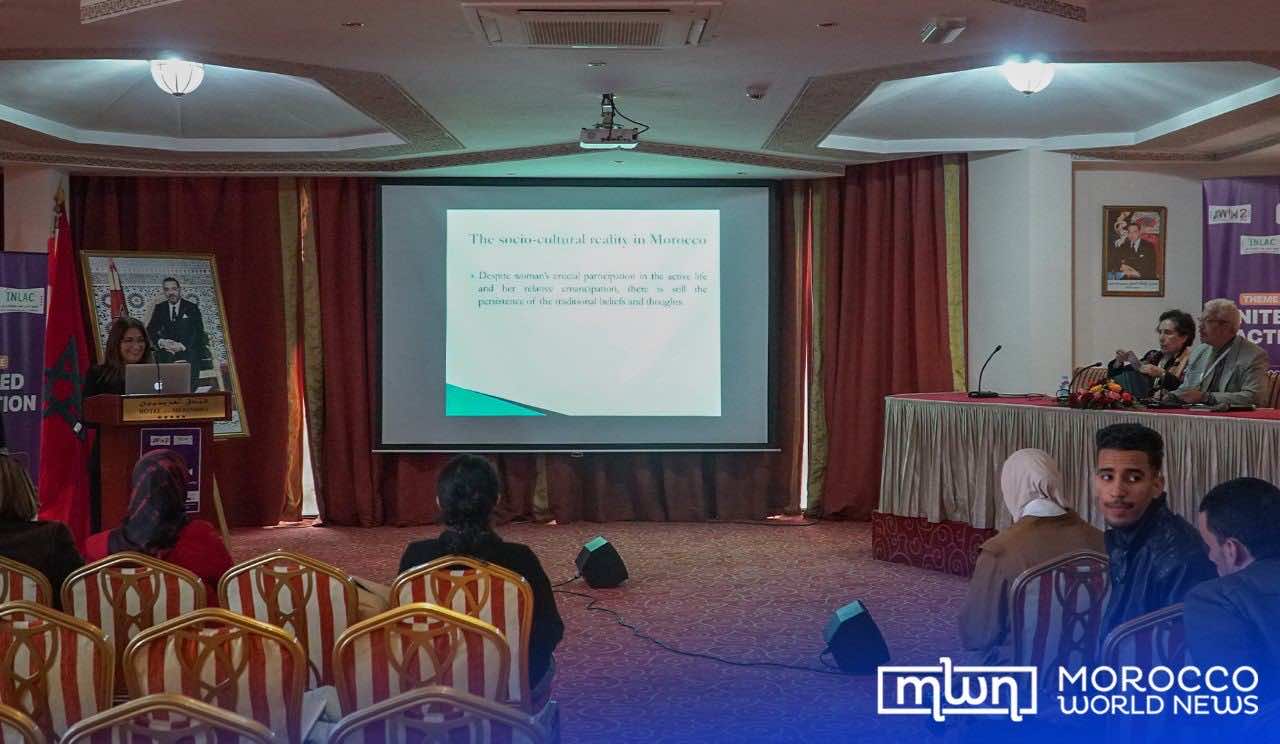
 Rabat – Since the constitutional amendment of 2011, Morocco has enhanced the participation of women in politics. However violence against women “did not decrease,” Moroccan scholar and renowned linguist Moha Ennaji has said.
Speaking on Thursday in Fez at a pan-African conference on women’s representation in media, Ennaji explained that despite the immense progress Morocco has made in the field of women’s rights, the country still lags behind regional peers.
While women’s participation in politics has improved in recent years thanks to policy reforms, he noted, it remains relatively low as women — even when educated — often prefer to opt for activism rather than attempt to make a change through politics.
“We still don’t have women in high-level decision-making positions,” the scholar lamented.
Moving forward, Ennaji maintained that Morocco should focus on legal reforms to make the public sphere a more enabling environment for women.
Of Morocco’s efforts to allow women access to education, the scholar cited recent data as showing that school-age young Moroccan girls are increasingly receiving education.
Ennaji’s presentation was part of a panel discussion that tackled the theme of “Misogyny in Moroccan Society: Deconstructing the Representation of Moroccan Women in Online and Mainstream Media.”
The discussion mainly focused on providing an account for the understanding of women’s agency in contemporary media.
Also intervening in the discussion was Fatima Sadiqi, a Moroccan scholar specializing in cultural studies. Sadiqi argued that although women are heavily present in the media, they currently form a resisting force within the industry as they unconsciously feel that they need to prove to society that they deserve to be there.
“These women are fighting all the time, and they are resisting all the time,” she insisted. “The resistance constraints cripple men and women across the world. These are the deep-level constraints,” she explained.
“More than men, women want to answer the expectations of society; it’s like they are apologizing to society. ‘We want you to accept us, we are not bad women after all.’”
Sadiqi called for creating a women-friendly environment, saying that the current “ culture is “hostile to women, even when no one says anything to her.”
According to her, the prevailing culture in the media industry dictates that women should not be there as they do not belong in the public space — and media is a public space.
She addressed the issue of women’s role in perpetuating. She argued that almost all current societies around the world are patriarchy, stressing that the system is not based on male dominance, but “it is rather built on the “importance of the father.”
Women are not only victims of patriarchy, they can also be forced to uphold it, she proposed, arguing: “Women can be powerful patriarchs.”
Sadiqi concluded her presentation by stressing the need to change individuals’ perceptions to tackle many of the constraints facing women in all public spaces, including the media sector.
She said: “We need to change the perception we have of women; just like the Arab spring changed perception, we need to do the same thing for women.”
Read Also: Morocco Reiterates Support for Women’s Role in Peacekeeping, Security


