 Join on WhatsApp
 Join on Telegram
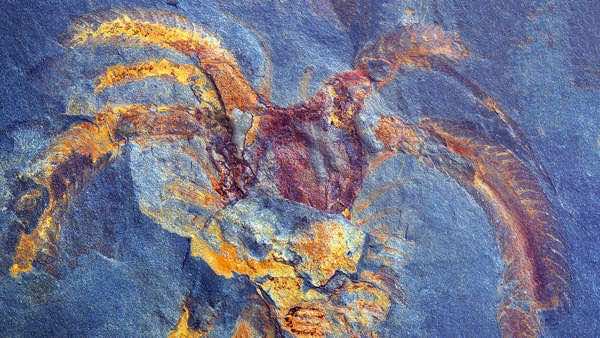
Rabat – An international research team has unearthed fossils in the Moroccan region of Taichoute, pointing to the existence of giant arthropods in the region hundreds of millions of years ago.
In a paper published by Nature magazine, the research team –composed of experts from Morocco, China, Europe, and the US– likened the discovery of the Taichoute fossils to that of the revolutionary Fezouata Biota fossil assemblage, also discovered in Morocco.
“Everything is new about this locality – its sedimentology, palaeontology, and even the preservation of fossils – further highlighting the importance of the Fezouata Biota in completing our understanding of past life on Earth,” said Dr Farid Saleh from the University of Lausanne and Yunnan University.
The discovery has huge potential to contribute to the scientific understanding of animal preservation, the paper explained, adding that the discovery “provides novel preservational and palaeontological insights during a key evolutionary transition in the history of life on Earth.”
The arthropods discovered are believed to be relatives of modern insects, spiders, and shrimps. They ruled the seas 470 million years ago.
While more research will need to be conducted to reveal all the secrets held by the fossils in question, the researchers believe that their discovery will be instrumental for future research.
Morocco is no stranger to archaeological findings. Earlier in December, the National Institute of Archeology and Heritage (INSAP) found a fossil of a 110,000 year old Atlas Lion in Essaouira.
The discovery was celebrated as the first time in the history of archaeological research that traces of the now-extinct species were discovered.