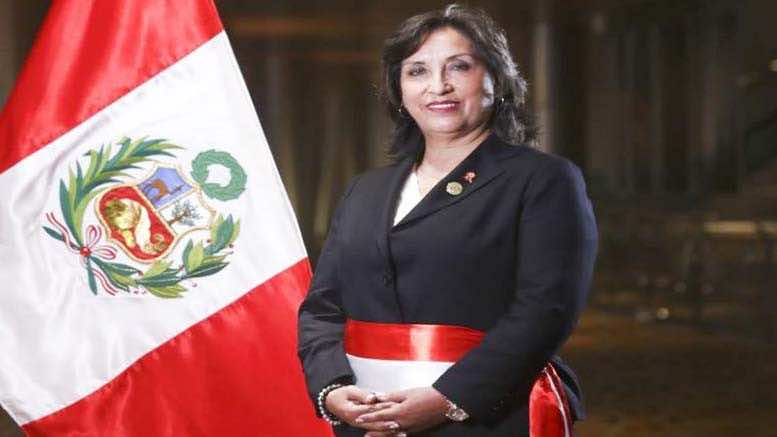
Rabat – In Peru’s latest political drama Dina Boluarte has been appointed president to replace Pedro Castillo. Boluarte is the first female to take charge of office in Peru’s history.
Boluarte was sworn in a few hours after the arrest of Castillo who was ousted yesterday for attempting to dissolve the country’s congress.
Prior to his replacement, Castillo announced that he will replace the congress with an “exceptional emergency government.”
The former president’s statement triggered an emergency meeting, which saw him impeached and detained for “rebellion.”
Boluarte, who has now replaced Castillo, will act as president until July 2026, marking the end of Castillo’s presidency.
The new president has urged for a political truce to challenge the crisis that is weighing down the country’s political and economic situation.
Following the political unrest, she said that she needs “space” and “time to rescue the country.”
Castillo’s rule marked several diplomatic crises with several countries – including Morocco.
In September, Peru’s Ministry of Foreign Affairs said that the Latin American country is resuming diplomatic ties with Polisario. The decision comes just a month after the government announced it would cut ties with the separatist group.
Polisario is a separatist group claiming independence in Western Sahara which undermines Morocco’s territorial integrity and sovereignty over Western Sahara.
Former Peruvian Foreign Minister Miguel Angel Rodriguez Mackay resigned over Peru’s recognition of the Polisario, arguing that Castillo intervened in his decision-making.
Rodriguez MacKay became the fourth Peruvian foreign minister to leave the ministry since Castillo’s inauguration in July 2021.
With the new president appointed to replace Castillo, it remains to be seen whether diplomatic ties between Lima and Rabat will be restored.
Morocco has been witnessing growing support for its position with regard to Western Sahara.
A growing list has emphasized the importance of Morocco’s efforts in the UN-led political process, describing the country’s Autonomy Plan as the most serious and credible basis to end the dispute over Western Sahara.