
Rabat – Morocco’s House of Representatives on Monday hosted a debate meeting to assess the Moroccan family code – the Moudawana – around 20 years after it was adopted, as well as discuss the possibility of amending it.
Organized under the theme “the family code in the face of social challenges and cultural constraints,” the meeting discussed various topics, including child marriage, equality and justice within the Moroccan family, as well as equality and sustainable development.
The participants argued that current realities call for the introduction of amendments to the family code to create a balance between Islamic teachings and the reality of modern Moroccan society.
Secretary General of the Popular Movement (MP) Mohamed Ouzzine said that the introduction of the Moudawana in 2004 was a “quiet revolution” in terms of human rights and gender equality. However, he argued that the family code has encountered challenges in regard to its implementation, as well as misinterpretations of some of its provisions.
While Ouzzine recognized how progressive some of the Moudawana laws are, he argued that they are not enough to guarantee women their rights and ensure gender equality. He called for deep debate that goes beyond the legislative framework and takes into consideration the cultural and economic dimensions.
The Moroccan parliament adopted the Moudawana in February 2004, replacing the Personal Status Code (PSC) which was drawn up in 1958 after the country’s independence.
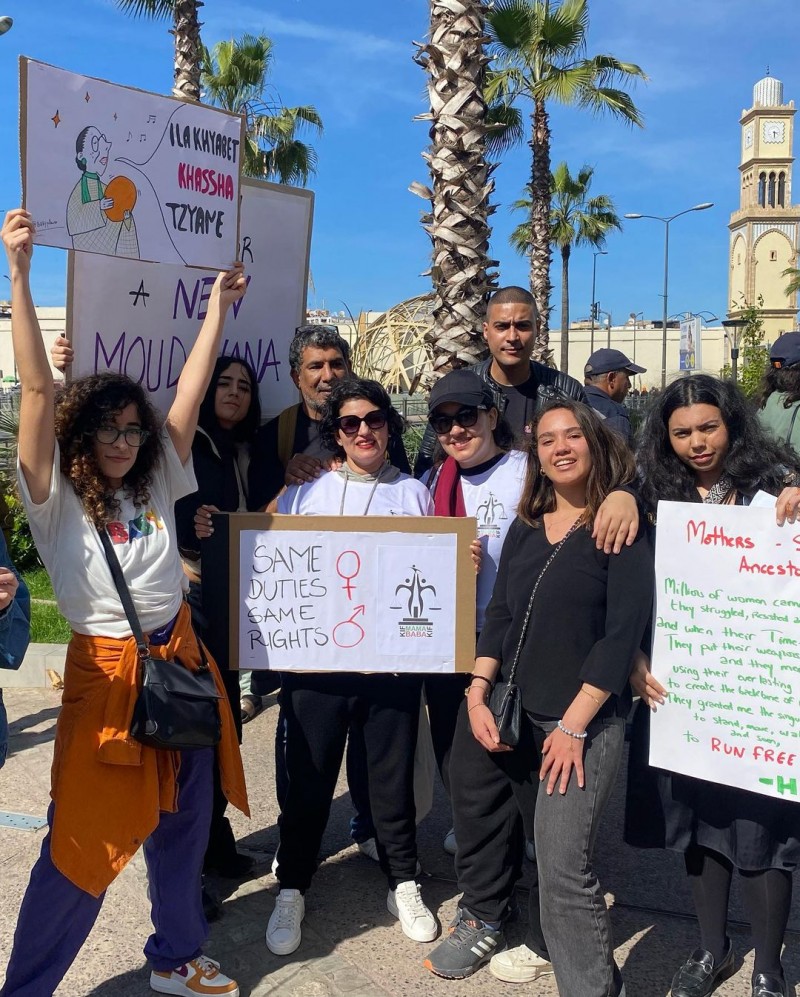
Protest at the United Nations Square in Casablanca, calling for reform in Morocco’s family code
The new family code introduced progressive laws governing various areas of family, including marriage, divorce, polygamy, inheritance, and child custody. It aimed to protect women’s and children’s rights and promote the principles of justice and equity within the Moroccan family.
Call for change
Speaking at the House of Representatives meeting, President of the Women Harakis Organization Nezha Bouchareb emphasized the need to review the family code with the aim of identifying its shortcomings, including the misinterpretation of its provisions.
Calling for the family code to be updated, Bouchareb said that it should adapt to the “spirit” of the 2011 Constitution, international conventions endorsed by Morocco, and the New Development Model.
In addition, she argued that the ultimate goal of this move is to strengthen family and social solidarity while addressing social taboos in a thoughtful and responsible manner.
The Chairman of the Popular Movement at the House of Representatives Driss Sentissi echoed Ouzzine and Bouchareb’s remarks, highlighting the existing weaknesses of the family code after nearly 20 years of its implementation.
Sentissi called for amendments and revisions following an approach that combines the principles of Islam and the best interest of the family, women, and children.
For his part, the chairman of the Popular Movement in the House of Councillors, M’barek Sbaii, highlighted the need to establish policies that place women, notably those from rural areas, at the heart of the development process. He also urged the Moroccan government to introduce a “gender approach” in all its programs and strategies.
Read also: Moroccan Association Calls for Abortion Law Reform After Death of 14-year-old Girl
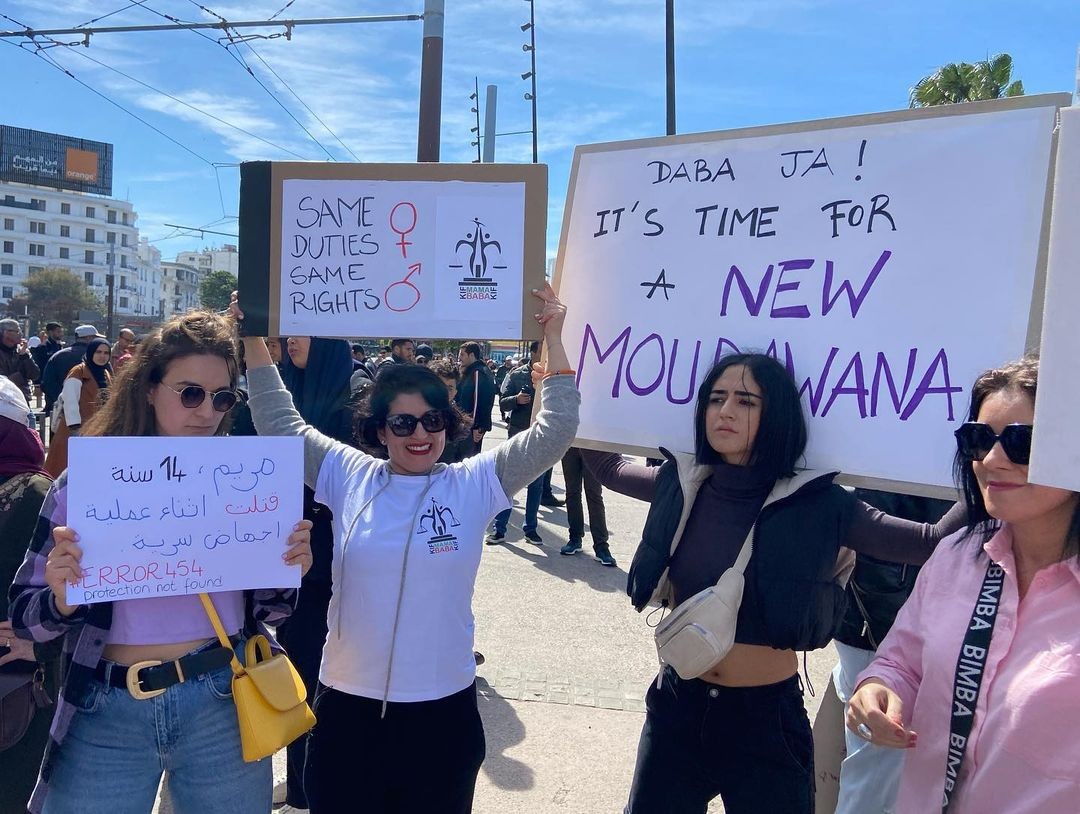
The move came two days after several Moroccan associations and women’s rights activists participated in a protest at the United Nations Square in Casablanca, calling for reform in the family code.
“The time for change has come … 19 years after the last reform of the Moudawana, women still do not have the same rights as men,” said Moroccan feminist movement “7achak,” which organized and led the protest.
The Sunday protest demanded a new Moudawana “where gender equality is effective,” with a Penal Code that ensures women’s rights over their own bodies, and a legal system that “effectively protects women from the scourge of violence.”
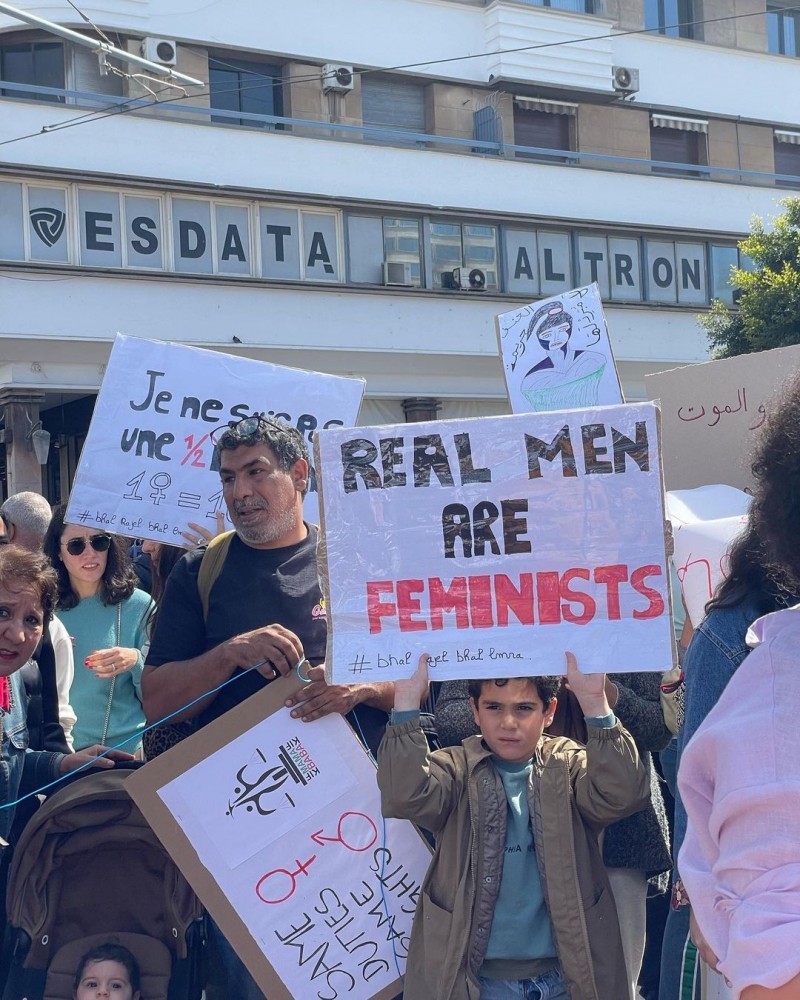
Protest at the United Nations Square in Casablanca, calling for reform in Morocco’s family code
The protest, which coincided with Women’s Day celebrations, saw the participation of Moroccans from all walks of life, men and women, young and old, holding signs that call for an egalitarian Moroccan society.
The posters conveyed strong messages such as: “Real men are feminists,” “same duties, same rights,” and “She wants rights, not flowers.”