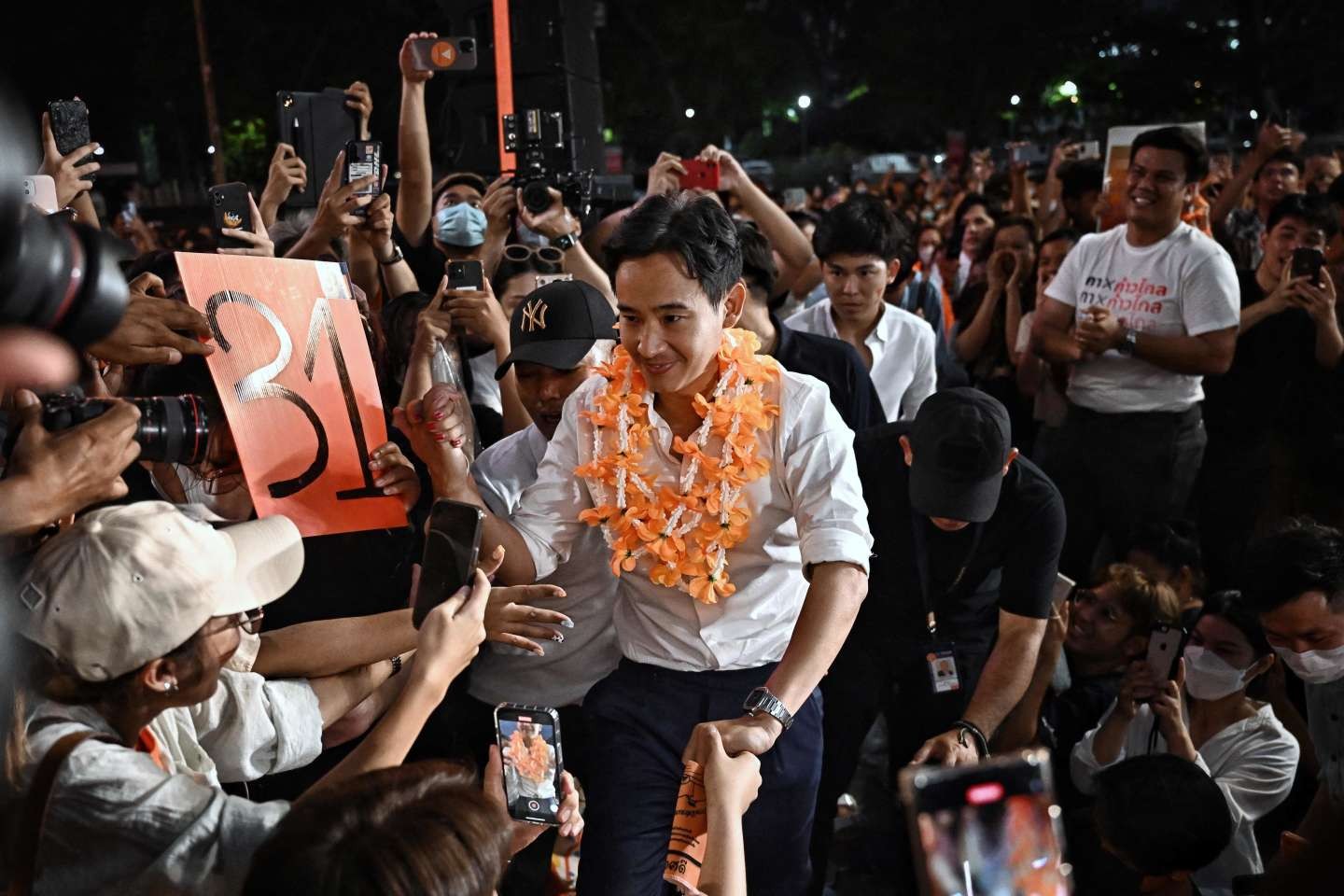
It’s unlikely that Pita Limjaroenrat, who on Thursday failed in his bid to become the 30th Prime Minister of Thailand, is unaware of the famous words “Politics is the art of the possible, the attainable — the art of the next best” uttered in another century by Bismarck. But even after the first round disappointment, he does not sound privy to the pearls of political wisdom spilled by the founder of the German empire and ace practitioner of realpolitik.
Pita’s Move Forward Party [MFP] returned with the highest number of seats in the elections held in May. Highest, but not a clear mandate. Hence he had to tie up with like minded parties – 7 of them – on the basis of a common agenda to reach within shouting distance of majority. While the coalition now has an upper hand in the lower house of the parliament, the Senate, the upper house is populated by nominees of the military. For a Prime Minister to win approval, the combined 50% mark of the 375 votes have to be obtained.
On Thursday, Pita fell short by 51 votes. The stumbling block, as anticipated, was the recalcitrant Senate where he could bag only 13 favorable show of hands. Well, the silver lining for him is the larger number of absentees (159) against just 34 voted against him. The large number of fence sitters should be his catchment area when the second and third round of votings scheduled for July 19 and 20 happen. Apparently, they are not deadly against him, but have reservations on some of MFP’s signature reforms.
Now, everyone knows the main hurdle is MFP’s proposal to fiddle with the monarchy’s pre-eminence in Thai society – amendments to ‘lese-majeste’ law. While this has been a prominent poll promise by MFP, they perhaps are the only one Party who are for this reform. In fact, changes to Section 112 (the statute that gives special privileges to royals) are not in the MOU reached between the 8 political parties of the MFP coalition. So one would have expected Pita to keep the contentious reforms on the back burner even before coming to face the parliament for the first vote. Instead, the idealist in him has been saying the MFP’s intention not to go back on that change.
Even after the first rejection of his PM ambition, Pita said “We will not change our Policies, we must keep our promise to the people ”. Brave, but unrealistic words! It’s as if either he is in the wrong profession, or he still does not comprehend the gist of Bismack’s wise remarks.
Unless, MFP gives up the ambitious reform, there is no possibility of a clearance for Pita’s PM aspiration. In fact, other parties in the coalition – Pheu Thai the second biggest being the frontrunner – are thinking of putting up their own candidate. If they succeed, it will be curtains for MFP’s plans for the foreseeable future. The impasse is also creating apprehension about the demonstrations by the supporters of MFP turning violent – a nightmare for the tourism dependent economy. Political deadlocks are known to harm the economy of any country.
Other than the practical aspect, Pita has no de jure ground to claim that his mandate enables him to amend the monarchy related law. MFP secured 38% of the popular vote and 151 seats out of 500 seats in the House of Representatives. Hence they are the biggest party by the first-past-the-post rule, but not enjoying a clear majority – the raison d’être to gather 7 other parties instead of ruling alone! So the vast majority never endorsed the pet themes of MFP. Hence to say that not implementing them shall be a breach of promise to the people is delusional.
In fact, by holding on to unimplementable promises (until MFP gets a clear mandate), Pita may lose the chance to be a PM. His challenges, afterall, are not just confined to numbers in parliament. He will soon be facing the Constitutional Court to answer the charges of entering the election arena whilst holding shares of a media company. The company in question is defunct for more than a decade and what Pita has are his father’s shares, as legal heir, till the entity is legally wound up. Hence there is no violation in the spirit of law, but then the ‘letter’ remains supreme in the hands of hostile authorities. So there is a question mark on his future as PM even if he were to clear the Senate snag. He seems to be heaping misery upon himself by adhering to the need to amend monarchy law.
The pragmatic route to travel would have been to shelve the ‘lese-majeste’ from the cards of his government and go ahead building a consensus in the parliament on his PM goal. Once in power – assuming the Constitution Court does not upset the applecart by an adverse judgment on him – the Harvard educated suave man should be able to usher in a fresh breeze of governance in the country accustomed to the military mandated government for too long. Who knows, the years in power can be harbingers for a bigger mandate next time when all the promises could be implemented! A successful businessman like Pita must know only too well that the limelight given by the Chair is preferable to the wilderness of opposition in furthering his group’s ideas among the public thus bolstering the chances for a clearer mandate next time.
Current cussed approach may see Pita losing out the PM slot and with that the high hopes of the followers of MFP also may fly out of the window.
The question of course is if Pita will give an ear to Bismarck or throw the baby of the mandate out with a flaccid bathwater of idealism.
Read Also: Thailand – Coalition Pact is a Move Forward!