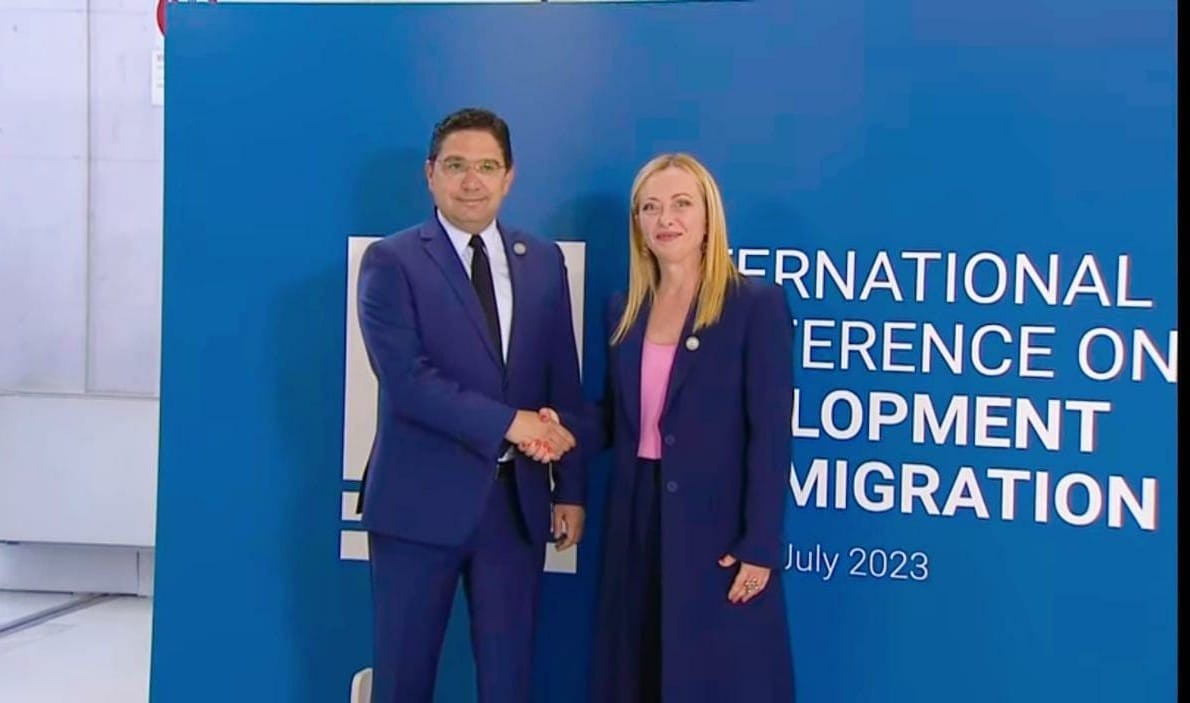
Rabat – Moroccan Foreign Affairs Minister Nasser Bourita outlined Morocco’s migration management during his participation at the International Conference on Development and Migration in Rome on Sunday.
Recalling Morocco’s efforts to tackle migration, Bourita stressed that the North African country does not address the issue as a “theoretical” issue but rather as a “lived reality.”
“The Kingdom has provided concrete responses at the national, interregional, continental and multilateral levels despite several challenges,” the Moroccan official said.
Morocco, which has been viewed by the international community as merely a transit country for irregular migrants, has recently managed to also establish itself as a destination for many refugees and migrants.
In 2013, King Mohammed VI launched the National Policy on Immigration and Asylum, seeking to offer protection to refugees and help migrants integrate in Morocco’s society.
Morocco’s vision seeks to tackle irregular migration through a humanitarian approach.
In January of last year, Bourita said that migration is natural, arguing that nothing will stop a “natural phenomenon” that has always existed and “will continue to do so.”
Echoing the same principle during his speech in Rome on Sunday, Bourita stressed that Morocco has developed”good practices in the integration of migrants.”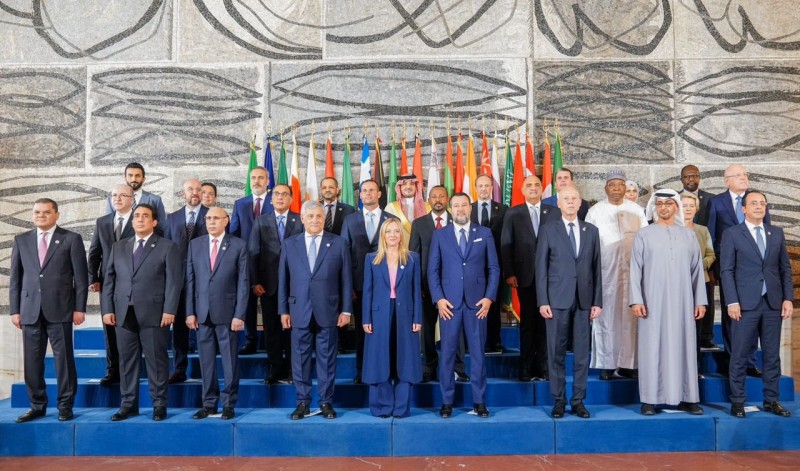
Recalling Morocco’s efforts, Bourita stressed that Morocco integrated migrants through two regularization operations, as well as the establishment of responsible and humane border management.
Morocco also implemented a health protection mechanism for migrants during the COVID-19 pandemic, he added, stressing the country’s determination to contribute to all action – including the Rome process, an initiative that aims to address the root causes of forced displacement.
The process also seeks to prevent and tackle irregular migration as well as human trafficking across the broader Mediterranean region, the Middle East, and Africa.
The minister also recalled Morocco’s drafted African Agenda for Migration that the King presented and was admitted by African heads of state in January.
“This agenda considers migration as a factor of rapprochement between populations and civilizations and tends to make migration a lever for co-development, a pillar of South-South Cooperation, and a vector of solidarity,” he stressed.
The Moroccan FM also recalled the importance of shared responsibility to tackle the phenomenon and the non-singularization of transit countries.