 Join on WhatsApp
 Join on Telegram
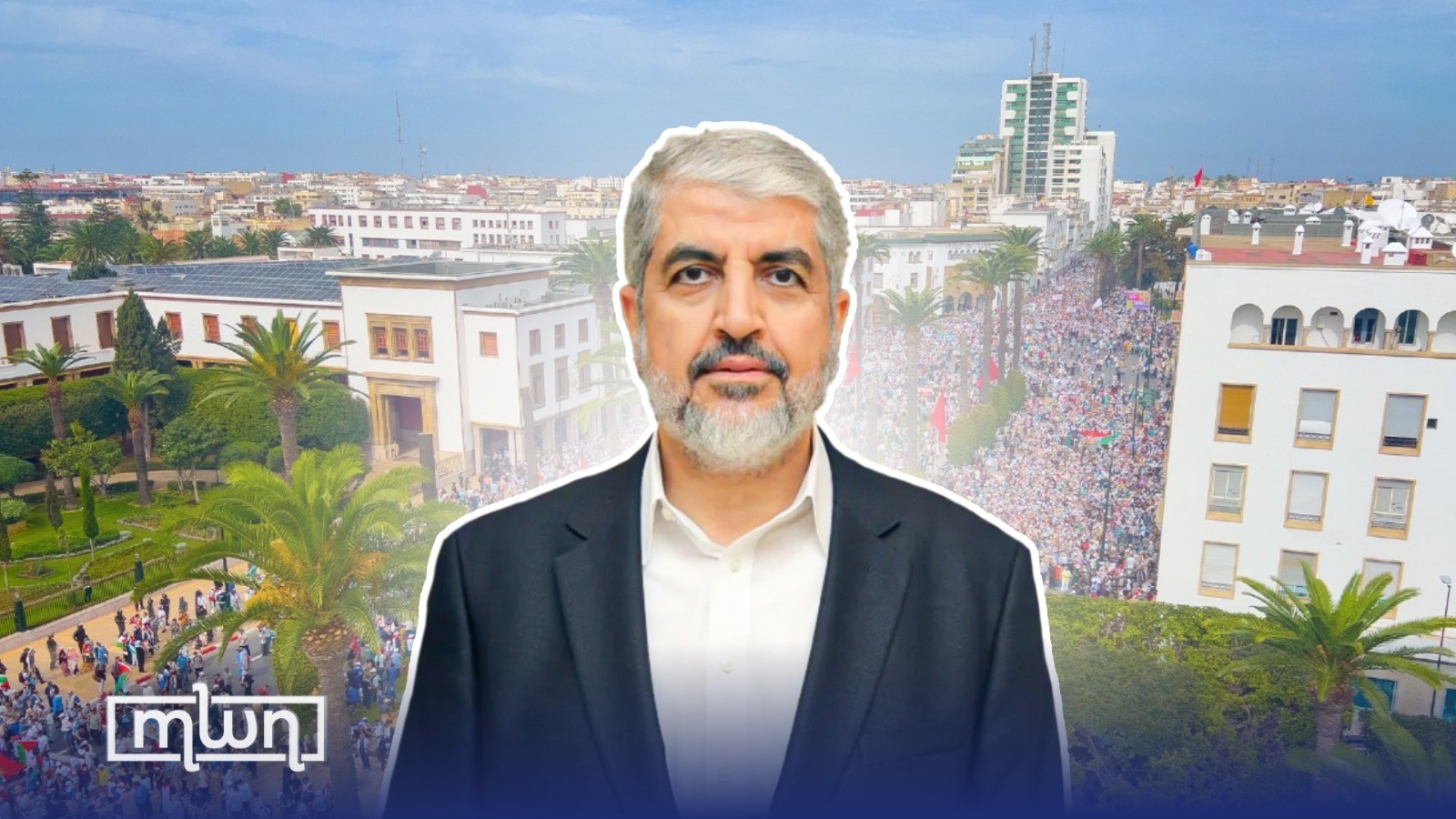
Rabat – It is becoming a concerning habit! Following Emmanuel Macron’s direct address to Moroccans after the al Haouz earthquake in September, Khaled Meshaal, a leader of Hamas, has taken a similar approach to speaking directly to the Moroccan population.
In both instances, regardless of the circumstances, many consider such direct communication inappropriate and out of place.
The context is one of war, or would it be more accurate to say, the massacre in Gaza. After decades of Israeli state terror, the establishment of an apartheid regime in Israel and the Occupied Territories, and the deadly attack by Hamas on Israel (1,200 casualties). The Israeli state is freely engaging in its massacre, through criminal, and terrorist actions.
The facts: In a recent event organized by the Movement of Unity and Reform, affiliated with the PJD, Khaled Meshaal, a former/current leader of Hamas residing in Doha, took the floor. Speaking from Doha, he took it upon himself to extend his appeal beyond the audience, reaching out to the Moroccan population.
Meshaal urged Moroccans to “address” their leaders (the king, to simplify) and request the termination of relations with Israel, and the expulsion of its ambassador. He emphasized the necessity for security in the kingdom, which is a form of threat, and stated that establishing relations with Israel was a mistake, marking it as a strong indiscretion.
The history: Needless to say, Morocco has maintained a steadfast commitment to supporting the Palestinians over the decades. No need to recall the actions of Kings Hassan II and Mohammed VI in advocating for the creation of a Palestinian state to underscore Morocco’s longstanding support. The continuous mobilization of the Moroccan population in favor of Palestine further emphasizes the nation’s commitment to this cause.
Figures like Khaled Meshaal and Ismael Haniyah visited Morocco in 2017 and 2021, respectively, where they were received by the highest authorities of the state. Their visits came either through a royal invitation or with the king’s consent. Haniyah’s visit as the leader of Hamas occurred eight months after the Tripartite Agreement and three weeks before Yair Lapid’s visit to Rabat.
Since the onset of the current conflict, it is crucial to note that Israel is involved in a systematic massacre, with the approval and, even complicity of Western powers. Morocco has not condemned the actions of Hamas on October 7, a stance that complicates its relations with the West, as they remain committed with their body, soul, and weapons to support Tel Aviv.
Rabat has consistently condemned attacks on hospitals and other acts of violence by Israel. Notably, demonstrations involving tens, or hundreds of thousands of people have generally been allowed in Morocco, with only a few exceptions. The response from Moroccans, including its monarch, government, institutions, and the population, has been nearly unanimous in expressing opposition to the ongoing massacres…
Why does Khaled Meshaal, who has consistently been received as a friend in the kingdom despite his past hostile positions against Morocco, now make an unfriendly, potentially offensive, and even aggressive call? The rationale behind this shift is not entirely explained by anger, especially considering Meshaal and his family’s safety in Qatar.
Moreover, urging Moroccans to request the king to sever ties with Israel is tantamount to a call for incitement, bordering on insurrection, as institutional decisions have already been made, and this call amounts to asking Moroccans to pressure the king from the streets.
Painting the Tripartite Agreement as a mistake goes beyond mere indiscretion; it constitutes an unfriendly and unquestionably hostile act, amounting to unacceptable interference.
Yet, the same Morocco, the same King maintains relations with Hamas, even as it officially recognizes Mahmoud Abbas’s Palestinian Authority as the sole legitimate representative of the Palestinian people. The kingdom doesn’t overly emphasize the Palestinians’ stance on the Sahara issue, a matter of paramount national importance to Morocco but of lesser concern to them.
The Moroccan Kingdom consistently advocates for the two-state solution in Rabat, Tel Aviv, al-Quds/Jerusalem, New York, Washington, Europe, and beyond. The kingdom extends solemn receptions to Palestinian leaders when they visit its territory.
The PJD, having held governmental leadership from 2012 to 2021 and governing major cities from 2015 to 2021, under whose mandate the Tripartite Agreement was signed by its then-leader, with the blessing of Abdelilah Benkirane, who has since conveniently changed his mind. However, This party reveals its true nature: It appears that its ultimate objective is the prioritization of the Ummah over the Moroccan interests.
Providing a platform to such a man is not merely an oversight but a significant fault, despite Benkirane’s crocodile tears who consistently referenced crocodiles throughout his term in office.
In navigating a complex international landscape, where Morocco faces the delicate task of balancing interests and sentiments, the PJD’s recent moves, exemplified by the MUR, seem to add weight to an already challenging mined terrain.
Moroccans steadfastly rally behind the Palestinian cause, and overwhelmingly denounce Israel, yet their loyalty remains firmly and unquestionably with their nation. Prioritizing the interests of other groups, even allies or victims of atrocities, ahead of Morocco’s concerns is deemed a flaw. Despite its imperfections and challenges, Morocco provides a tranquil and peaceful existence for its people amid a world marked by escalating turbulence, brutality, and violence.