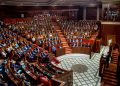
Rabat – Pedro Sanchez has maintained his post of Prime Minister of Spain, overcoming the difficulties and winning a parliamentary victory with 179 votes, three more than the absolute majority, in a session marked by stormy debates.
After four months of political deadlock following the legislative elections on July 23, Pedro Sanchez, the leader of the Spanish Socialist Workers’ Party (PSOE), has navigated the complexities of Spain’s fragmented parliament to reclaim the role of Prime Minister.
The parliamentary confidence vote on Thursday not only marked his political resilience but also concluded a prolonged period of uncertainty in the aftermath of the elections.
Sanchez, in power since 2018, skillfully garnered support from various regionalist factions, successfully securing the backing of Basque and Catalan lawmakers.
At the heart of the negotiations between Sanchez’s PSOE and Junts, the Catalan separatist party led by Carles Puigdemont, was a controversial amnesty law for leaders involved in the 2017 attempt at secession.
This law, aimed at healing the wounds of the Catalan crisis, sharply divided the Spanish state in recent days.
The re-election of Sánchez brings forth a new set of challenges as he now faces the task of forming a government with his left-wing coalition allies, Sumar.
Read also: Fears of Far-Right Shift as Spain Votes on Sunday
Amidst the polarized political landscape, this victory did not come without its share of obstacles, with the Partido Popular (PP), led by Alberto Nunez Feijoo, strongly criticizing Sanchez’s move, labeling it an infringement on the rule of law and a political maneuver to cling to power.
Street tensions and protests, notably in Madrid, underscore the deep divisions within Spanish society.
Sanchez, who has committed to pursuing a left-leaning agenda with a focus on social reforms, now leads a parliamentary majority of diverse factions, hinting at potential instability. Mertxe Aizpurua, representing Bildu, cautioned that their support is not unconditional.
Addressing the contentious backdrop, Sánchez urged the opposition not to escalate the situation, while heightened security measures around the Parliament reflected the current political and social tensions in Spain.
As he prepares to name his new government on Friday or Saturday, and with the inaugural cabinet meeting scheduled for the following Thursday, the stage is set for a term that promises both progressive policies and potential parliamentary challenges.