


 Join on WhatsApp
  Join on Telegram
 Rabat – Al-Shifa Hospital in Gaza is grappling with a dire humanitarian crisis, exacerbated by persistent electricity shortages and the Israeli forces’ siege of the medical complex.
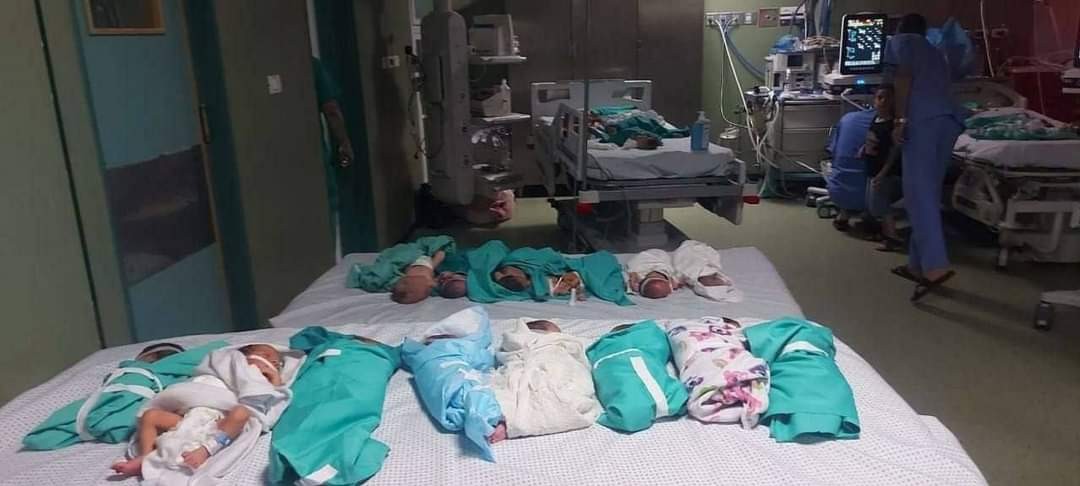
According to Gaza’s health ministry, six premature babies and nine patients lost their lives in the last 48 hours due to the impact of the ongoing power crisis.
Palestinian news agency WAFA reported that a premature baby and two intensive care patients died today due to lack of oxygen.
The situation, described by WHO Director-General Tedros Adhanom Ghebreyesus as “dire and perilous,” continues to escalate, claiming more lives, including vulnerable premature infants.
The director-general of Gaza’s Health Ministry Medhat Abbas told Al Jazeera that the Al-Shifa Hospital is under siege, with around 200 families in the vicinity unable to leave their homes.
Shockingly, the hospital’s courtyard has become a graveyard with approximately 100 bodies decomposing.
The hospital, which is the biggest medical facility in the region, is grappling with an already stretched-thin capacity to provide essential medical care.
The director of hospitals in Gaza Mohammed Zaqout highlighted the decrease in the number of individuals seeking refuge within the hospital compound.
Initially sheltering around 1,500 patients, 1,500 medical workers, and 7,000 displaced people, the numbers have significantly dropped.
Currently, approximately 650 patients, 500 healthcare workers, and 2,500 displaced people remain trapped within the besieged complex.
Reports from those inside said that Israeli tanks and snipers surrounded al-Shifa Hospital, with many individuals pinned down by sniper fire.
Israel claimed it had offered safe passage to those willing to evacuate the hospital.
A UN official, speaking anonymously, shed light on the challenges faced in evacuating the remaining patients, Al Jazeera reported. The official said that special procedures, including equipped ambulances, are necessary to transport patients to Egyptian hospitals.
More than 60 patients are currently receiving treatment at the hospital, including over 30 infants in the premature and nursery ward. In addition, the number of patients in the hospital’s dialysis department exceeds 500.


