
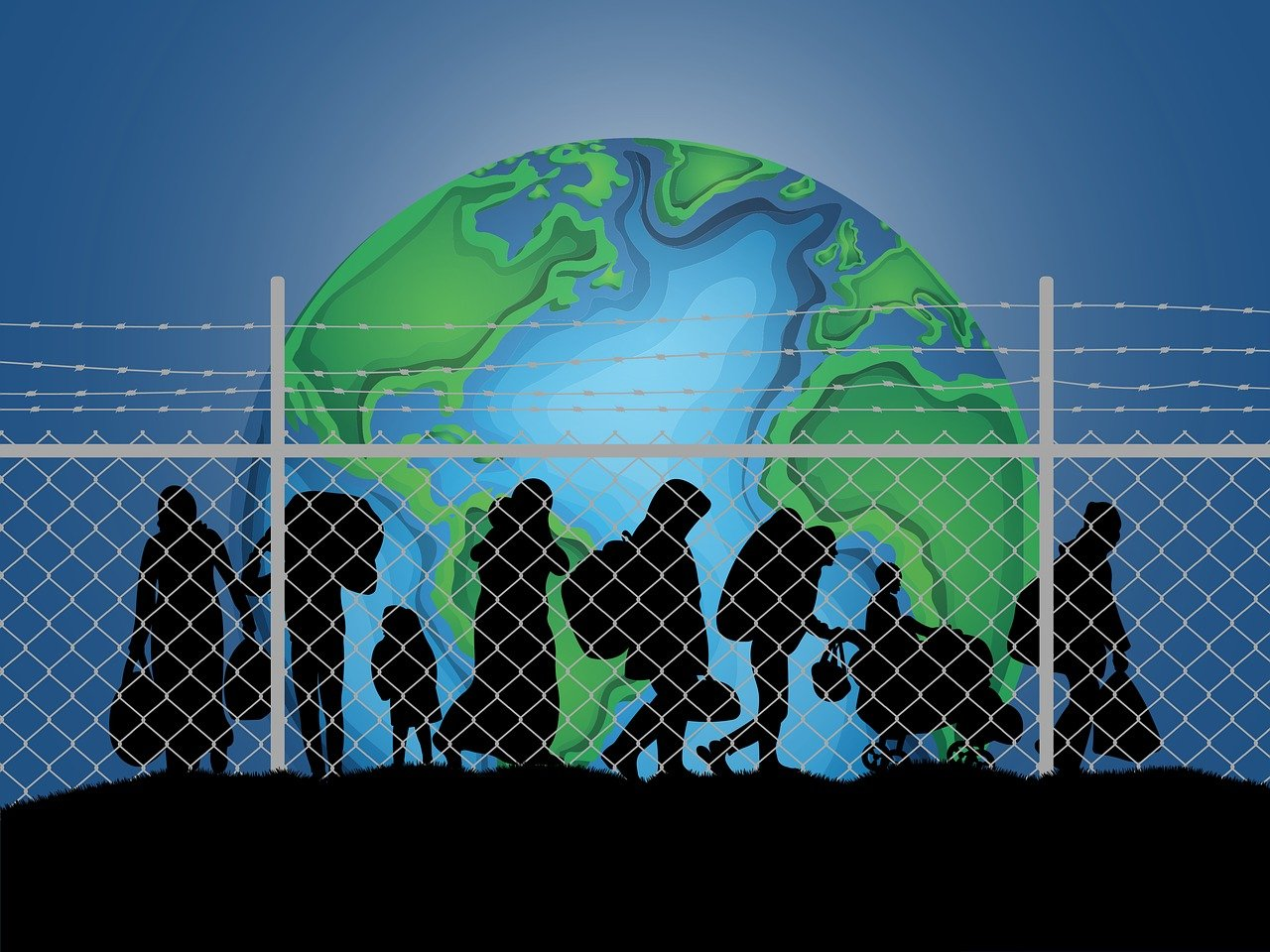
Doha – Morocco is the second largest country of origin for migrants in Africa, trailing only Egypt, according to the latest World Migration Report 2024 published by the International Organization for Migration (IOM). South Sudan, Sudan, Somalia, Algeria, the Democratic Republic of the Congo, Nigeria, Burkina Faso and Mali round out the top ten origin countries on the continent.
The newly released report sheds light on key migration trends and developments in Africa and around the globe. It found that the vast majority of African migration occurs within the region itself.
In 2020, around 21 million Africans were living in another African country, a significant increase from 18 million in 2015. At the same time, the number of Africans living outside the continent also grew to over 19.5 million.
“While free movement protocols have been instrumental in enabling people to easily move across borders, irregular migration – both within and from the subregion – remains a challenge,” the report states. Many West and Central African migrants attempt risky irregular journeys to Europe each year, often facilitated by smugglers. In 2022 alone, nearly 2,800 migrant deaths and disappearances were recorded along routes from West and Central Africa to Europe.
For Moroccans specifically, many reside as immigrants in Europe and Gulf Cooperation Council states. The report lists Morocco among the top 20 origin countries worldwide for international remittances, estimated to have received over $11 billion in 2022, accounting for 8% of its GDP. Remittances have become an important source of foreign exchange and economic support for the country.
Read also: Morocco’s Border Control Foiled 87,000 Irregular Migration Attempts in 2023
The report also highlights how Morocco and other North African countries are transit points along the perilous central Mediterranean route used by many sub-Saharan African migrants attempting to reach Europe. Migrant smuggling and human trafficking networks have become entrenched in the region.
“In Libya, at points of maritime departure toward Europe, beatings, torture and forced labour of migrants have been well documented,” according to the report. “Women and girls in particular are at heightened risk of gender-based violence, especially during desert crossings and at border areas.”
Over 20,000 migrants have died trying to cross the central Mediterranean since 2014, making it the deadliest migration route in the world. In response, the European Commission proposed an action plan in late 2022 to try to reduce irregular migration and address challenges related to search and rescue in the Mediterranean.
Recent attacks against sub-Saharan migrants in Tunisia have spotlighted the racism and xenophobia migrants can face in North Africa. Political rhetoric accusing sub-Saharan Africans of bringing crime and threatening Tunisia’s national identity sparked racist violence in early 2023, prompting countries like Côte d’Ivoire, Guinea, Burkina Faso and Mali to organize repatriation flights for their desperate citizens.
Looking at the broader factors that shape migration, the report presents a global index analyzing quality of life factors alongside key migration statistics. It notes that visa access tends to align with development levels, meaning “regular migration pathways are problematic” for citizens of less developed countries who may have little choice but irregular routes.
Examining this data shows that countries in Africa and Asia tend to have lower human development and stability rankings coupled with higher displacement levels, suggesting a need for greater migration programming and policy support. In contrast, European countries generally show high levels of development and low displacement.
Climate change is also explored as an increasing driver of migration in Africa. The worst drought in over 40 years has displaced over 2 million people in Ethiopia and Somalia by May 2023. Cyclones and floods have devastated Southern Africa, with Cyclone Freddy displacing over 500,000 in Malawi alone in early 2023.
Read also: IOM: Moroccans Among Top Nationalities of Irregular Migrants to Europe in 2023
Morocco has recently been grappling with the impacts of climate change, which have manifested in the form of droughts and wildfires. By the end of 2022, wildfires had triggered 9,500 displacements in northern parts of the country, forcing people to flee their homes and seek safety elsewhere. These wildfires also destroyed substantial areas of land, with the total land area ruined in 2022 surpassing the combined total of the previous nine years.
Moreover, conflict remains a major source of forced migration, with African countries like Sudan, South Sudan, Democratic Republic of the Congo, Somalia, Central African Republic and Burkina Faso continuing to see large populations of refugees and IDPs fleeing violence.
In a different context, the report mentions that Morocco stood out during the 2022 FIFA World Cup for having one of the highest numbers of foreign-born players in its national team.
However, the report also emphasizes that for the vast majority of young people in West and Central Africa who dream of playing football in Europe, the opportunities to migrate and successfully join European clubs are extremely limited. Pursuing this aspiration often comes with significant risks, as migrant smugglers and traffickers exploit their dreams by posing as football agents and charging large sums to facilitate their journeys to Europe, only to abandon them upon arrival or subject them to forced labor, sexual exploitation, and other abuses.
The report makes clear that African migration is driven by an array of overlapping factors, from pursuits of economic opportunity via regular and irregular means, to forced displacement from conflicts, instability and climate change impacts. Continued focus on creating safe, regular migration pathways while addressing the root causes that drive people from their homes will be crucial.
With the UN projecting that the number of international migrants globally could reach 405 million by 2050, it is more critical than ever to improve our understanding of migration dynamics in Africa and beyond. Evidence-based research and reporting, as seen in the World Migration Report, provides an important foundation for more effective migration governance in an era of increasing human mobility.