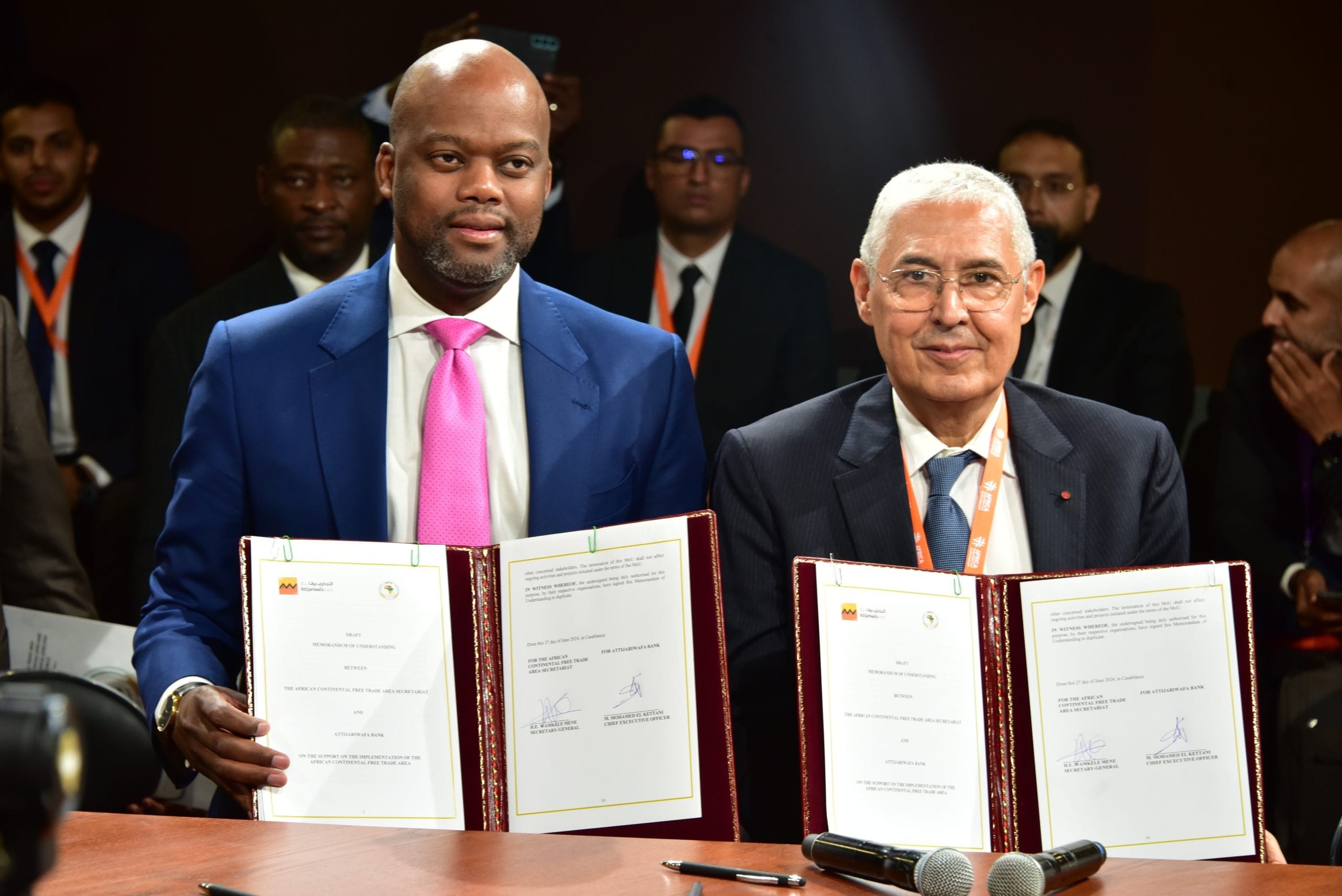
Rabat – The Attijariwafa Bank Group and the secretariat of the African Continental Free Trade Area (AfCFTA) inked an agreement this week, aiming to unlock the full potential of the continent’s free trade zone.
Signed during the 2024 Africa Development International Forum, the memorandum of understanding (MoU) signifies a renewed push to accelerate trade and investment across Africa.
This strategic partnership paves the way for joint efforts in several key areas. Both parties will work together to identify and support critical projects in vital sectors like infrastructure, energy, and agriculture.
The agreement also places a strong emphasis on empowering African businesses, with a particular focus on women and young entrepreneurs.
The African free trade area, launched in 2021, holds immense promise for boosting intra-African trade and fostering economic growth. However, challenges like limited infrastructure and access to financing remain hurdles.
“The African banking sector plays a critical role in empowering African businesses to capitalize on the AfCFTA,” said Wamkele Mene, Secretary-General of the AfCFTA Secretariat.
He underscored the need for improved communication channels and prioritized infrastructure projects to facilitate the movement of goods and people.
Attijariwafa Bank, with its extensive presence across Africa, is well-positioned to play a leading role in this initiative. “This free trade area has the potential to be a game-changer for Africa’s economic development,” stated Mohamed El Kettani, Chairman and CEO of the Attijariwafa Bank Group.
He highlighted the agreement as an opportunity to leverage synergies and unlock new economic opportunities.
The partnership extends beyond traditional trade finance. The MoU outlines plans to leverage Attijariwafa’s African Development Club as a platform for South-South exchange, fostering collaboration among African entrepreneurs.
This landmark AfCFTA-Attijariwafa Bank partnership holds promise, but its success hinges on translating good intentions into concrete action. Clear timelines, measurable goals, and transparent implementation plans are essential.
Furthermore, the agreement should be seen as part of a broader strategy involving African governments, regional economic communities, and the private sector.
Only through a collaborative effort can the continent unlock the true potential of the AfCFTA and build a more integrated and prosperous Africa.