 Join on WhatsApp
 Join on Telegram
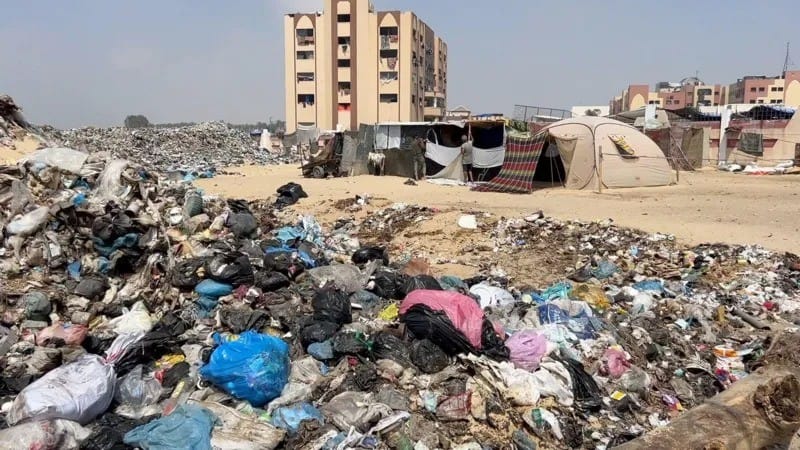
Rabat – In the Gaza Strip, a new catastrophe is mounting amidst the ruins left by Israeli Occupation Forces (IOF) merciless campaign: mountains of rotting rubbish are posing severe health and environmental risks to the population.
Displaced from her home in Beit Hanoun, Asmahan al-Masri now lives in a tent in Khan Younis with 15 family members. “We’ve never lived next to rubbish before,” she laments to BBC. “This is like a slow death. There is no dignity.”
According to the UN, over 330,400 tonnes of solid waste have accumulated in Gaza in the past eight months, exacerbating the already dire living conditions.
The stench of decaying waste permeates the air, and the threat of disease looms large. “The smell is very disturbing,” Asmahan says. “I keep my tent door open for air, but all I get is the smell of rubbish.”
The overcrowded camp near al-Aqsa University, where Asmahan stays, is plagued by flies, rodents, and even snakes. Stray dogs wander menacingly, adding to the fears of the residents.
Ali Nasser, who fled Rafah with his extended family, also describes to BBC their plight: “We couldn’t find anywhere else where we could stay together. Our finances are destroyed, and we have no jobs, no income. We suffer from vomiting, diarrhea, and itchy skin.”
Years of blockade by Israel and Egypt had already crippled Gaza’s waste management system, with the ongoing war on the strip making matters worse. The blockade limited the entry of essential equipment and materials needed for proper waste disposal.
“We’re seeing a waste management crisis in Gaza, and it’s worsened over the past few months,” says Sam Rose, director of planning for the UN agency for Palestinian refugees (UNRWA). Local authorities, overwhelmed by the sheer volume of waste and damaged infrastructure, struggle to manage the crisis.
Efforts by the UN Development Programme (UNDP) have led to the collection of 47,000 tonnes of waste and the distribution of 80,000 liters of fuel for cleanup. However, the scale of the problem requires more substantial intervention.
As summer temperatures rise, aid agencies warn of escalating health hazards. Yet, for many Gazans, the need to survive overrides the risks.