
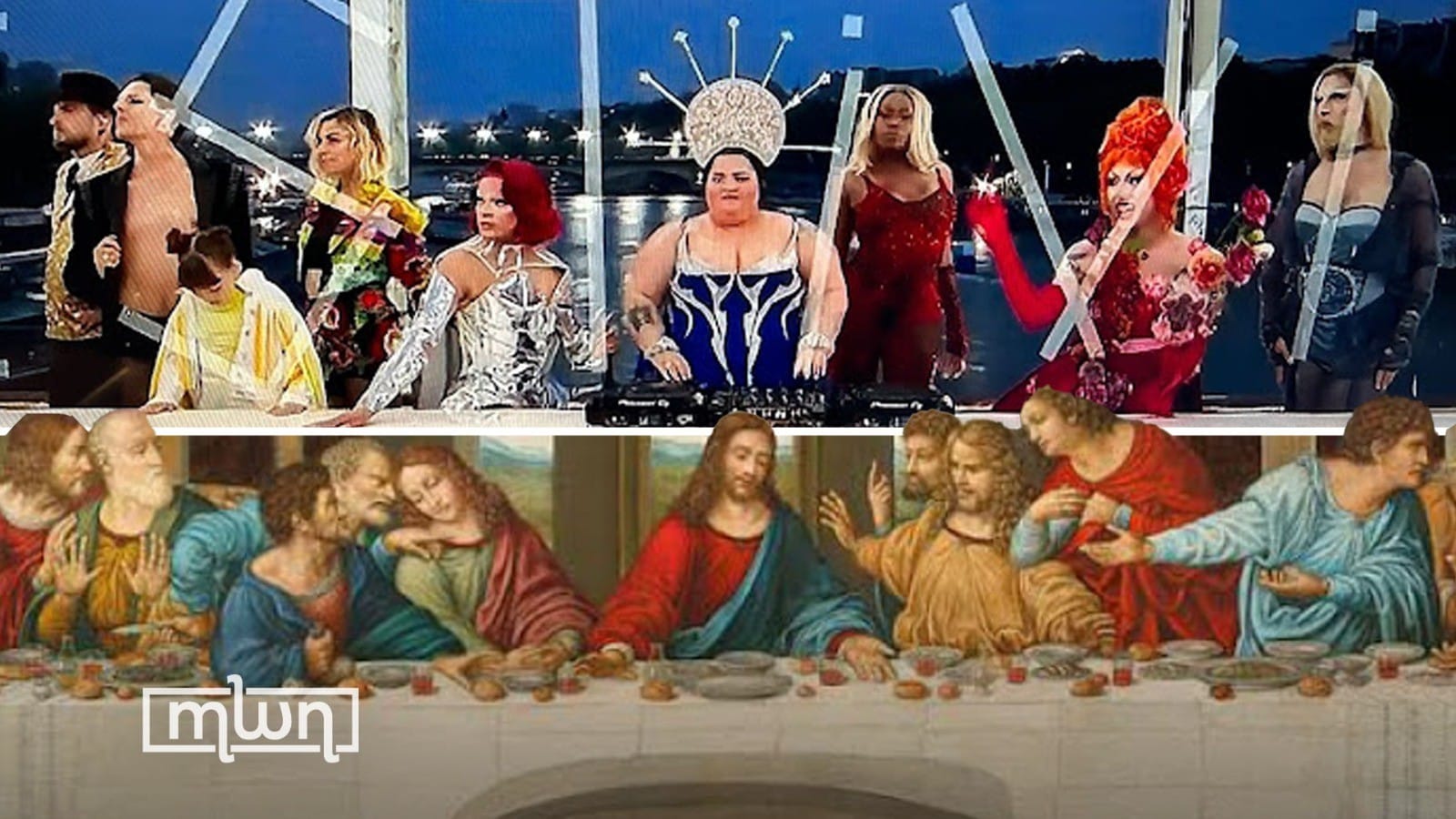
Marrakech – The opening ceremony of the 2024 Paris Olympics has sparked widespread controversy and condemnation from religious groups worldwide due to a performance that appeared to mock Leonardo da Vinci’s iconic painting “The Last Supper.”
The scene, which featured drag queens and other performers, has been criticized by the Catholic Church, Muslim authorities, and conservative figures as disrespectful and insulting to religious beliefs.
In response to the backlash, the International Olympic Committee (IOC) issued a formal apology.
Paris 2024 spokesperson Anne Descamps stated, “Clearly, there was never intention to show disrespect to any religious group. On the contrary, we intended to show tolerance and community. If people have taken any offence, then we are sorry.”
However, amidst the global outcry, Moroccan Christians have expressed a different perspective on the controversial performance.
Adam Rabati, pastor of the Moroccan Glory Church in Temara and president of the Union of Moroccan Christians, shared his thoughts on the matter in an exclusive interview with Morocco World News (MWN).
Rabati believes that the performance sends a valuable message to countries that continue to oppress and discriminate against the LGBT community.
Read also: King Mohammed VI: Morocco Leads the Way in Tolerance, Religious Freedom
“This opening ceremony was unique because it was the first one held outside the stadium, involving the general public. For us, this opening itself gives a strong signal to countries that persecute homosexuals and transgender people,” he said.
The performance showcased the spirit of tolerance within Christianity, Rabati further argued, explaining: “The idea of Christ leads us to think of freedoms, modernity, and this is something very beautiful. If Morocco, as it prepares for major international events, could be one of the pioneering countries to send strong signals in its opening ceremonies, it would be wonderful.”
As Morocco gears up to host the 2030 World Cup and the 2025 African Cup of Nations, Rabati urged the Moroccan government to not only build stadiums, but to also lay the necessary foundations for a society that is open, accepting of others, and upholds freedom of expression.
“It is the duty of the government, as it builds the grounds in the stadiums, to also build a platform for society to be an open society that accepts others and has freedom of expression when it comes to presenting noble messages for others,” he argued.
Rabati further explained that the depiction of Jesus in the Last Supper scene, which symbolizes unity and priesthood, conveyed a message of unity to the entire world, particularly for oppressed and marginalized individuals and groups.
The Union of Moroccan Christians has been working towards building a modernist, liberal mindset that encourages Moroccan Christians to be open-minded and non-extremist.
“We are happy, and Morocco should be one of the first countries to have people who present messages for the oppressed groups in the world,” Rabati emphasized.
While the controversy surrounding the Paris Olympics opening ceremony continues to unfold, Moroccan Christians view it as an opportunity to promote a message of acceptance, tolerance, and progress.