
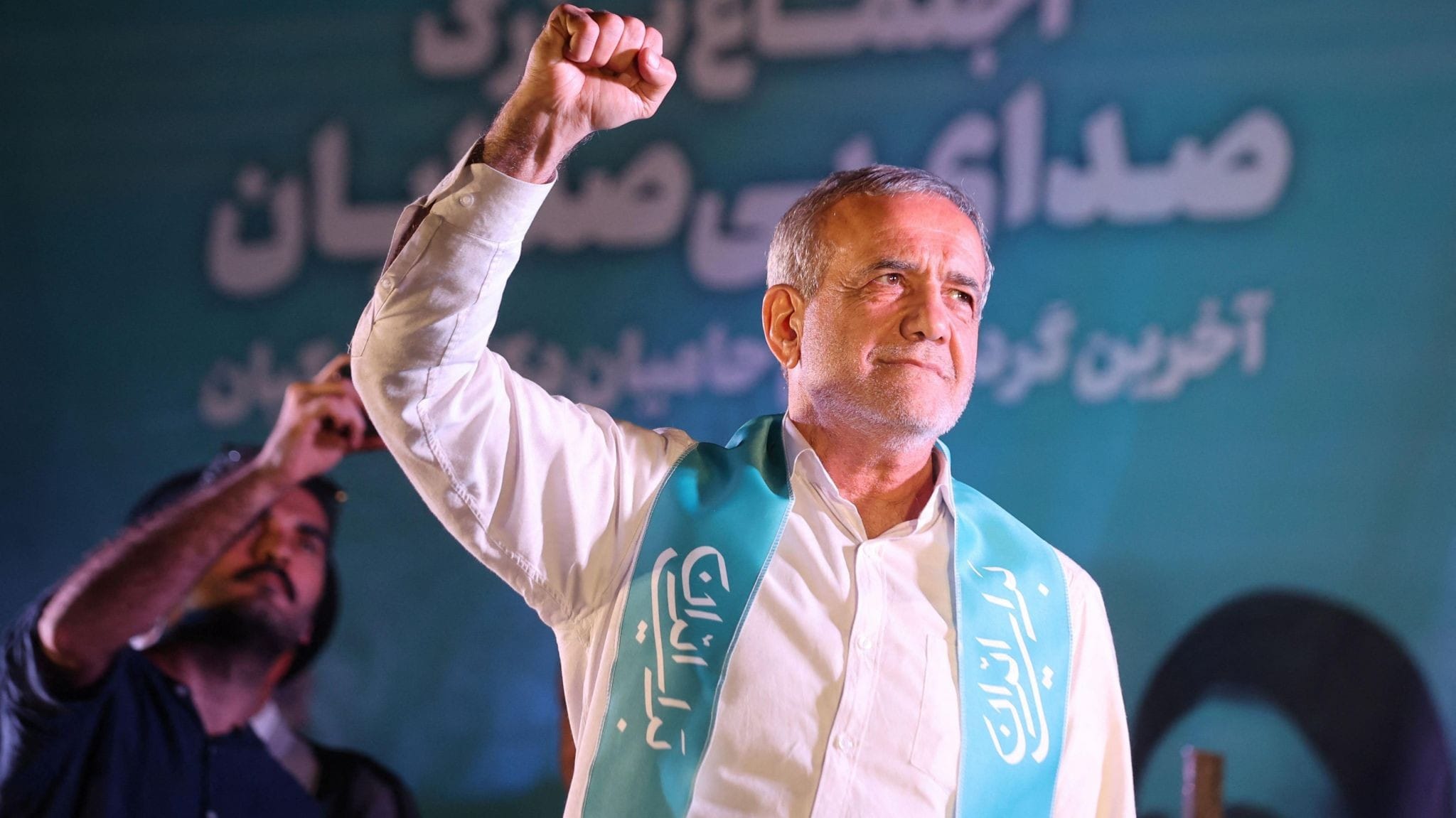
Rabat – Centrist candidate Masoud Pezeshkian has won Iran’s presidential election run-off against Saeed Jalili, a hardline conservative, the country’s Ministry of Interior announced today.
Pezeshkian secured victory with an official tally of 16.3 million votes to Jalili’s 13.5 million, amid a low voter turnout of 49.8%.
Originally scheduled for 2025, the elections were expedited following the tragic death of President Ebrahim Raisi in a helicopter crash in May.
Pezeshkian took to social media platform X to thank the Iranian people for their support during the election, emphasizing that his victory marks the beginning of a new journey together.
He pledged to walk hand in hand with the Iranian people as he promised to uphold their trust and work tirelessly for their interests.
“The path ahead is challenging, but it will only be made smooth with your support, solidarity, and trust. I extend my hand to you and solemnly vow not to leave you alone on this path,” he said.
The incoming president, currently a member of parliament representing Tabriz, awaits parliamentary ratification of his resignation before assuming office. This procedural step precedes endorsement by Iran’s supreme leader and an official inauguration expected before August 5.
Read also: Josep Borrell: Get Rid of Iran’s Nuclear, Then Talk about its Interventionism
Pezeshkian’s win signals a turn towards reform, endorsed by a wide spectrum of international leaders, including regional neighbors Qatar, Oman, Kuwait, and Iraq, who have extended their congratulations.
Pezeshkian’s victory has sparked optimism among supporters, particularly regarding promises of social justice, economic reform, and a more open international stance. However, challenges lie ahead as he navigates balancing reformist agendas with Iran’s established political framework and international relations.
Key global figures, including Chinese President Xi Jinping and Russian President Vladimir Putin, have conveyed hopes for strengthened bilateral ties under Pezeshkian’s leadership.
Pezeshkian’s presidency is set to address pressing issues such as economic instability, exacerbated by sanctions, and Iran’s nuclear policy amid ongoing international scrutiny.
“If we wish to improve on economic issues and also establish relations with the world in order to grow, we must resolve the cruel sanctions through a variety of means,” he said in a debate before the polls.
His proposed strategies include renegotiating the Joint Comprehensive Plan of Action (JCPOA), also known as the Iran nuclear deal. The agreement was reached in 2015 between Iran and the P5+1 (the US, United Kingdom, France, Russia, China, and Germany).