 Join on WhatsApp
 Join on Telegram
Doha – Morocco announced last month its plans to purchase $27.5 million worth of advanced seawater desalination technology from US company Energy Recovery as part of efforts to address the country’s growing water scarcity challenges.
According to a new report from Fitch Solutions, a division of the Fitch Group, this investment is part of Morocco’s goal to provide half of its drinking water supply through desalination by 2030.
The desalination projects that will use the new technology “are expected to produce more than 1mn cu m of potable water per day, which represents an increase of approximately 189.0% from the current desalination capacity of around 0.53mn cu m per day,” Fitch stated.
The report notes that Morocco currently lags other North African countries in desalinated water production per capita.
While the targeted government investment is seen as positive for Morocco’s Resource Scarcity risk score in Fitch’s ESG Country Index, the report cautions that “water scarcity will remain a significant drag on the economy” in the coming years despite Morocco outperforming most regional peers on this metric.
The tourism sector, which accounts for about 7% of Morocco’s GDP, is expected to particularly benefit from the desalination projects.
“Tourism… has faced water use restrictions during peak seasons, particularly in regions such as Casablanca-Settat and Rabat-Salé-Kénitra, affecting public and private amenities,” according to Fitch.
“Targeted regional investments in desalination have however shown promise,” the report noted, pointing out that Agadir’s desalination plant has been helping prevent water rationing in that major tourist hub since 2021.
Read also: Renewables and Desalination: WSJ Commends Morocco’s Innovative Approach to Water Scarcity
Agriculture, representing around 10% of GDP, will likely see a more limited positive impact in the near-term.
Fitch further points out that as of 2022, “approximately 80.0% of Morocco’s cultivated area was reliant on rain-fed agriculture, which means other investments in water infrastructure will be required for agriculture to benefit more from desalination.”
The sector has been hit hard by recent droughts, with wheat production plummeting from 7.5 million tonnes in 2021/22 to just 2.7 million tonnes in 2022/23, slashing the country’s wheat self-sufficiency ratio from 71.8% to 27.1%.
Looking ahead, climate change is expected to exacerbate water scarcity challenges across all sectors of Morocco’s economy, but especially agriculture.
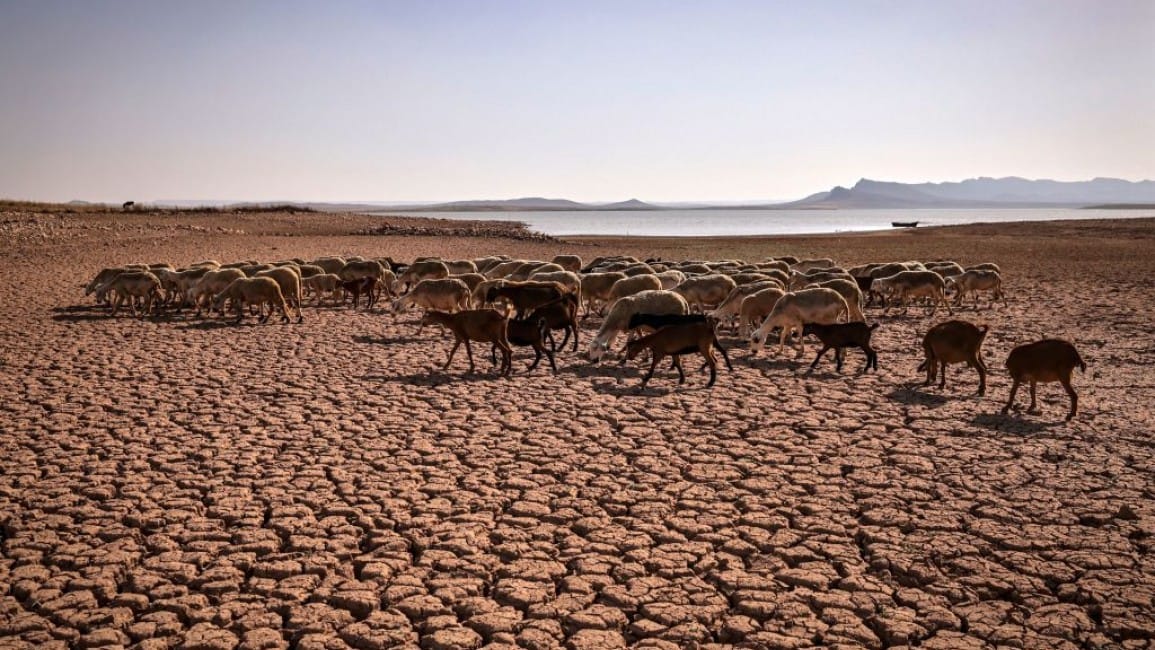
Fitch notes that as of late August, Morocco’s reservoirs were filled to just 27.4% of total capacity “despite heavy rains and flooding in late August in the typically arid southern regions.”
The report concludes that “Morocco, much like other markets in North Africa, is expected to become on average drier and hotter but exposed to periods of more intense rainfall due to climate change.”
Fitch’s ESG Country Index forecasts Morocco’s Natural Disasters risk will “remain elevated compared to 2018/2019, indicating the threat to the economy of greater exposure to natural disasters.”