
 Join on WhatsApp
 Join on Telegram
Doha – The Spanish government has put out a tender for the lease with option to purchase four seismometers to study the seabed of the Strait of Gibraltar as part of the project to build a tunnel linking Spain with Morocco, which has garnered renewed interest in recent years following a new phase in bilateral relations.
According to Europa Press, the Spanish Company for Fixed Communications Studies through the Strait of Gibraltar (SECEGSA), under the Ministry of Transport and Sustainable Mobility, made the tender public for leasing four seismic sensors on the State Procurement Platform.
The campaign, named “Captain Manuel Catalán Morollón,” aims to conduct seismotectonic research in the Strait of Gibraltar and will last six months once the devices are delivered to the Royal Institute and Observatory of the Navy in San Fernando, Cádiz. The contract is valued at nearly €488,000, including taxes.
Spain and Morocco signed an agreement on the fixed link project between Europe and Africa in 1980, establishing two national companies, SECEGSA and SNED (National Company for Studies of the Strait of Gibraltar) on the Moroccan side, to study its feasibility.
Since then, several studies have been carried out to understand the geological, oceanographic, seismic, and meteorological challenges of the site, SECEGSA explains on its website. These include deep onshore surveys, geotechnical tests through a full-scale submarine gallery near Tangier, and another onshore gallery near Tarifa.
Seismographically, another deployment of three seismometers was already carried out in 2014 in collaboration with Spanish Navy ships, as recalled in the technical specifications of the current tender.
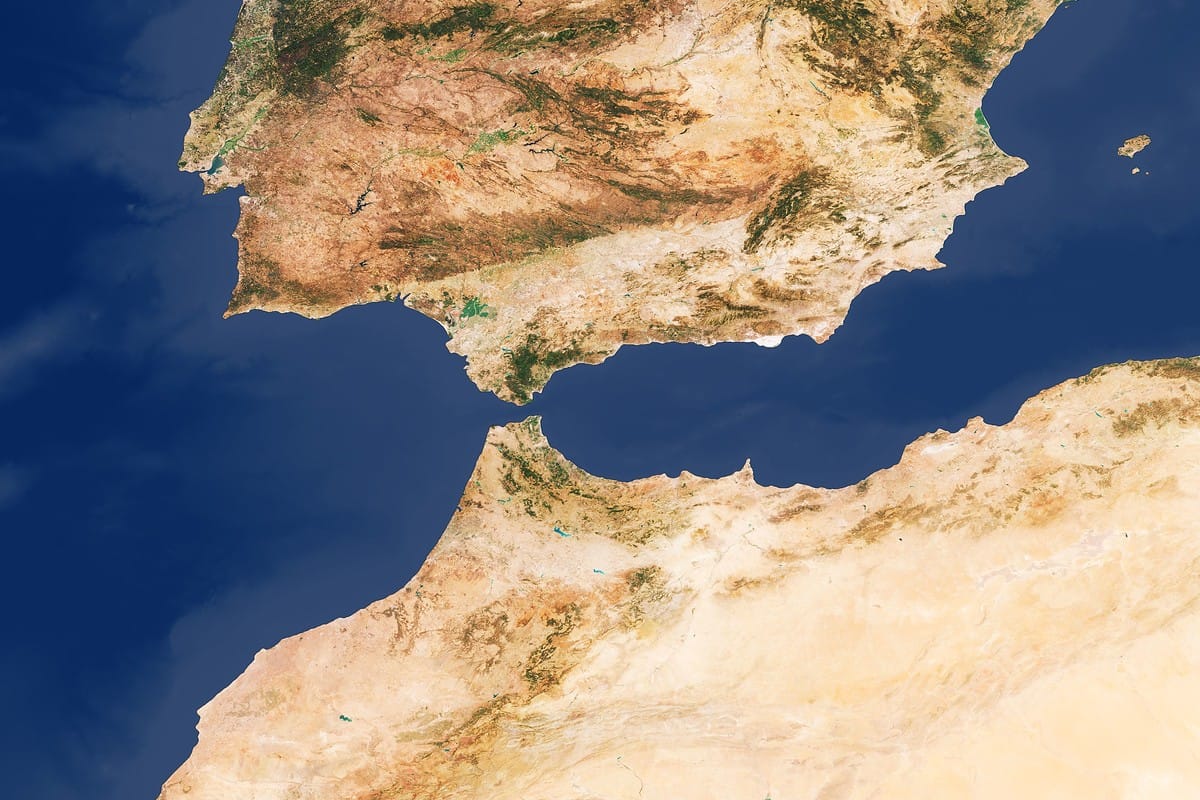
As a result of these studies, various bridge and tunnel options were evaluated to connect the two shores of the Strait, finally opting for a 38.5 km tunnel between Punta Paloma – near Tarifa – and Tangier, of which 27.7 km would be submarine, composed of two rail tunnels.
The project has regained political momentum following the new phase in bilateral relations initiated in April 2022 with the meeting of Spanish Prime Minister Pedro Sanchez and King Mohammed VI, after Spain’s declared support for the Moroccan Autonomy Plan for Western Sahara ended a serious diplomatic crisis.
During the high-level meeting between Spain and Morocco held in Rabat in February 2023, Spain’s then-Transport Minister Raquel Sanchez announced a new impetus for studies of what she called a “strategic project” for both countries.
In April, the project was reactivated with a telematic meeting of the Spanish-Moroccan joint committee, although the Ministry of Transport made it clear that for now it is only studies, and that new agreements between the two countries would be necessary for the tunnel’s realization.
The joint organization of the 2030 FIFA World Cup by Spain, Portugal and Morocco has generated new interest in the project.
SECEGSA highlights on its website that the creation of the “fixed link” will lead to unprecedented economic and social development for the adjacent areas of Andalusia and northern Morocco, promote growth of transport networks between Spain and Morocco, and create an unparalleled space for cooperation between the European Union and the Maghreb.
According to La Razón, which cites The Daily Telegraph, the National Moroccan Company for Studies of the Strait stated it was working to find financing for the project, previously declared to cost just over €7 billion. The deepest point would be 475 meters below sea level. The tunnel plans would connect Punta Paloma in southern Spain and Malabata, east of Tangier in Morocco.
Lombardi Engineering, a Swiss company contracted in 2006 to draft the design of a rail tunnel, compared the tunnel’s construction to the Channel Tunnel but said the depth of the Strait and geological conditions would make construction more complex.
This is due to the presence of two deep Quaternary clay channels in the middle of the Strait and a major geological fault, the Azores-Gibraltar Transform Fault, which has caused earthquakes in the region.
Moroccan sources state that the tunnel will significantly boost the development of its surrounding areas, improving logistics, streamlining infrastructure, enhancing storage facilities, and lowering transportation costs.
In this perspective, the specific conditions of the Strait of Gibraltar and adjacent territories are particular and even exceptional with three large ports (Algeciras, Tangier, and Tanger Med) and two medium-sized ones (Cádiz and Ceuta).
Read also: Spanish Firm Conducts Seismic Study for Morocco-Spain Underwater Tunnel