
 Join on WhatsApp
 Join on Telegram
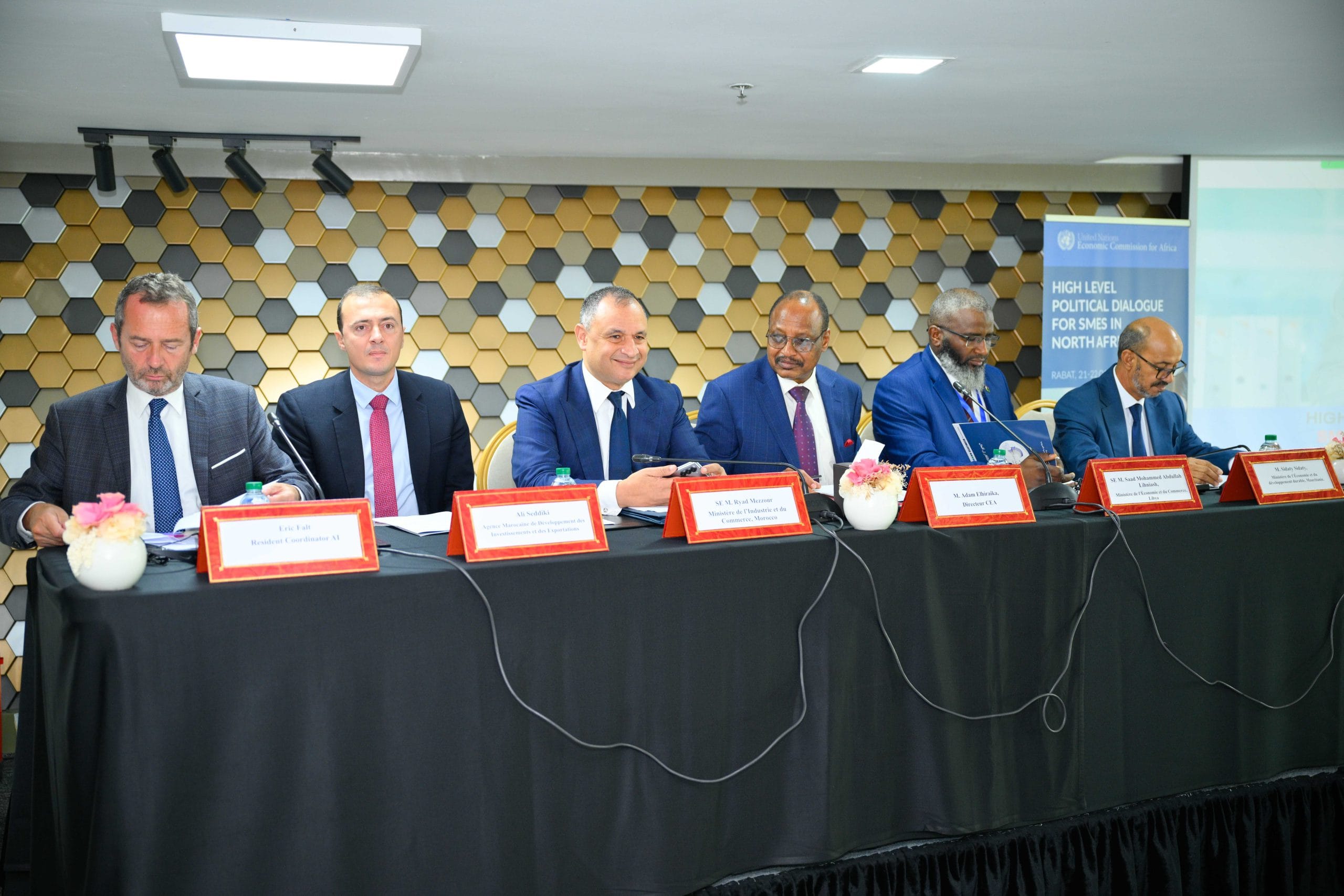
Rabat – The Office for North Africa of the Economic Commission for Africa (ECA) has wrapped up a two-day high-level policy dialogue focused on small and medium enterprises (SMEs) in North Africa, held in Rabat, Morocco.
This dialogue marks the end of a two-year initiative by the ECA Office for North Africa, which included organizing a series of workshops aimed at supporting women-led enterprises in Libya, Mauritania, Morocco, and Sudan. These sessions covered timely essential topics like access to finance, market dynamics, digitalization, and climate challenges.
Adam Elhiraika, Director of the ECA office for North Africa, noted in a statement on the event the importance of the discussions in fostering an enabling environment for SMEs.
“We explored how policy issues can facilitate a more significant contribution from SMEs to North Africa’s economic transformation, enhancing resilience, access to finance, sustainable growth, and leveraging opportunities presented by the African Continental Free Trade Area (AfCFTA),” he was quoted as saying in a press release.
The policy dialogue convened senior officials from Libya, Mauritania, and Morocco to identify and recommend strategies for bolstering the resilience of North African SMEs in the face of economic and climate-related challenges.
Key discussions focused on the role of SMEs in fostering economic diversification and gender inclusivity, exploring financing innovations, climate adaptation strategies, and addressing the effects of policy distortions on productivity, innovation, and integration into global value chains.
Riad Mezzour, Morocco’s Minister of Industry and Trade, noted the critical role of SMEs in the economy. “SMEs represent the backbone of our economic framework. While about 50% survive their first five years, we recognize that this is a strong figure,” he was quoted as saying.
He also discussed Morocco’s supportive policies, which include improved access to public markets, certifications, favorable payment terms, and initiatives aimed at greening the sector.
The dialogue underlined the potential of women-led enterprises in North Africa to drive economic growth, diversification, job creation, and inclusive development. However, numerous barriers remain.
These include limited access to finance, property, markets, and networks, which hinder their ability to scale and participate in formal markets. Consequently, many operate in smaller markets and the informal sector, restricting their growth and trade opportunities.
Eric Falt, Director of the UNESCO office for the Maghreb, pointed out during the discussions the disparity in leadership roles within SMEs, noting, “In Morocco, while SMEs account for 86% of formal employment, women lead only 15.3% of newly established enterprises, with slightly over 12% in leadership positions.”
Founded in 1958 by the United Nations Economic and Social Council (ECOSOC) as one of the organization’s five regional commissions, the ECA is tasked with advancing the economic and social development of its member states, encouraging intra-regional integration, and enhancing international collaboration for Africa’s development.