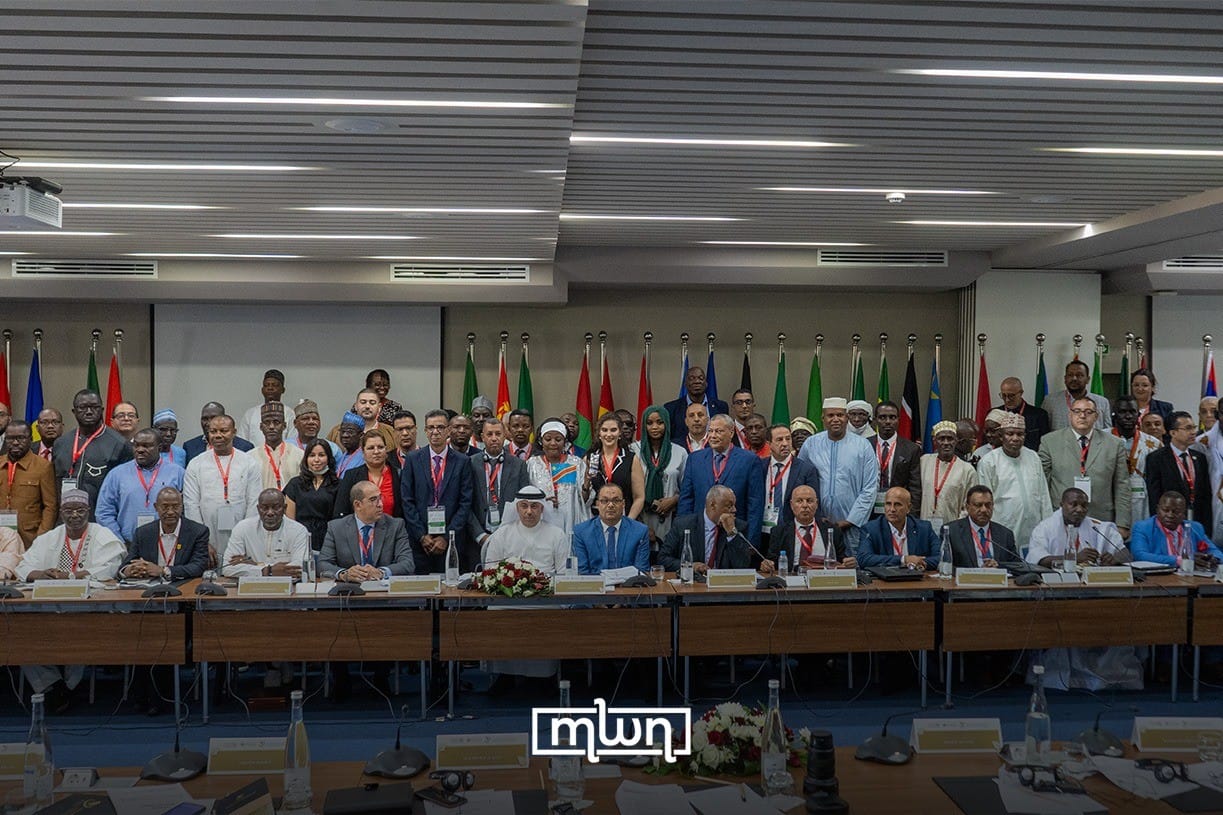
Tangier – LOGITERR 2024 officially commenced today in Tangier, famously known as “The Bride of the North,” at the Place Mövenpick Malabata.
Running from October 22 to 25, the event is organized by the City Council of Tangier, the African Union of Transport and Logistics Organizations (UAOTL), and CGLU Africa.
The forum brings together key figures, professionals, and innovators from across the mobility, transport, and logistics sectors to engage in critical discussions on Africa’s logistical transformation.
The exhibition presents advanced solutions to address the continent’s evolving mobility and transport needs, ensuring that logistics systems are prepared to support Africa’s industrial and economic growth.
A ceremony of recognition
Sponsored by major industry stakeholders, the first day began with a formal ceremony that included the Moroccan national anthem and the UAOTL anthem.
Participants from various African nations were recognized for their contributions, with trophies awarded to representatives from Libya and Nigeria.
The opening ceremony was followed by a speech from Dr. Mustapha Chaoune, President of UAOTL.
Reflecting on the event’s significance, he stated: “Today marks a historic milestone for transportation in Africa. We are prepared to address any questions you may have.”
This statement reflects the forum’s broader vision of establishing a unified and sustainable transport system to foster Africa’s structural transformation.
Origins of UAOTL
Dr. Chaoune also recounted the origins of UAOTL, which trace back to March 14, 2018, when the union’s founding act was signed in Marrakech.
He emphasized the importance of aligning Africa’s legal frameworks with the union’s broader objectives, stating: “This occasion is about aligning our legal frameworks with our objectives to create a future of solutions for all African nations.”
Technology of growth
SEM Amara Kallon, Minister of Public Administration and Political Affairs of the Republic of Sierra Leone, stressed the need for Africa to enhance the efficiency and sustainability of its supply chains.
With the continent’s population projected to surpass 2.5 billion by 2050, Kallon indicated that these supply chains will be critical for Africa’s industrialization and economic growth.
“With a population projected to exceed 2.5 billion by 2050, our economies are poised for rapid expansion, creating a large, youthful, and dynamic market,” he said. “However, for Africa to truly harness its potential, there is an urgent need to focus on the efficiency and sustainability of its supply chains, as they will underpin the next phase of industrialization and development.”
Kallon further addressed the role of technology, arguing that “the question is not whether technology will have negative effects, but how we can harness it to work in our favor.”
He also emphasized the importance of striving toward the goals of the African Union’s Agenda 2030, stressing: “We must walk tough to achieve the Africa we want to see by 2030.”
The importance of unity
Dr. Kasim Ibrahim Bateya, First Deputy President of the African Transport and Logistics Union, underscored the significance of the event, calling it one of the most important for Africa in terms of transportation and logistics, with 37 participating countries.
“This event brings us closer to our goal. We already have the resources – minerals and knowledge – all we need now is unity and communication.”
‘A historic milestone’
As the first day of LOGITERR 2024 came to a close, it concluded with a major conference led by Dr. Mustapha Chaoune and other prominent participants.
During the conference, Dr. Chaoune emphasized the forum’s mission to address pressing issues in Africa’s transport and logistics sectors, reaffirming UAOTL’s commitment to regional integration and collaboration.
“Today marks a historic milestone for transportation in Africa. We are prepared to address any questions you may have,” he told Morocco World News as he opened the floor for discussions on Africa’s logistical challenges and the opportunities ahead.
With two more days of keynotes, panels, and networking events on the horizon, the journey toward building sustainable logistics systems for Africa is just beginning.