
 Join on WhatsApp
 Join on Telegram
Doha – Morocco has launched an ambitious project to restore wildlife to the desert regions of Jerada Province in the northeast of the country by reintroducing two threatened species: Cuvier’s gazelles and Barbary sheep (mouflons).
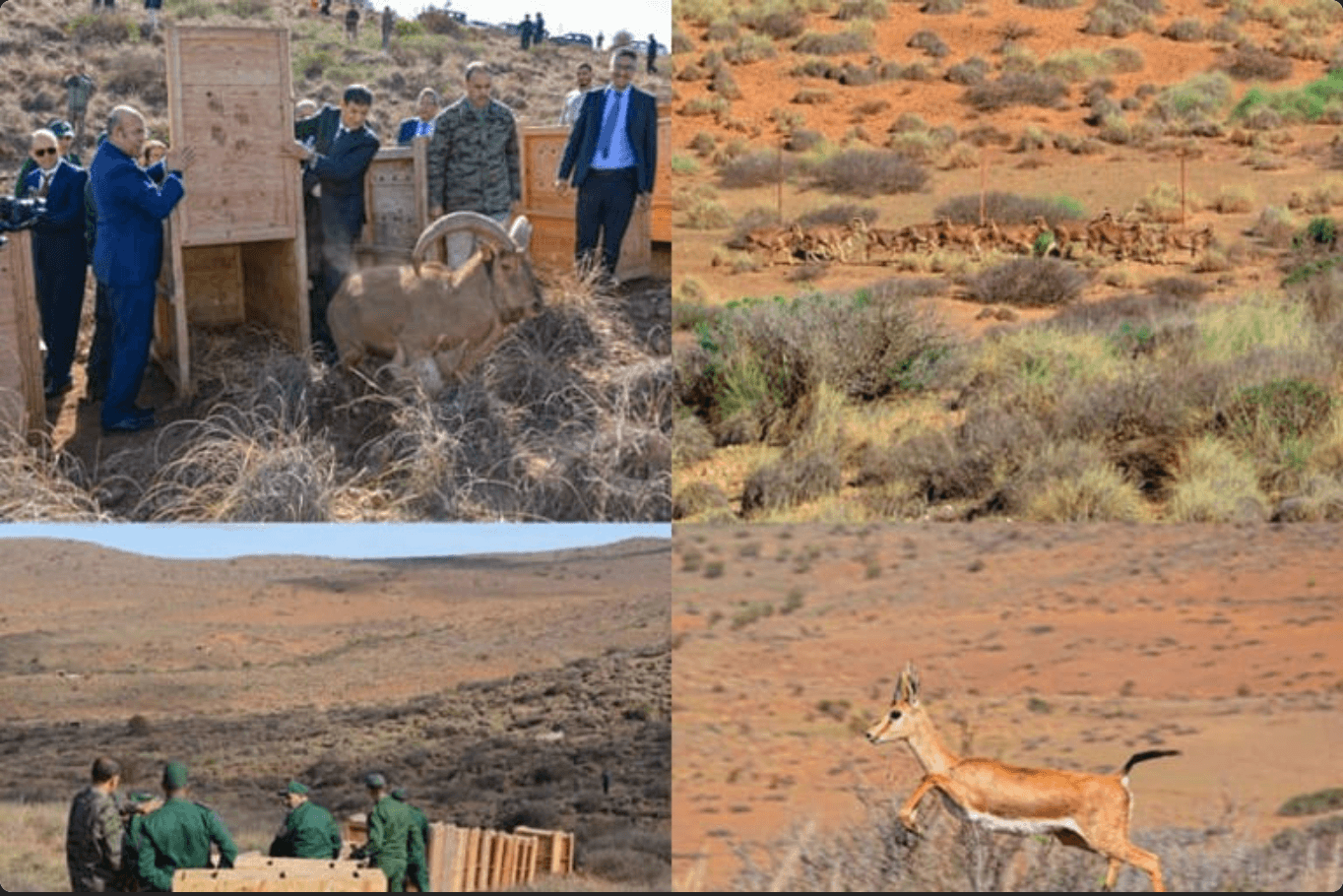
Last week, the National Agency for Water and Forests (ANEF) began releasing these animals into the newly established Chekhar Natural Park, located about 100 kilometers south of the city of Oujda, as reported by the Spanish news agency EFE.
The Cuvier’s gazelle and the Barbary sheep, both classified as vulnerable species on the International Union for Conservation of Nature’s (IUCN) Red List of Threatened Species, have been disappearing from the area due to poaching and the degradation of their natural habitat.
The reintroduction program aims to gradually bring these species back to revitalize the desert ecosystem.
On Tuesday, October 15, around 20 Barbary sheep (eight males and 12 females), 14 Cuvier’s gazelles (eight females and six males), and eight porcupines were released into a twenty-hectare fenced area within the park.
“We first released them in this acclimatization zone, and later, when we see how their numbers evolve, we will apply the soft release protocol without forcing the animals,” explained Zouhair Amhaouch, head of ANEF’s Department of National Parks and Protected Areas, to EFE.
The acclimatization enclosure is equipped with water troughs and supplementary food to help the animals adapt in the initial stages until they regain their autonomy.
According to Amhaouch, the Barbary sheep require two to three months before being definitively released into the wild, while the gazelles may need a longer period and will be monitored before release.
Morocco is home to the world’s largest population of Cuvier’s gazelles, an endemic species also found in Algeria and Tunisia, with around 5,000 individuals living in the wild or semi-captivity in natural reserves, mainly in the Anti-Atlas and High Atlas regions.
As for the Barbary sheep, which prefer mountainous areas, there are approximately 6,000 individuals in the country.
ANEF expects these species to multiply and restore the wildlife cycle in the area, as they can also serve as a food source for predators such as vultures. In the future, the agency says they plan to reintroduce other species like the red-necked ostrich.
Morocco’s commitment to protecting endangered species
The Chekhar Natural Park project, set to begin in 2025 with a budget of MAD 80 million (approximately $7.8 million), will include the reintroduction of protected species and the development of ecotourism infrastructure.
This project follows the conclusive results of the public surveys conducted for the park’s creation, initiated by the Ministry of Agriculture, Maritime Fisheries, Rural Development, and Water and Forests.
With these initiatives, the park has been officially inaugurated as a protected zone, covering around 60,000 hectares. This addition contributes to the dozen sites that Morocco plans to designate as protected by early 2025.
The reintroduction of fauna is just one aspect of the Chekhar project. In parallel, a vast program for the rehabilitation of natural ecosystems is being implemented, including the restoration of green oak and juniper forests and the sustainable management of natural resources to promote the coexistence of human activities with wildlife.
According to ANEF’s Director General, Abderrahim Houmi, Morocco has committed to increasing the number of protected areas in line with the UN Convention on Biological Diversity.
Houmi said to EFE that the park’s creation has received the support of the local population and politicians. In addition to the conservation efforts, he said the park aims to become a hub for ecotourism, with infrastructure being developed to accommodate visitors while minimizing the impact on the environment.
The park will offer activities such as hiking and paragliding, aspiring to become a benchmark destination for ecological tourism in Jerada, a province traditionally associated with its former coal, zinc, and lead mines, as well as mining accidents.
Guided wildlife observation hikes, educational tours on local flora, and workshops to raise awareness about the importance of preserving threatened species will also be among the activities offered.
Read also: Morocco Intensifies Efforts Against Poaching Ahead of Hunting Season