 Join on WhatsApp
 Join on Telegram
Doha – In recent months, Morocco has demonstrated increased cooperation with Spain in curbing waves of illegal immigration, as observed firsthand by reporters from the Spanish newspaper El Debate.
In late August, El Debate sent a special envoy to the Morocco-Ceuta border area, who witnessed the extensive measures taken by Moroccan authorities to secure the frontier.
“The approximately three kilometers separating the border with Ceuta from the center of Castillejos, the first town on Moroccan soil, is absolutely shielded with fences and spirals of barbed wire that prevent the passage of any person to the sea to attempt to swim across the Tarajal breakwater that separates Ceuta from Morocco on its northern border,” the reporter recounted.
This collaboration was recently confirmed by Spanish Defense Minister Margarita Robles, who stated on September 5 that Spanish army detachments in Ceuta and Melilla have reported Morocco’s cooperation in managing border immigration as being “total and absolute.”
Foreign Minister José Manuel Albares also praised Morocco’s efforts in Congress on September 18, noting it was evident in the latest events in Ceuta.
In mid-September, the professional association Justice for the Civil Guard (JUCIL), which has representation in Ceuta, applauded the joint stance of the “police shielding” on both sides of Ceuta’s border being carried out by Spain and Morocco.
However, it reiterated its request to Interior Minister Fernando Grande-Marlaska to demand greater cooperation from Morocco in border control and in the fight against drug and human trafficking mafias.
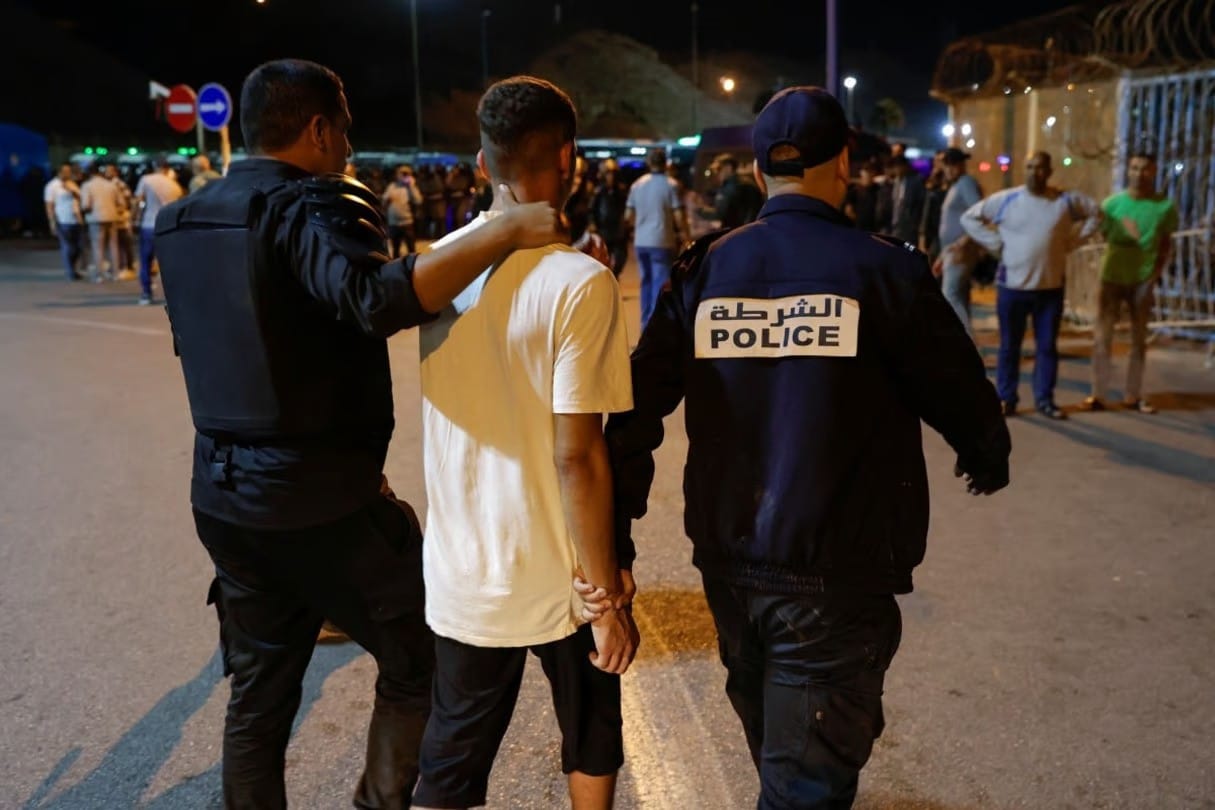
Moroccan security forces have thwarted several mass attempts of illegal entry into Ceuta organized via social media in recent weeks.
On September 13, a large deployment of Moroccan gendarmerie and other security forces with numerous agents and vehicles prevented hundreds of immigrants from jumping the border fence.
Thus far, at least 60 people have been arrested for inciting and organizing the “massive operation of illegal immigration.”
Moroccan authorities reported that in August alone, their security forces prevented the arrival of nearly 15,000 irregular immigrants in the autonomous cities, either by swimming or jumping fences.
While the increased cooperation is a positive development, some experts have claimed that Morocco has used illegal immigration flows as a means of exerting pressure on Spain, suggesting a “hybrid strategy” in Morocco’s approach to Spanish territories in North Africa. However, the current situation on the ground paints a different picture.
Morocco has been grappling with a complex and multifaceted migration crisis, as the country serves as both a transit point and destination for migrants from various regions seeking to reach Europe.
The challenging socio-economic conditions, coupled with the loss of hope and lack of trust in the future among some Moroccan youth, have contributed to the desperate measures taken by those attempting to cross into Spanish enclaves.
The government’s apparent lack of concrete solutions, as well as the growing gap between political actors and citizens, have further compounded the issue.
Read also: Spanish Media Spotlight Morocco’s Robust Security Deployment Amid Mass Migration Attempts