 Join on WhatsApp
 Join on Telegram
September-October is known for being the United Nations season. A fair of promises. A flea market for some, a godsend for others. A series of disappointments, for the most part. Speeches delivered in front of a half-full, half-empty room: The Glass Saga. And sometimes, a completely empty room. Informed observers draw conclusions according to what they deem be a fair assessment.
People are questioning diplomats about their inability to promote themselves appropriately, which hinders their country’s delegation from striking deals and presenting their case effectively. Speechwriters are on edge waiting for the texts they helped write to hit the mark. By the same token, they fear that their performances might miss the mark.
Special correspondents from official or semi-official news agencies are invited to write moderate or triumphant texts depending on the outcome of the issues in which their countries are involved. This is not to mention the consultants pampered on television studios who must scrupulously respect the editorial line of the shareholders of the channels that pay them, or risk being fired. In short, it is a process of déjà vu. So why bring it in?
Don’t get me wrong, I’m not going to talk about it as if nothing had happened. I am interested in this because the annual meeting of the United Nations General Assembly is also characterized by the presentation of the reports of the Secretary-General’s Personal Envoys to the various conflicts as well as the reports of the heads of mission of the United Nations peacekeeping forces around the world.
In this regard, I borrow the phrase “Special Envoy” and combine it with the phrase “Personal Envoy” to share a reflection on the role of the Personal Envoys of the Secretaries-General of international and regional organizations appointed to mediate inter-state conflicts. The enthusiasm and skepticism that accompany their initial appointment often have a premonitory effect on the outcome of their mission.
Stirring up wind for some
The reports that these envoys submit to the Secretary-General of the regional or international organization are expected as a promise or as a farewell kiss. Along the way, the steps taken to get the mission to achieve its goal give an idea about the real significance of the narrative pertaining to the management of international conflicts.
A first distinction is necessary at first glance. The Special Envoy is appointed by a state to deal with a particular issue concerning interstate bilateral conflicts. He is a kind of ambassador-at-large whose mandate is well defined. He is in charge of prospecting for the means capable of creating a breach or achieving a breakthrough likely to relieve pressure congestion. The United States is considered to be a champion in the appointment of Special Envoys of this kind.
One example is the appointment of Robert Malley as Special Envoy for Iran in 2021. But other countries temporarily resort to this practice for epistolary crises that regain tension to the point of threatening regional stability. Uzbekistan has done so, twice appointing Ismatulla Irgashev (2006 and 2023) as Special Envoy for Afghanistan. Pakistan has also appointed Assif Durani as Special Envoy for Afghanistan (2023-2024).
In addition, the European Union has appointed Bernard Quintin as Special Envoy for the Great Lakes in 2022. He was succeeded by Johan Borgstam in 2024. Russia has appointed Zamir Kabulov as its Special Envoy for Afghanistan in 2022. China did the same by appointing Deng Kijun and Lui Jian as Special Envoys for Afghan Affairs in 2015 and 2020, respectively.
Sometimes, some countries join the mass out of mimicry or powerlessness to prevent the initiative in a given geopolitical configuration from slipping through their fingers. This was the case for Algeria, which created seven positions of Special Envoys in 2021. Special Envoys to restore the image of a half-hearted diplomacy, but the main objective has been to try to regain the upper hand in the regional conflict over the Moroccan Sahara. A process that fizzled out.
The Special Envoy may be a goodwill ambassador appointed by one state to act as a messenger to another state, but whose mission is short-term. He can carry specific messages to pave the way for even more serious negotiations, provided the conditions are met. He may also be tasked with assessing the evolution of the situation from afar in a country with which his own country’s relations are changing in a rollercoaster fashion. There would be no direct correlation, but undermining his work in the international arenas is assiduously undertaken.
The Personal Envoy, on the other hand, is appointed by the secretary-general of a regional or international organization. This appointment is the result of a long process and must be ratified by a clear resolution that clearly defines his mission. In this case, this means the Envoys of the League of Arab States and the Secretary-General of the United Nations.
One of the best-known examples is the appointment of Lakhdar Ibrahimi, an Algerian national, as UN Special Representative for Afghanistan in 2001. He was also an important player in the negotiations leading up to the 1989 Taif Agreement on Lebanon. Another example to remember is that of the Moroccan Jamal Benomar, appointed as Arab League envoy to Iraq in 2004 and to Yemen between 2011 and 2015.
The appointment of Personal Envoys obeys a number of criteria that sound very clear on paper. But it is the result of steady work behind the scenes. This effort takes into account not only the interests of the countries in conflict but also their foreign allies and partners.
The balance of power, of course, is decisive in this case. Of course, there are international civil servants who work on this type of mission, but the most prominent are former foreign ministers, seasoned ambassadors, and sometimes former heads of state (the German Horst Köhler for the Sahara or the Nigerian Olusegun Obasango for the crisis in the Democratic Republic of Congo). They may be former secretaries-general of regional or international organizations (Kofi Annan, former Secretary-General of the United Nations, who was jointly appointed by the United Nations and the League of Arab States as Special Envoy for Syria in 2012).
The appointment is therefore not the result of chance. But the interpersonal element comes into play. This happens when the secretary general of a regional or international organization, himself a former foreign minister, appoints a former foreign minister colleague as a personal envoy. Personal affinity, reward for reciprocal services rendered in the past, or simply a recommendation from a great power (perhaps for the same reasons) are factors to be taken into account in this respect.
However, the mission responds to a well-defined roadmap, a kind of specification. It is framed by precise resolutions that leave no shadow of doubt. While the Personal Envoy is sometimes given leeway, this remains purely formal or technical.
So much so that all the Personal Envoys who wanted to distance themselves from the roadmap were either called to order or terminated their mandate. In absolute terms, this assertion would be unfair insofar as the end of the personal envoy’s mandate may occur at the request of one of the parties to the conflict or at his own request (Jamal Benomar, 2015-Yemen conflict; James Baker, 2004; Horst Köhler, 2019-Sahara conflict; Staffan de Mistura, 2018-Syria conflict; Geir Otto Pedersen, 2008-Lebanese crisis; and Lakhdar Ibrahimi, 2014-Syrian crisis).
The most advanced argument in this regard is based on the fact that the personal affinities of the Personal Envoy with one of the parties to the conflict may push him to go beyond his obligation of reserve and, even worse, his neutrality. The Personal Envoy remains first and foremost a foreign citizen whose country can adopt a new position on the conflict he deals with that is harmful to one of the parties. The Personal Envoy is then the target of pressure that can destabilize him or even make him deviate from the roadmap that has been drawn up for him.
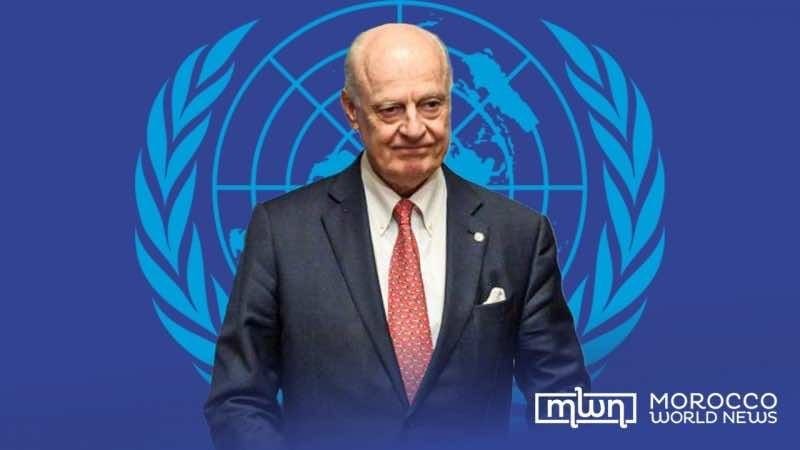
Recently, out of the blue, Staffan de Mistura, Personal Envoy for Western Sahara, threw a spanner in the process of resolving the Sahara issue. He suggested the partition of the territory between the Kingdom of Morocco and Polisario that was rejected in 2002 by all parties to this regional conflict. Indeed, James Baker, then Personal Envoy, proposed it at the pressure of Algeria. He failed to make it adopted by the UNSC and resigned in 2004.
De Mistura was reported as saying that if no progress was made in the upcoming six months, he would probably ask the United Secretary General to terminate his mission. There is no need to dig deep that Staffan de Mistura has failed so far to abide by the UNSC resolutions that have started a new momentum in 2007. He will probably resign real soon.
Sometimes personal interests come into play. They are the direct result of lobbying processes involving states, multinational companies, or religious organizations conveying extremist ideologies combining philosophical trends and controversial visions of Man and the Universe (the United States, the Republic of Korea, and some European countries harbor ideologues of the kind).
People share the view that, if a non-permanent country secures a seat on the UN Security Council, it will have a good chance of serving its foreign policy agenda by serving those of the other members, mainly the permanent member countries. Nothing could be more illusory. Most of the countries that have had this privilege have taken it at their expenses, not to say come out more entangled in their contradictions than they had been before the election to the post of non-permanent member.
It goes without saying that some countries, familiar with the reality of the UN system, have combined sitting on the UN Security Council with scoring points and obtaining positions in regional organizations. Of course, respect for quotas and rotation is indisputable within all organizations, but withdrawal or reciprocal support are means to reach compromise and mutual benefits. It is a kind of division of labor, but both withdrawal and reciprocal support rarely concern strategic positions.
Another approach used is to call on nationals sitting as judges in international courts of justice to win disputes in which the judge’s home country is involved. Here too, the service provided is fiercely negotiated. Yet, to my knowledge, it has never been established that such collusion had been reported or publicly denounced. However, suspicions exist, particularly during debates within the International Court of Justice prior to the publication of advisory opinions.
Advisory opinions were issued on African conflicts during the 1970s and 2000s, and the nationality of some judges was decisive in tipping the balance in favor of one of the parties. So much so that some judges prefer to write a dissenting or minority opinion in this case to clear themselves of any suspicion. It is also true that collusion (or manipulation) can be unconscious or induced.
In this case, the judge in question may not have properly deciphered the political-diplomatic signals sent to him in order to conform, like the Personal Envoy, to the practice of time management and avoid putting things upside-down.
The literature on the management of interstate conflicts is not sufficiently worded on the fact that epistolary conflicts and endemic conflicts are good business handled by major international actors. The latter promote time management and are reluctant to resolve conflicts definitively, particularly in issue areas.
These are spaces where the risks of direct military confrontations between the parties to the conflict are permanent. Similarly, spaces potentially conducive to future tensions are pushing these major players to be on the lookout to possibly take advantage of them.
The Personal or Special Envoys tackle the double mission of stirring up the wind and keeping an eye on the main actor, who has his finger on the trigger. This is one of many criteria established in the job description charters that enable candidates to be selected.
This observation legitimately opens the debate about allegiance and impartiality, on the one hand, and allegiance and complacency, on the other. It raises the issue of ethics and politics and throws a spanner in the politico-diplomatic games.
The management of international conflicts is a ping-pong game between the major state actors—those who control and condition other actors’ behavior—and the springboard actors, who play the role of strategic intermittents.
For the first category, the chessboard is wide. The major state actors have a clear vision of what they aim to achieve. They also have visibility that they frame through an arsenal of conventions and resolutions adopted within the organizations where they have their final say. For the second category, the specifications are simple. Springboard actors are instructed to conform to the written script. They must incidentally play the spoilsport for the purposes of diversion.
It is in this spirit, for example, that the League of Arab States has always refrained from seriously searching for solutions to inter-Arab conflicts. If it happens, a media uproar is noticed; this translates to an attempt by the pan-Arab Organization not to appear as a kind of empty shell in terms of the management of Arab conflicts that are obviously beyond its capacity.
Hands on the trigger for others
The same observation applied to the African Union at a time when it was under the diktat of a few countries anxious to control their geopolitical spaces by dividing up the roles of supporting each other from a distance. These state actors are South Africa in its East and Southern African space, Nigeria in its West African space, and Algeria and Libya (under Gaddafi) in North Africa.
So much so that these countries started panicking as soon as the management of African conflicts that they used as business was put on the back burner or taken care of exclusively by the United Nations. The most salient example is the regional conflict over the Western-Moroccan Sahara.
One may assume, without risk of missing the target that few are the special and personal envoys who have carried out their missions successfully. They have been called upon to play the role of sedative instead of prescribing the effective remedy the parties to the conflict have expected from them.
There are a few examples to sustain this very bare truth. Thus George J. Mitchell, who succeeded as US Special Envoy for Northern Ireland (1995-2001), failed when he tried to fulfill the same mission in the Middle East (2009-2011). Philip C. Habib had the same fortune with regard to the Arab-Israeli conflict (1981–1983). The Zalmay Khalilzad mission (2001-2005 and 2019-2020) in Afghanistan was cut short when the United States considered a different option regarding the Afghan crisis.
As for the Personal Envoys of the League of Arab States or the United Nations of Arab origin, the harvest was half-hearted, not to say that the mission failed. In this regard, we can mention Lakhdar Ibrahimi, Special Envoy to Afghanistan and Iraq in 2001, whose mission was fraught with pitfalls. Despite his experience and his reputation as a man of dialogue, Ibrahimi was forced to throw the towel.
Ibrahimi’s mission as League of Arab States envoy to Syria (2012-2014) was even more complex. Here too, he preferred to give up. Jamal Benomar faced the same hard time in Iraq (2006) and in Yemen (2011-2015). Ghassan Salamé, too, became entangled in the Libyan crisis (2017-2020) and left the stage.
It goes without saying that some conclusions have to be advanced. First, the nationality (or dual nationality) of the Special and Personal Envoys was important in the casting, but it did not, with a few exceptions, produce convincing results and, in any case, decisive results in the processes of inter-state or intra-national crisis management.
Secondly, political affinities or interpersonal relationships have sometimes distorted the dynamics set in motion for conflict resolution. This was the case with Zalmay Khalilzad in the Afghanistan civil war and Christopher Ross in the Western-Moroccan Sahara.
Thirdly, the Special and Personal Envoys’ mission is subject to pre-established arrangements that they must not taint in any way with any personal initiatives. They are requested to first refer to the main decision-makers, be they states or organizations.
Fourth, the management and resolution of interstate conflicts depends on the major international decision-makers. If regional and international organizations provide the appropriate forum for public discussion, the decisions that matter and strike deals are made elsewhere.
At the bottom of the wave, this is, in fact, the situation where the Special Envoys and the Personal Envoys find themselves stuck in. They are chosen to be excellent executors but never to be decisive actors in making decisions pertaining to security and stability in the various issue areas.
“Open secrets, you might say!” Yet, this is worth reminding those who believe that multilateralism neutralizes the bargaining capacity of individual states or stops regional and international interests working behind the scenes from having their say and sometimes controlling the whole game.