
 Join on WhatsApp
 Join on Telegram
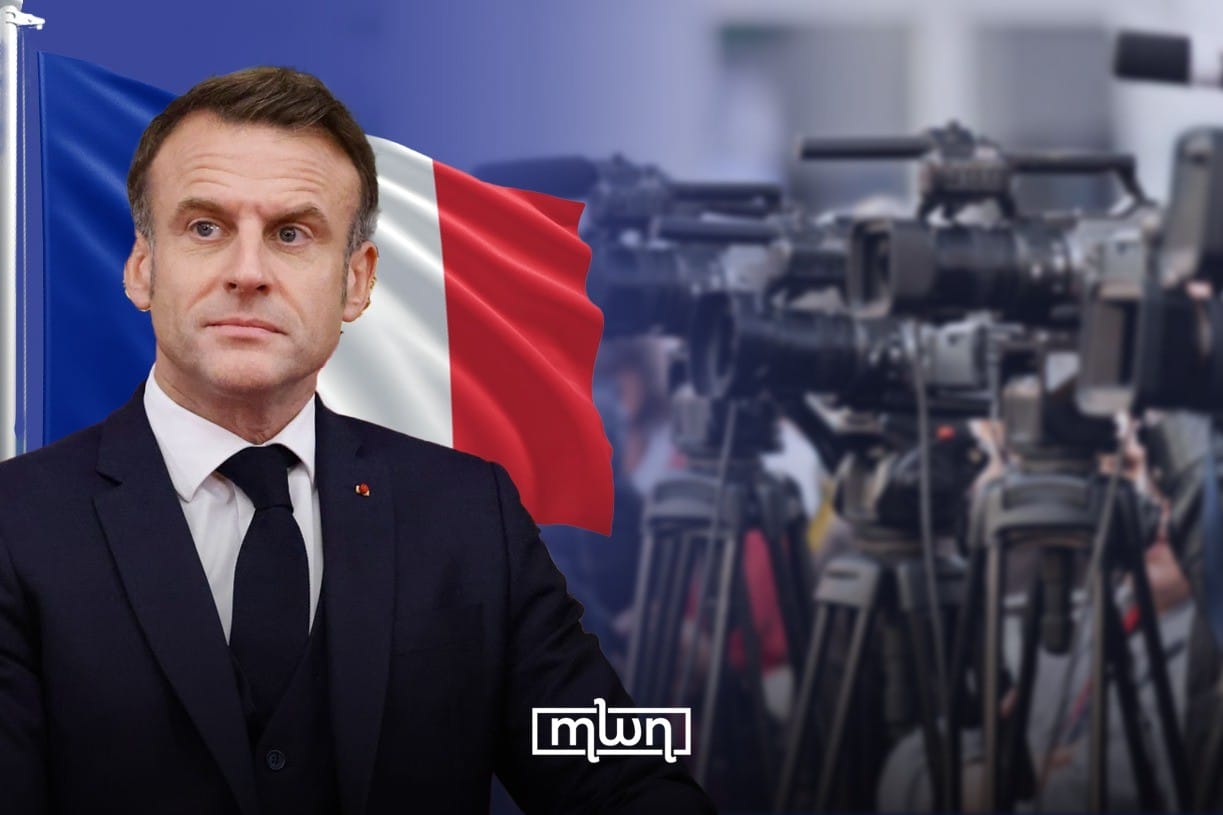
Doha – French President Emmanuel Macron touched down in the Moroccan capital of Rabat on Monday afternoon, kicking off a highly anticipated three-day state visit at the invitation of King Mohammed VI.
The trip, originally planned years ago but repeatedly postponed, is seen as a capstone to the recent thawing of relations between France and Morocco after a prolonged period of diplomatic tensions.
Macron, accompanied by his wife Brigitte and a delegation of over 100 French officials, business leaders and cultural figures, was greeted at the airport by the King himself in a sign of the visit’s importance.
A 21-gun salute welcomed the French head of state, who then traveled by motorcade with Mohammed VI to the royal palace for a private meeting.
The wide-ranging visit agenda reflects the close, complex and sometimes tumultuous relationship between France and its former protectorate.
It encompasses political dialogue, economic cooperation, educational and cultural partnerships as well as thorny issues like the Western Sahara territorial dispute and the integration of the Moroccan diaspora in France.
Several dozen cooperation agreements and commercial contracts were signed.
Diplomatic ties between Paris and Rabat had chilled in recent years over matters such as Moroccan intelligence allegedly using Pegasus spyware to hack French phones, France sharply reducing visas for Moroccans and perceived French support for Algeria in the Western Sahara dispute.
But relations have warmed considerably in 2024, starting with France explicitly backing Morocco’s Autonomy Plan for the disputed territory in July.
French newspapers have given extensive coverage and analysis to Macron’s visit and the rekindling of Franco-Moroccan ties:
The left-leaning daily Le Monde focused on the economic significance of the trip, noting the over 40 French industry leaders accompanying Macron in hopes of winning new business.
“The visit of the French president could translate into a shower of contracts,” it predicted, listing potential deals for companies like Airbus, Engie and Alstom.
Le Monde also highlighted how France hopes “to remain the privileged provider for Morocco” for major infrastructure like its planned high-speed rail expansion.
The conservative Le Figaro hailed Macron’s visit as “the hour of reconciliation” after “years of squabbling” between the two countries.
Adopting a geopolitical lens, the paper noted Morocco’s growing role as a hub for French influence and business in Africa, the Middle East and the Mediterranean.
But Le Figaro also pointed out the trip risks further straining France’s already tense relationship with Algeria, Morocco’s regional rival.
Business newspaper Les Echos framed the visit as Macron and Mohammed VI “sealing the French-Moroccan reconciliation” by turning the page on the “long period of tension.”
Highlighting economic cooperation, it reported that France remains the top foreign investor in Morocco and its second-largest trade partner.
Les Echos also noted the awkward balancing act Macron must play between Morocco and Algeria, saying he will have to show “great caution with regard to Algiers.”
The newsmagazine Le Point called the visit a sign of “reconciliation at any price” as France and Morocco seek to demonstrate that their three-year chill “is over.”
Citing Moroccan intellectual Tahar Ben Jelloun, it said the trip “symbolizes the reconciliation so long awaited by both Moroccans and the French, because we were not used to arguing.”
Le Point also praised Macron for having “shown courage by taking a decision that strongly displeases the Algerian authorities” in backing Morocco’s Western Sahara stance.
The newsmagazine L’Express underscored the strategic importance of Macron’s rapprochement with Morocco for French interests in an increasingly competitive Africa.
“In an Africa that is rejecting the French presence more and more, the warming of relations with the Cherifian kingdom offers a providential gateway for Paris,” it wrote.
L’Express warned however that France “has no right to make a mistake” and that “to avoid any missteps, in the discussions, every term will count.”
Read also: Macron in Morocco: Back to the Future
The Catholic daily La Croix saw Macron’s visit as the French president “making the choice of Morocco” in the Maghreb and assuming a clear preference for cooperating with Rabat over Algiers.
“By aligning himself with the United States and Spain” in supporting Moroccan sovereignty over Western Sahara, Macron is making a calculated bet, La Croix quoted experts as saying.
“France is a banker by trade, it has calculated the costs and benefits. Algeria is richer, but despite its offers of service, it has not obtained the long-awaited reconciliation. There were undoubtedly more advantages to returning to traditional support for Morocco.”
On Tuesday, the second day of his visit, Macron delivered a closely watched address to the Moroccan parliament.
While praising the kingdom’s reforms and renewed partnership with France, the French president also touched on sensitive regional issues, reaffirming Paris’ support for Morocco’s Autonomy Plan for Western Sahara.
Later, Macron attended the closing session of the France-Morocco Business Forum, titled “Strategic Sectors of the Future,” at the auditorium of the International University of Rabat. The event brought together dozens of major French and Moroccan business leaders to discuss boosting bilateral trade and investment in key forward-looking industries.
While challenges remain in the Franco-Moroccan relationship, notably on migration cooperation and balancing ties with Algeria, the effusive tone and packed agenda of Macron’s trip signal a shared desire to open a new chapter.
As Paris and Rabat look ahead, both seem determined not to let their strategic partnership be deterred again by passing political headwinds. The grand spectacle of this week’s state visit provides a fitting tribute to that enduring bond.