


 Join on WhatsApp
 Join on Telegram
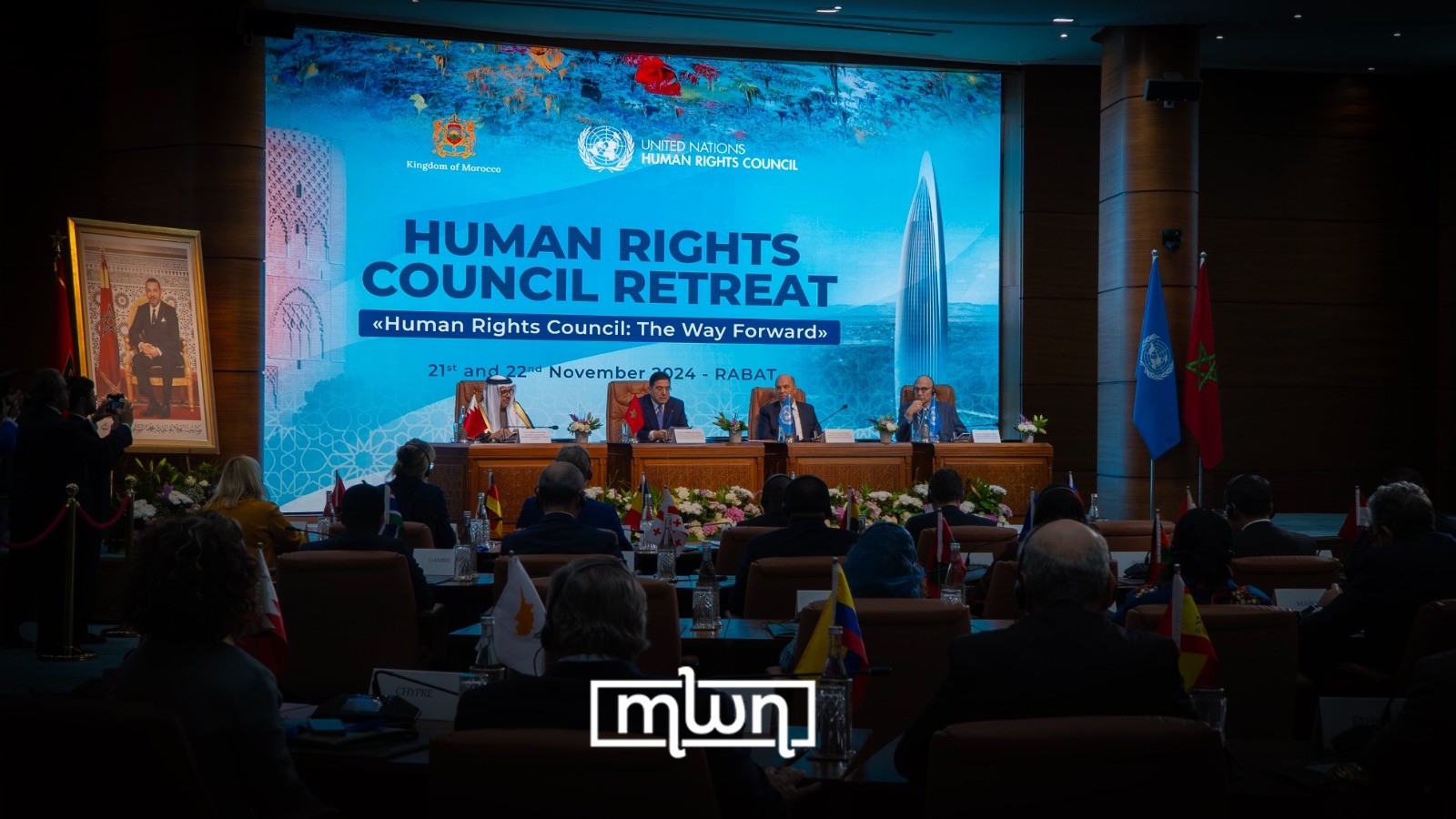
Rabat – Rabat is hosting a pivotal United Nations Human Rights Council (UNHRC) retreat, led by the Moroccan Council president Ambassador Omar Zniber.
Zniber, who is the permanent representative of Morocco to the UN, opened the event with remarks focusing on his country’s proactive role in steering the council toward meaningful reforms.
The retreat, which is being held from November 21-22, brings together global stakeholders to examine the challenges faced by the UN Human Rights Council and its evolving role in protecting human rights.
As the first ever of its kind in the MENA region and only the second on the African continent, the retreat is meant to be a platform for constructive dialogue and strategic reflections.
Zniber outlined the pressing need to bolster the council’s operational capacity, noting its importance as a unique platform that brings together diverse actors, including governments, international organizations, NGOs, academics, and civil society.
Under Morocco’s first-ever presidency of the UNHRC, which began in January 2024 following Zniber’s election during a meeting in Geneva, the council has introduced two major initiatives.
The first explores the impact of AI and emerging technologies on human rights, while the second addresses interconnected global challenges, including climate change, food security, and health security.
Gender equality has also been a central priority during Morocco’s leadership.
Rethinking the future of the UNHRC, forward-looking reforms
The retreat’s main aim is to reimagine the role of the UNHRC by fostering in-depth debates on some of the most urgent human rights challenges facing the global community.
These discussions center on identifying systemic gaps, exploring innovative solutions, and proposing reforms that could better equip the council to respond to an evolving and increasingly complex human rights landscape.
Key topics include addressing the intersection of human rights with issues like technological advancements, climate change, global health crises, and inequality.
The goal is to ensure the UNHRC not only addresses current challenges but also anticipates future crises that may impact fundamental rights and freedoms.
It provides a space for collaborative thinking on the council’s future direction.
Bahrain applauds Morocco’s role in human rights
Bahrain’s Foreign Minister, Abdullatif Bin Rashid Al Zayani, lauded Morocco’s major role in promoting human rights both nationally and internationally.
He recognized Morocco as a distinguished leader in protecting fundamental freedoms and upholding the principles of dignity and equality, attributing its strong international standing in human rights to its proactive and impactful efforts.
Al Zayani also spoke on Bahrain’s shared dedication to advancing human rights, citing the country’s initiatives and partnerships aimed at fostering global standards in this vital domain.
The retreat in Rabat, he noted, embodies a pivotal moment for the UNHRC, creating a platform to tackle pressing global challenges and redefine the council’s approach to building a more inclusive and effective framework for protecting human rights.
First introduced in Bangkok in 2010, the retreat format has since been embraced by various countries holding the UNHRC presidency, including Germany, Slovenia, Senegal, Switzerland, and Austria.
These retreats have played a pivotal role in facilitating meaningful dialogue, contributing to significant outcomes such as the UN General Assembly’s resolution on the Council’s operations.
Morocco’s human rights framework for reform
Morocco’s approach to human rights serves as a reference framework for reform initiatives, according to Foreign Minister Nasser Bourita.
Speaking yesterday at the opening of the UN Human Rights Council’s retreat in Rabat, Bourita referred to the Royal message during the 75th anniversary of the Universal Declaration of Human Rights, in which the monarch notably stressed Morocco’s unwavering commitment to preserving fundamental rights.
“Our unwavering commitment to the defense and promotion of these rights is matched only by our steadfast determination to continue the work of strengthening the rule of law and reinforcing institutions as a voluntary and sovereign choice,” the King had said, pointing out Morocco’s continued engagement with new developments in human rights both nationally and within the UN system.
Echoing this royal pledge, Bourita outlined that Morocco’s approach is built on four key foundations. The first is a process of voluntary ownership and bold decisions, he argued, citing initiatives like the Equity and Reconciliation Commission (IER), which the chief Moroccan diplomat described as a “singular experience in transitional justice.”
The second is the reconciliation of the universality of human rights with national specificity, demonstrated by the Royal directives on reforming the Family Code, he noted, stressing: “The High Royal Guidelines related to the reform of the Family Code and the revision of its provisions are an eloquent illustration of Morocco’s commitment to reconciling Islamic principles with universal values stemming from international conventions.”
Read Also: Morocco, a ‘Bridge Builder’ at UN Human Rights Council
The third foundation is Morocco’s firm determination to promote all human rights, and the fourth is a participatory approach that involves Moroccan society in consolidating these rights and opening the door to the third generation of human rights, as reflected in the revision of the national sustainable development strategy by 2030.
Bourita also shared several proposals to improve the Human Rights Council’s effectiveness, calling for a bold consensus on enhancing the Council’s performance. “The stability of the current institutional framework is a strong guarantee for keeping human rights among the most important pillars of the UN system,” he said.
He also noted the need to balance the roles of states and civil society in the human rights system, stating: “There are enormous opportunities for cooperation, even the possibility of establishing a partnership charter between states and civil society.”
Bourita concluded by stressing African countries’ struggle to carve their own paths and make their voices matter on the international stage. , “Africa refuses to remain the exclusive subject of external deliberations and evaluations, and aspires to be a major actor, on equal footing with other international actors,” he said.


