


Doha – Morocco has become a reference point for the European Union on migration management and counter-terrorism efforts, according to Italy’s ANSA news agency. Joint operations and agreements with the EU continue to demonstrate the North African country’s effectiveness in addressing regional challenges, the agency wrote this week.
According to ANSA, Morocco’s geographic location makes it “central in efforts to contain irregular migration to Europe, combining humanitarian considerations and security imperatives.”
The Italian news agency emphasized that this aspect has “emerged strongly since last summer,” supported by data and analyses from various institutions. This also showed the North African country’s growing importance in regional security cooperation.
The report highlighted a major operation from November, where coordinated efforts led to the rescue of over 300 migrants in the Mediterranean and the arrest of more than 50 traffickers responsible for dangerous sea crossings.
ANSA noted that these interventions “underscore the importance of sharing resources, information, and operational strategies to address the problem effectively.”
On the security front, ANSA reported that Morocco recently demonstrated its key role when its intelligence services collaborated with international partners to thwart a terrorist plot targeting sensitive infrastructure in Europe.
The news agency also emphasized Morocco’s adoption of more sophisticated counter-terrorism measures, including advanced surveillance technologies.
The December agreement between Morocco and the European Union strengthened economic support for border control programs and migrant assistance.
“This agreement, which also provides for increased joint monitoring of Mediterranean routes, is part of the Rabat Process, aimed at balancing migration management with development initiatives in countries of origin and transit,” ANSA reported.
Read also: El País: Morocco’s Coastal Crackdown Reduces Irregular Migration to Spain by 30%
The agreement also included targeted training programs for Moroccan security forces in collaboration with European experts.
Recent statistics from Morocco’s Interior Ministry validate these efforts. In 2024, authorities prevented 78,685 irregular migration attempts, with 58% of irregular migrants originating from West African countries, 12% from Maghreb nations, and 9% from East and Central Africa.
The country’s security forces dismantled 332 trafficking networks throughout the year.
Morocco’s humanitarian approach resulted in 18,645 migrants being rescued at sea in 2024, receiving medical assistance, shelter, and guidance.
Additionally, 6,135 irregular migrants were supported in voluntary returns to their countries of origin, coordinated with their diplomatic missions.
Spanish Minister of Inclusion, Social Security and Migration, Elma Saiz, reinforced these achievements, praising bilateral cooperation between Morocco and Spain during her working visit.
“Cooperation with Morocco, a partner and friendly country, is based on innovative migration policies such as circular migration, as well as on strong economic and trade exchanges,” Saiz stated in an interview with MAP.
The minister pointed to the success of the ‘Wafira’ program, which supported 209 Moroccan women in developing entrepreneurial skills.
“The ‘Wafira’ program is a prime example of the success of this strategic collaboration with Morocco,” Saiz emphasized, noting that all participants expressed interest in renewal and over 66% reported significant improvement in their skills.
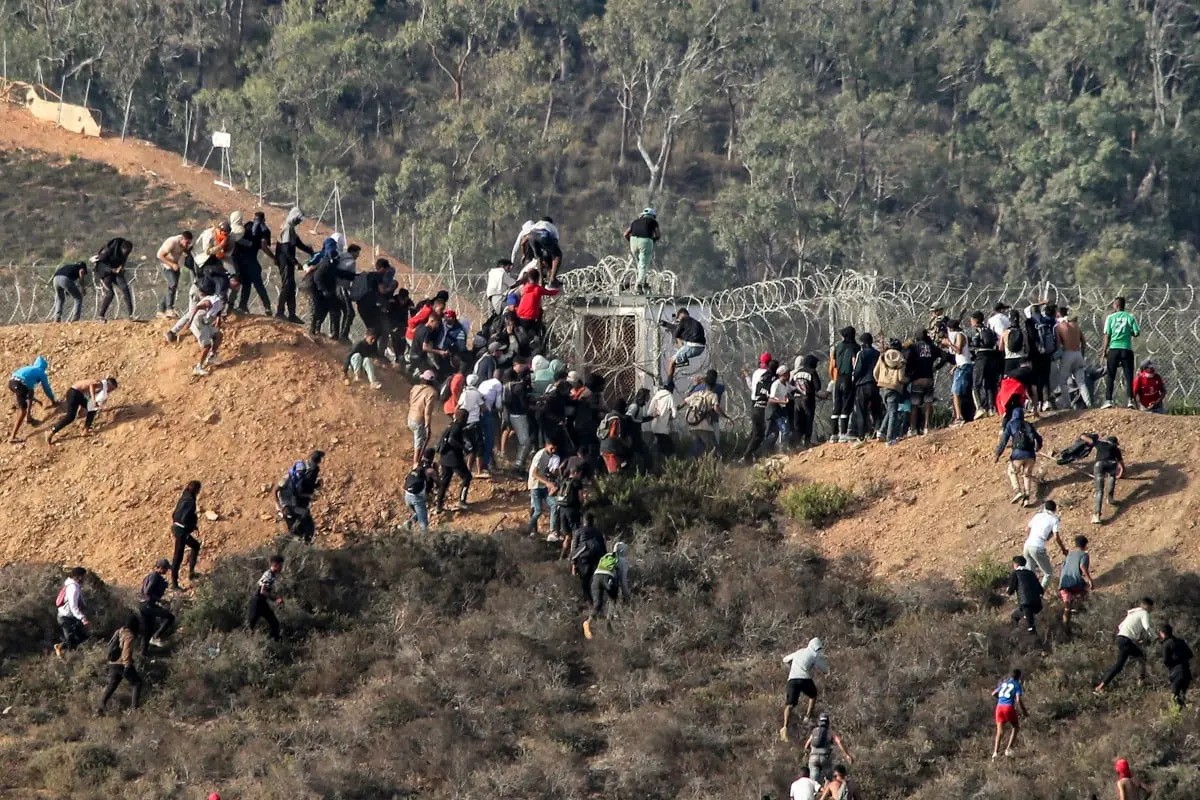
These developments occur as the region faces ongoing challenges, including 14 attempted assaults on Ceuta and Melilla involving more than 4,290 migrants.
The convergence of migration and security challenges, ANSA concluded, “requires constant and multilateral cooperation,” highlighting Morocco’s dual role as both a transit country and security partner in promoting stability across the Mediterranean region.




