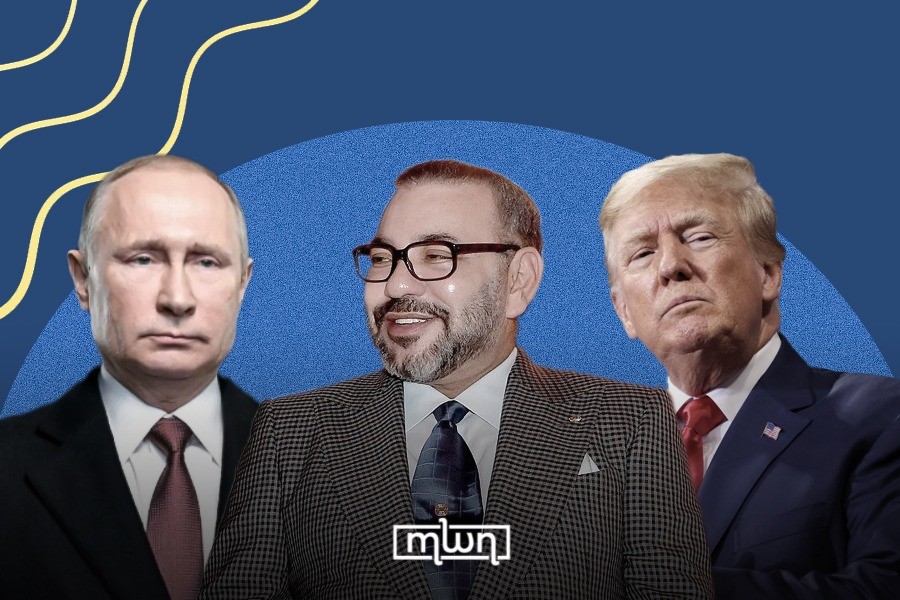
Rabat – Russia’s Foreign Affairs Minister Sergey Lavrov has again renewed his country’s interest in maintaining good ties with Morocco, saying that Moscow is actively working with Rabat to solve the Western Sahara dispute.
The Russian news agency quoted Lavrov’s remarks on Tuesday during a press conference on the diplomatic gains Russia made and the challenges it faced in 2024.
“Morocco is a friendly country. We have good plans and we are helping Moroccans solve problems that fall under the Ministry of Foreign Affairs’ jurisdiction, primarily the issue of Western Sahara,” Lavrov said.
He recalled the UN Security Council’s resolutions before the recent momentum, which helped Morocco gain more recognition and endorsement for its autonomy plan and its position on Western Sahara.
The past resolutions issued over 40 years ago to endorse a self-determination path have proven unworkable, he acknowledged.
Morocco and Russia maintain good diplomatic relations, reaffirming their determination to boost cooperation through continued political dialogue and the exchange of visits.
Russia, however, continues to obstruct the UN-led political process. It recently notably called on the US to adopt new language in Western Sahara resolutions in an attempt to emphasize its mission of organizing a self-determination referendum in the Sahara.
The US, however, has continually rejected Russia’s pro-Polisario maneuvers while retaining the same language as in the previously adopted resolution.
Russia is one of Algeria’s strongest allies, being its number one arms supplier. On the Western Sahara dispute, Moscow’s policy has long been to appease Algiers. Yet with relations improving with Morocco, Russia has also appeared at times to avoid being overly hostile to or critical of the Moroccan stance.
Read also: Western Sahara: Everything You Should Know About Morocco’s Autonomy Plan
For instance, Russia has in recent years gone from downright voting against UN resolutions to abstaining from openly endorsing resolutions that typically endorse Morocco’s efforts in the UN-led political process.
Instead of opposition to Morocco’s Sahara stance, many see in Russia’s position a desire to challenge the US, which is the penholder of the UN resolutions on the Sahara dispute.
Indeed, Lavrov took a swipe at the US in his Tuesday’s remarks.
He notably took issue with what he described as the unfortunate unilateralism with which the US declared the Western Sahara region in late 2020 as an integral part of Moroccan territory.
“The Trump administration, when Trump was first in the White House, simply issued a decree stating that Western Sahara is part of Morocco,” said the top Russian diplomat, noting that “issues should not be resolved unilaterally.”
“It only sows the seeds of a storm that will inevitably break out somewhere again after some time,” adding that the situation should be looked at through “mutually acceptable agreements.”
Lavrov further acknowledged how the Sahara dispute is an important issue for Morocco, pledging his country’s full readiness to assist in resolution efforts.
“The question can only be resolved based on mutual consent, not by imposing something on one side,” he concluded.
Morocco has consistently emphasized that the dispute over the Sahara is the lens through which it reviews its relations and cooperation with other countries.
The Moroccan approach is to enter no agreement or partnership with any country that challenges or undermines its most important cause: Moroccan sovereignty over the Western Sahara region.
With no indications that Moscow intends to shift to embracing the Moroccan Autonomy Plan as the only workable and best path to solving the Sahara question, it remains to be seen how Morocco and Russia will navigate their perceived shared desire to deepen diplomatic ties.