
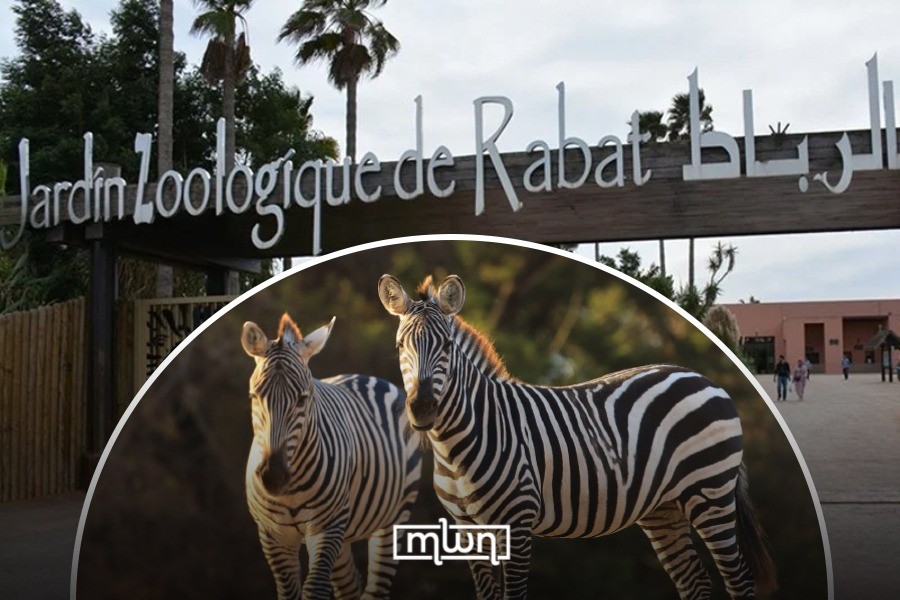
Rabat – The National Zoo in Rabat has welcomed over 6 million visitors since its inauguration in 2012.
The zoo, celebrating its 13th inauguration anniversary this January, is home to over 2,000 animals from 190 species.
The zoological space receives over 500,000 visitors annually and provides a space for biodiversity preservation and environmental education.
A statement from its administration indicated that the zoo is organizing celebrations for its 13th inauguration anniversary, from 9-14 January. The event’s aim is “to promote environmental education, as a space of discovery and learning for the younger generations,” it said.
The zoo’s conservation strategy centers on establishing foundational groups of wild species, which are either extinct or facing extinction in the wild.
Rejuvenation of these groups takes place through new births or through acquiring individuals from a global network of partner zoos and zoological institutions.
The zoo saw the birth of 220 animals in 2024, including Atlas Lions, Bald Ibises, Magot Monkeys, Thompson’s Gazelles, Addax, and Cuffe Sheep. Meanwhile, it acquired from foreign zoos 50 animals, including wild dogs, saharan antelopes, reptiles, and birds.
Read also: Morocco Calls for Urgent Global Action to Preserve Biodiversity
In over a decade of existence, Rabat’s most visited attraction has taken notable action to enhance scientific research on biodiversity in the country.
As part of its plans to raise awareness and exchange expertise, the zoo has conducted various studies on Moroccan animal species, especially the endangered ones.
In its 2025 plan, the zoo vows the digitalization of its platforms “via connected solutions adapted to the citizens’ contemporary needs.”
As part of its conservation and scientific research strategy, the Rabat Zoo has deployed a plan to enrich the zoo’s diversity by enriching its animal collection and improving animal welfare. The zoo welcomes contributions from various wildlife studies stakeholders on a regional level.
Rabat National Zoo offers visitors an experience to indulge in five biodiversity areas, namely Atlas Mountain, the Savannah, the Desert, Wetland, and Tropical Forest. The five biozones provide an original simulation, including animals and the natural characteristics of each.
The Rabat Zoo stands for Morocco’s commitment to protecting the natural environment and taking action in response to the escalating dangers of climate change.
In 2020, the North African Country called for a global strategy to preserve biodiversity, recalling its Green Generation 2020-2030 and Forest of Morocco, both launched in 2020.