
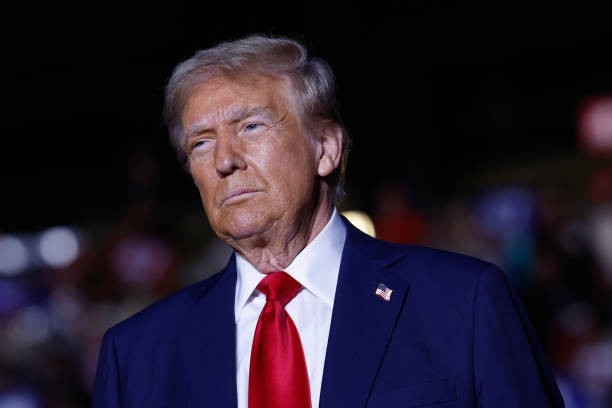
Rabat – US President Donald Trump has decided to turn the detention facility at Guantanamo Bay, Cuba, into a center for undocumented immigrants.
He announced the plan on Wednesday while signing the Laken Riley Act into law.
Trump pledged during his campaign to launch a large-scale deportation effort against the estimated 11 million undocumented individuals in the US.
The Laken Riley Act aligns with this plan, requiring the Department of Homeland Security to detain non-citizens who have been arrested or charged with burglary, theft, larceny, or shoplifting, regardless of conviction.
Trump introduced an executive order instructing the Departments of Defense and Homeland Security to establish a 30,000-bed migrant detention facility at the Guantanamo Bay naval base.
“Most people have no idea about it,” Trump said. “Some of them are so dangerous we cannot trust their home countries to keep them. We do not want them returning, so we are sending them to Guantanamo—it is not an easy place to leave.”
Trump claimed the facility would double the country’s capacity to hold undocumented migrants.
The US has used the Guantanamo Migrant Operations Center (GMOC) for years, under various administrations, to detain migrants intercepted at sea.
Human rights organizations continue to demand the closure of the Guantanamo Bay detention center, condemning its history of inhumane treatment and lack of legal protections.
Established in 2002 as part of the US counterterrorism War on Terror strategy, the facility has drawn criticism for holding individuals without trial for extended periods and bloody torture methods.
Although the administration claims that the new move will only be a temporary holding place for the migrants it has sparked controversy on social media, with many Americans worried that it will lead to unlawful treatment of these communities.
“Trump is reviving Guantanamo and kind of literally creating a concentration camp over there,” one concerned user posted on X.
Some UN experts have condemned it as a place of “unparalleled notoriety,” arguing that its continued operation undermines the US government’s commitment to the rule of law.
They also pointed to it as a symbol of the systemic lack of accountability and censorship surrounding state-sponsored torture and mistreatment, as well as the impunity granted to those responsible.
Trump’s directive has also sparked legal and political disputes, as advocacy groups and lawmakers weigh the consequences of detaining migrants in a place known for indefinite imprisonment and basic human rights violations.
Read Also: 495 Moroccan Nationals Under Final Deportation Orders from US as of November 2024