Rabat – I hate to say that over the last fifty years, ’Morocco the African’’ has been betrayed by its African brotherly countries. And with a sigh of confidence, I will add that “Morocco the African” has been able to draw on its African soul to learn how to recover and become even more African. He would have done so with the conviction that African genius ultimately finds its place at the intersection of history.
Morocco is today in full possession of its means; quiet strength despite the feeling of being betrayed. Even being awakened big time, it is not fooled. Morocco still finds itself faced with the dilemma of Africa’s unity, its breakup, and the rational choice that it is forced to make no matter what.
Morocco opted for unity when he was among the pioneers of African unity by participating in the Accra conference in 1958 (Ghana, Morocco, Ethiopia, Egypt, Sudan, Liberia, Tunisia, and Libya). The same year, Tangier hosted the tripartite meeting of the Moroccan Istiqlal Party, the Tunisian Neo-Destour, and the Algerian National Liberation Front.
Unity also, by hosting the meeting of the Casablanca Group in 1960 (Egypt, Guinea, Libya, Mali, Morocco, and Algerian FLN representatives), coinciding the same year with the meeting of the Monrovia Group (Liberia, Nigeria, Senegal, and Cameroon) for the establishment of a supranational structure federating an independent and promising Africa.
These efforts were not rewarded. Indeed, the Organization of African Unity (OAU) was born in 1963, enshrining a contested principle labeled the inviolability of borders inherited from colonization. Instead of aborting the path towards unity, Morocco stayed as a member while expressing reservations about the above-mentioned principle. A principle that is now being called into question as border disputes are multiplying and heralding future turbulence.
Snipers and Geopolitical Gravediggers
Unity again when, in 1984, Morocco preferred to leave the OAU, which had admitted, in a flagrant legal hold-up, the pseudo-Sadr. It left this organization in order to avoid its breakup, even though many member countries were ready to leave in the process.
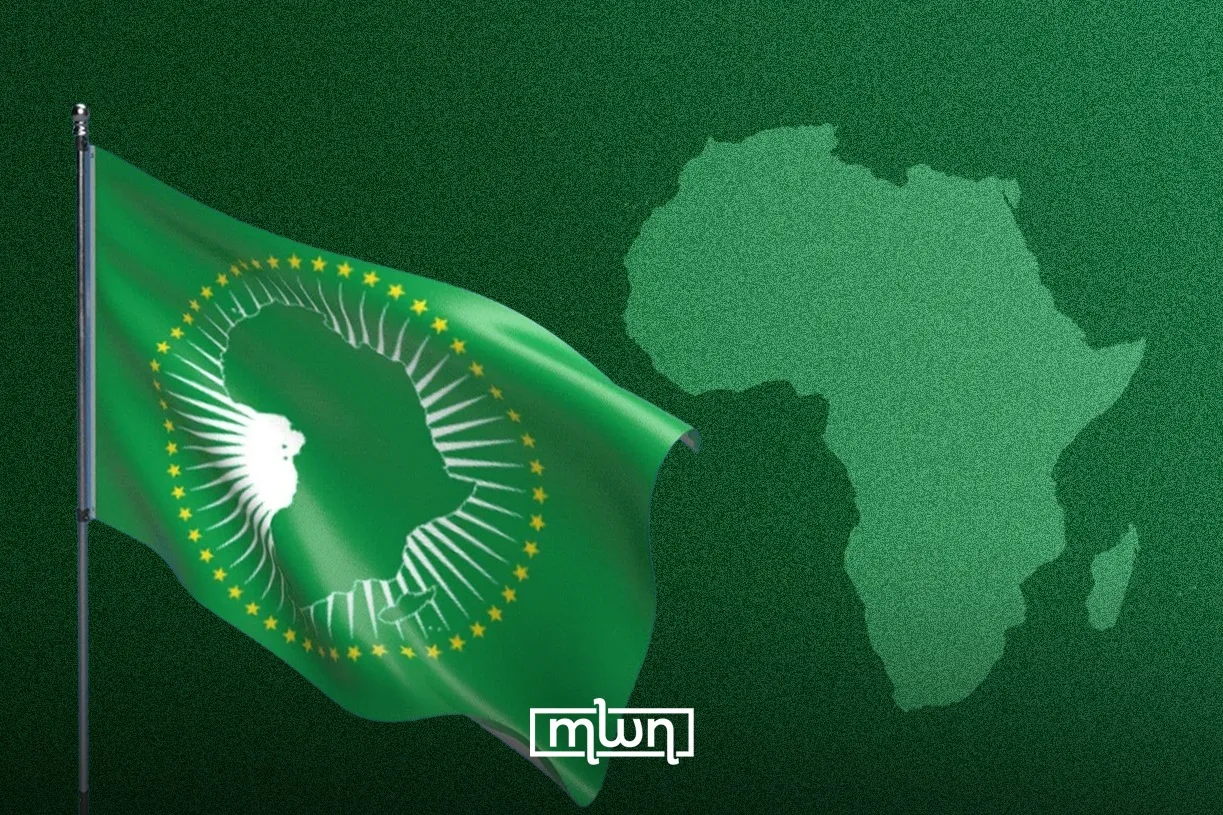
The rational choice has then prevailed. And it is this same rational choice that led Morocco to decide in 2017 to regain its place within this organization, which became the African Union (AU) in 2002.
Political and Security Research Centers and the media in general are following the trend and sharing ironic names and titles with a generosity that fascinates and, above all, intrigues. This is the case with the expression “African policy”. This expression has known different successes depending on the interest that Moroccan decision-makers have paid to Africa. This interest has always been at the center of the concerns of influential actors within the decision-making system. This system has proven to be very centralized, not to say hermetic and unbreakable.
The perception of Morocco’s African policy has been very mixed in the political and academic chessboard in Morocco. This perception has evolved according to the political culture of the various parties as part of the overall perception of the country’s diplomatic behavior.
In this respect, we can schematically identify five stages, some of which have already been touched upon above. They have strongly influenced this perception. Firstly, African policy is conditioned by the concern for the completion of territorial integrity. It was built on the basis of careful negotiation with the former colonizers, while making sure not to leave the field open to neighbors who expressed (territorial) covetousness in the aftermath of their own independence.
Morocco has been able to manage the principle of the inviolability of borders inherited from colonization by expressing reservations following the adoption of the founding charter of the Organization of African Unity (OAU) in 1963.
Yet, the ambition to complete territorial integrity was slowed down for two reasons. On the one hand, because the struggle for power at the intranational level was between political actors who had ambitions that went beyond active participation in political life. On the other hand, because of the war of the sands Algeria initiated, which African and Arab countries surprisingly supported. The process of recovering Morocco’s still unrecovered territories began with Tarfaya in 1959, Sidi Ifni in 1969, and the southern provinces in 1975.
Secondly, the withdrawal of the OAU in 1984, following the admission of the pseudo-Sar. The withdrawal was motivated by the fact that the Secretary General of this organization, Edem Kodjo, gave in to pressure from Algeria and its African supporters to violate the provisions of the charter on the admission of new member states. Here too, Algeria was the instigator of the whole process, as it had been in 1963 when it played the role of the victim.
Thirdly, the return to the African Union (formerly OAU) in 2017. This return was motivated by the fact that Morocco had deemed the moment opportune to pull the rug out from under the feet of its adversaries. This smart move prevented its adversary from taking a step forward to get the pseudo-Sadr admitted to the United Nations and achieve a masterful checkmate.
Three years earlier, the personal representative of the UN Secretary-General, Christopher Ross, had maneuvered to achieve the same coup as Edem Kodjo. He attempted to flout the parameters set by the Security Council in order to find a mutually acceptable solution.
Fourthly, the haste to correct the anomaly committed by Edem Kodjo and taken up differently by the charter of the African Union adopted in 2002. The presence of pseudo-Sadr has become a burden for member states. Despite the decisions taken to limit its role in the organization’s committees or its participation in multilateral forums, this presence disturbs numerous member states. A handful still recognize it. Indeed, out of all member states, only twelve maintain their recognition, half of which are in a situation of freezing due to indifference.
Haste does not mean impatience. Morocco is aware of the fact that giving time to time would be a good option insofar as the main supporters of this entity are experiencing problems of credibility (or legitimacy) at the intranational level and concerns about impact at the international level.
However, this charged perception doesn’t rule out that the African Union has lost its influence. The AU has confirmed its impotence in resolving inter-African conflicts for several reasons. One: the struggle for regional leadership according to a blind reading of the principle of checks and balances. Two, the exhaustion of the so-called pivotal states that have succeeded in everything in failure, so to speak. They have failed because they have made every effort to improve their image internationally while neglecting to resolve multidimensional deficits at home. Three, the belated discovery that the regional allies on which each one relied were in fact competitors, snipers, and geopolitical gravediggers.
Fifthly, Morocco’s first post-independence years were marked by emotional behavior and even unexplained naivety. If it is true that in politics only the blind cannot see things coming in the course of events, there is nothing to conclude that they do not have the intuition to feel that something is wrong. Moroccan decision-makers knew that their interlocutors were hatching shady scenarios, but they hoped that good faith could prevail in the last resort.
However, the game is never definitively lost. Because there are obvious facts that can tip trends and thwart subterfuge. History is full of facts that have proved that presents a propulsion engine that can take everyone by surprise.
Perseverance and resilience
A little history doesn’t hurt anyone, as long as its perception doesn’t lead to biases to flee. Amadou Mbathé Bâ, a Malian thinker, is best known for saying, “When an old man dies in Africa, it is a library that burns.” A crystal clear answer to those, among military ethnologists and amnesiacs of their own history, who lack confidence and fall back on references whose objectivity is questionable.
The foreign policy of states is an accumulation of facts and acts that only historical archives, even incomplete, can help to understand. In this regard, as far as Morocco is concerned, four historical events can help to see more clearly. One: the battle of Oued al-Makhazen (1578). If Morocco had lost it, it would have suffered the same fate as most of the Arab and African countries conquered in their time by the Ottomans and the Portuguese.
Two: the war between the Saadian Empire and the Songhai Empire (1591-1630). It was in the same logic as the long-distance plot between the Ottomans and the Portuguese to cut Morocco off from its African roots.
Three: the establishment of the protectorate in 1912, following insidious arrangements on the part of France, Spain, the United Kingdom (agreement of 1895, recognizing without much conviction the sovereignty of Morocco over the territories south of the current Wadi Noun-Sahara), the United States, Germany, Italy, and Russia through secret or public agreements.
A non-exhaustive list eloquently demonstrates this: In 1902, the verbal go-ahead the United States gave to France for colonizing Morocco; in 1904, the Franco-Spanish agreement to colonize Morocco; in 1905, Germany’s verbal opposition in Tangier to the colonization of Morocco to get a piece of the cake, which it finally manages to have.
The same was true in 1906, the Algeciras Agreement, in which the signatories expressed commitment to respect the sovereignty of Morocco, and violated it the day after. In 1911, the agreement between Morocco and Spain recognizing the sovereignty of Morocco, from which Spain distanced itself, was the same year.
Morocco saved the furniture by accepting a sovereignty amputated in 1912, with the establishment of a protectorate whose torments it suffers by being between the hammer of the nibbles of its sovereignty and the anvil of capitulations. Four: the recovery of the plundered territories according to a gradual process in the same spirit as that of the protectorate.
After the history arguments laid out above, there are solid vectors that make Morocco African to the core. And it is not a luxurious description that, since the formation of the first post-independence governments, the adjective “African” has been associated with the Department of Foreign Affairs. Among the most important vectors to take into account is the religious dimension. The introduction of Islam in West Africa was possible thanks to Morocco.
The Zawiyas and religious brotherhoods played a key role in this process. To understand the controversy surrounding the Tijaniyya that Algeria fuels in relation to Morocco, nothing could be easier than to look at the religious history of Morocco in its Maghreb and sub-Saharan space under the reign of the various dynasties that ruled the country, starting with the Almoravids (Hami H., The Spiritual Dimension of Transnational Relations: Morocco and Sub-Saharan Africa, 2007, in French).
The renewed interest in the religious field in Africa is associated with two factors. On the one hand, with the reform of the religious field in Morocco since 2004, and on the other hand, with the activism of certain countries in the Middle East, Turkey, and Iran, which sometimes obscures the messianic deep work of the Catholic Church and the Scandinavian churches, particularly Danish and Norwegian.
Suffice it to say that Morocco experienced hard times during the 1960s and 1970s (with acuity), 1980, and 1990 (with less vehemence) to make its African policy understood. This was perceived as a clear expression of its irredentism, while the country was only working by all means to recover its territorial integrity.
However, it is worth mentioning that towards the end of the 1980s, Morocco adopted a new African policy approach. It reminds us that it is through the economy and trade that relationships can be forged and consolidated. However, this all depends on the timing and opportunity at the time. This was the case through the combination of two events. One: the arrival of the Socialists in power in France. François Mitterrand was keen to adopt a new policy with regard to France-Africa relations. He introduced the principle of conditionality to fine-tune French development aid policy.
Mitterrand’s speech in La Baule in 1989 remains memorable. Yet, it was from this date that France began to lose ground in Africa. This should not have happened, because one of the fiercest competitors, the Soviet Union, was in an early phase of collapsing. Similarly, China, after a breakthrough in the mid-1960s, had taken a break for reasons of political and ideological restructuring at the internal level. Moreover, the United States was concerned about the post-USSR era and was endeavoring to make a deal to resolve the Arab-Israeli conflict to Israel’s advantage.
Two: the way was relatively cleared. It was from this date that Morocco began to be economically and financially interested in Africa. In cooperation with the International Monetary Fund and the World Bank, Morocco, through the BMCE (now Bank of Africa) and the Banque Centrale Populaire (BCP), undertook the reform of national banks in Mali and Guinea. He became an important player within the African Development Bank Group (AfDB).
Two decades later, Morocco became the leading African investor in Africa. In 2023, investments reached $836 million (FDI). He had occupied 3rd and 4th places in 2021 and 2022, respectively. Many observers and finance experts share the view that Morocco is becoming a must for investment in Africa, especially in West Africa.
Three, the paradigm shift as Africa has seen the rise to power of new generations of decision-makers. These decision-makers no longer allowed themselves to be bamboozled by inflated ideological speeches. Traditional forms of cooperation with the former colonial powers and the reaction to new attempts at subjugation by neighboring countries, particularly in North Africa, have been put under scrutiny. This wake-up call has facilitated the emergence of a new perception of international relations applied to the African continent.
Admittedly, the pace of military coups has not decreased as political planners at the global level would have wished, but this has contributed to the entrenchment of the notion of regime change as an imperative necessity to get out of unresolved institutional impasses.
Faced with this new development, Morocco has adopted a thoughtful attitude, hardly intervening in the internal affairs of its sub-Saharan neighbors. The latter, at the height of despair, have been at the mercy of security plots hatched by separatist movements subservient to organized crime networks. The common denominator of these organizations was that they were orchestrated from afar by foreign intelligence services. An idea then emerges that rightly links separatism and terrorism as a dangerous factor in the destabilization of sovereign states.
Mutual Development, Mutual Management, and Mutual Commitment
Fourth, the paradigm shift has also affected the concept. Morocco has thus adopted an approach based on mutual development, mutual management, and mutual accountability in terms of the obligation of result. This approach has gained the suffrage of its African peers.
Five, the paradigm shift has called on African partners to orient their compasses and revise their perceptions of the link between cooperation and stability, cooperation and security, and cooperation and equal opportunities for progress and development.
Six, most of Morocco’s partners have become aware of the fact that the persistence of artificial conflicts is no longer an option. Some are beginning to understand that this country has been the victim of a legal hold-up pertaining to its sovereignty and territorial integrity. They were aware of this insofar as some of them had been victims of separatist movements in the past. The latter have lately begun to rise from the ashes through the collusion between hidden scripts based on la raison d’Etat and banditry.
Seven, most African countries have come to the conclusion that the African Union, created in 2002 to improve the OAU’s ineffective actions, does not provide answers to the endemic problems related to the management and resolution of conflicts. This organization is witnessing the replication of the leadership struggle of yesteryear and attempts to establish a hierarchy of actors similar to the one that took place in 1963. This, of course, is now unacceptable.
Eighth, the paradigm shift has allowed Morocco to free itself from the stranglehold of sterile legalism, such as the rights of peoples to self-determination, territorial integrity, sovereignty, acquired rights, the inviolability of borders that some interpret as they wish. In 2007, Morocco proposed an autonomy plan to resolve the artificial regional conflict over the Sahara and took its opponents by surprise.
Nine: Since then, many changes have taken place. The Arab Spring has been there. Morocco has demonstrated that it adapts and that it knows how to draw on its cultural, civilizational, and psychological assets to be in tune with the evolution of regional subsystems and the international system in general. Despite the haunting that has gripped some of its African partners, Morocco has persisted and signed up to support their development projects. It has done so according to a participatory approach perceived as a locomotive engine of the win-win spirit.
The participatory, respectful approach of the creative genius of the African peoples has allowed Morocco to be perceived as a reliable partner and a credible mediator. Let us share the following facts to this end. King Mohammed VI has made fifty-two visits to twenty-nine African countries since his ascension to the throne in July 1999.
Projects that are synonymous with the first steps towards a certain economic take-off might be mentioned. Four levels are in the spotlight. One: the consolidation of bilateral cooperation with the conclusion, since 2000, of more than six hundred agreements with forty countries and, thus, ambitious projects, including the construction by the Office Chérifien of Phosphates-OCP Group, of fertilizer production plants in Nigeria, Ethiopia, and Ghana.
Moroccan operators are very active and support the consistent investment processes led by Attijari Wafa Bank, Bank of Africa, the Banque Populaire Group, Royal Air Maroc, Maroc Telecom, insurance companies, real estate groups, etc. Two: projects of global scope through an enriched form of triangular cooperation. Three: projects with a wide range of projects (the Atlantic Initiative, the African-Atlantic gas pipeline, the opening up of the Sahel landlocked countries). Four initiatives of human and social scope (the training of 25,200 students in 2023, 85% of whom are African, and the regularization of the situation of 50,000 Sub-Saharans since 2014).
Geopolitical repositioning is not a wheel of fortune. It responds to imperatives that intervene unexpectedly on the global strategic chessboard. If state actors don’t prepare in advance to get in the process, they are swept away by the groundswell that pulls them once and for all into the abyss. Savvy state actors learn from their miscalculations and past failures, even if they have made errors of judgement through inadvertence or lack of experience. Morocco has done so by turning the myth of Sisyphus into a steamroller to support its resilience and its refusal to give up its rights to recover the plundered territories.
Morocco is positioning itself to defend its achievements and, by the same token, support other African countries being part of international politics. It does it by encouraging them to use tact, perseverance, and confidence in their potential. It also does so while being aware that Africa has become more than ever a secondary field of international confrontation.
The difference with respect to the past is that foreign intervention is carried out through economic and commercial battles in broad daylight, whereas in the past, it sought to create hotbeds of tension by encouraging the proliferation of conflicts and maintaining alive artificial disputes.
It is commonly admitted that context and timing are important to assess political and diplomatic situations. They relegate to second place futile comparisons on the number of representatives in regional and international organizations. Having a significant number of official representatives or national and international civil servants can bring a bit of prestige, but it is not synonymous with ascending decision-making power or recurring influence.
The state of affairs resembles, to some extent, a partial transfer of technology or tempered relocations. The beneficiary countries are only substitutes. They are mandated to benefit from the windfall while being warned that some springs may not see the arrival of swallows.
However, some would say, rightly, that it is better to occupy a chair than to allow opponents to make a business out of it. Others might reply to them, and rightly so, that the geopolitics of the first half of our century is and will be made by the ascendancy of rational choice, the grouping of state actors who have the right to speak so as not to be the strategic orphan-dependencies of tomorrow.
Morocco would have understood this. He therefore adopts an African policy that is ambitious but still realistic. This policy has not been handicapped by the COVID pandemic or by the slowdown in the completion of certain projects on time, and even less by the actions of its opponents, who have shown a political and diplomatic amateurism that borders on the ridiculous.
A few African countries would have understood Morocco’s policy with respect to Africa. It is in this context that peaceful axes of multidimensional cooperation between Morocco, Mauritania, and Senegal and promising corridors between the landlocked Sahel countries and the latter have to be understood. They are reasons for hope, progress, and stability to be achieved at all costs.
These axes and corridors remain open to other countries in the region so that they, in turn, can be reborn to international politics with a vision cured of the illusion of a hypothetical golden age. However, they must first take stock of the situation at home to identify the flaws and correct the shortcomings because jumping on the bandwagon is no longer a luxury trip. This is subject to the acceptance of the other partners, and obviously it is not taken for granted.
If the political will is there, financing is a matter of responsible negotiations in order to shorten the time it takes to carry out projects. After all, the adage that says that through economics, citadels of entrenchment and isolation are easily crossable is very relevant.