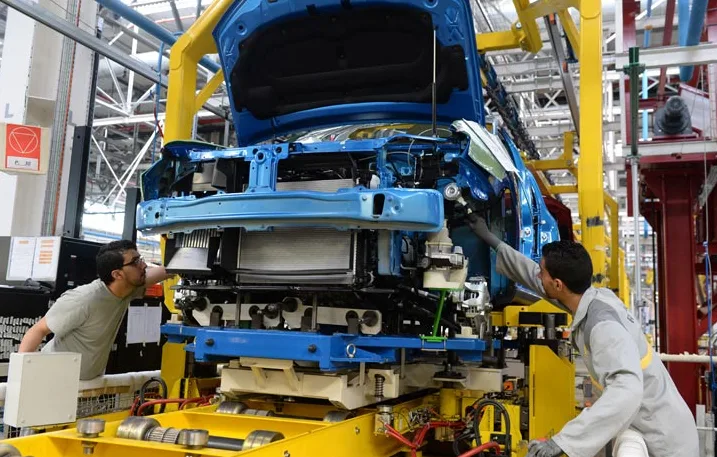
Rabat — Morocco’s government has responded to the European Commission’s decision to impose duties on imports of aluminum road wheels from the North African country.
Government spokesperson Mustapha Baitas said on Thursday that the Moroccan government is studying all possibilities to take “any measures it deems appropriate to address these issues.”
In the press briefing following a government council session, Baitas added that the partnership between Morocco and the European Union is “global,” warning that this partnership cannot be “subject to a selective logic” or to “tailored treatment.”
“It is necessary to find a solution to these problems,” he concluded.
On March 14, the European Commission released a statement announcing the countervailing duties on imports of aluminum road wheels from Morocco, alleging that this decision aims to shield EU producers and defend 16,600 jobs from “unfair trading practices.”
“A Commission anti-subsidy investigation found that the Moroccan government was systematically supporting its automotive sector through WTO-incompatible subsidies, including grants, loans at preferential rates, and tax exemptions/reductions,” the statement added.
The European Commission’s decision comes as Morocco continues to strengthen its global position in industrial sectors like in automotive and aeronautical.
Statistics from Morocco’s Exchange Office from September of last year documented the country’s development in the sector. Morocco has been strengthening its status as a top exporter
Last year, automotive exports spiked by 8.5%, reaching $9.6 billion in the first half of 2024.
The office attributed the growth to significant gains in the construction and wiring sectors, which saw exports rise by 7.3% and 8.3%, respectively.
Morocco and the EU have already been pledging to boost ties, with the European bloc pledging to strengthen cooperation between the two parties.
The pledges come after the European Court of Justice’s biased ruling, accusing the EU Commission of violating the “right to self-determination” for the “population of Western Sahara.”
These accusations threatened to effectively annul the EU-Morocco partnerships related to fisheries and agriculture.
In response, Morocco said the country does not consider the ECJ’s ruling as relevant or important for its agreements.
“Morocco is not a party to this case, which involves the European Union on one side and the ‘Polisario’ supported by Algeria on the other. Morocco did not participate in any phase of this procedure and, therefore, does not consider itself concerned by the decision,” the ministry stated.
The EU also made moves to salvage the diplomatic crisis, backing the partnership with Morocco and calling for maintaining bilateral cooperation.
However, Morocco’s Foreign Affairs Minister Nasser Bourita called on the EU to take action and clarify how it intends to safeguard the EU-Morocco partnership agreements.
“Morocco has been recognized in Europe as a pillar of stability, a pillar of prosperity, and increasingly over these five years, we have seen Morocco also become a reliable, always available, and serious partner in the region’s security,” he said in November last year, adding that the partnership is not only positive but also indispensable.