
 Join on WhatsApp
 Join on Telegram
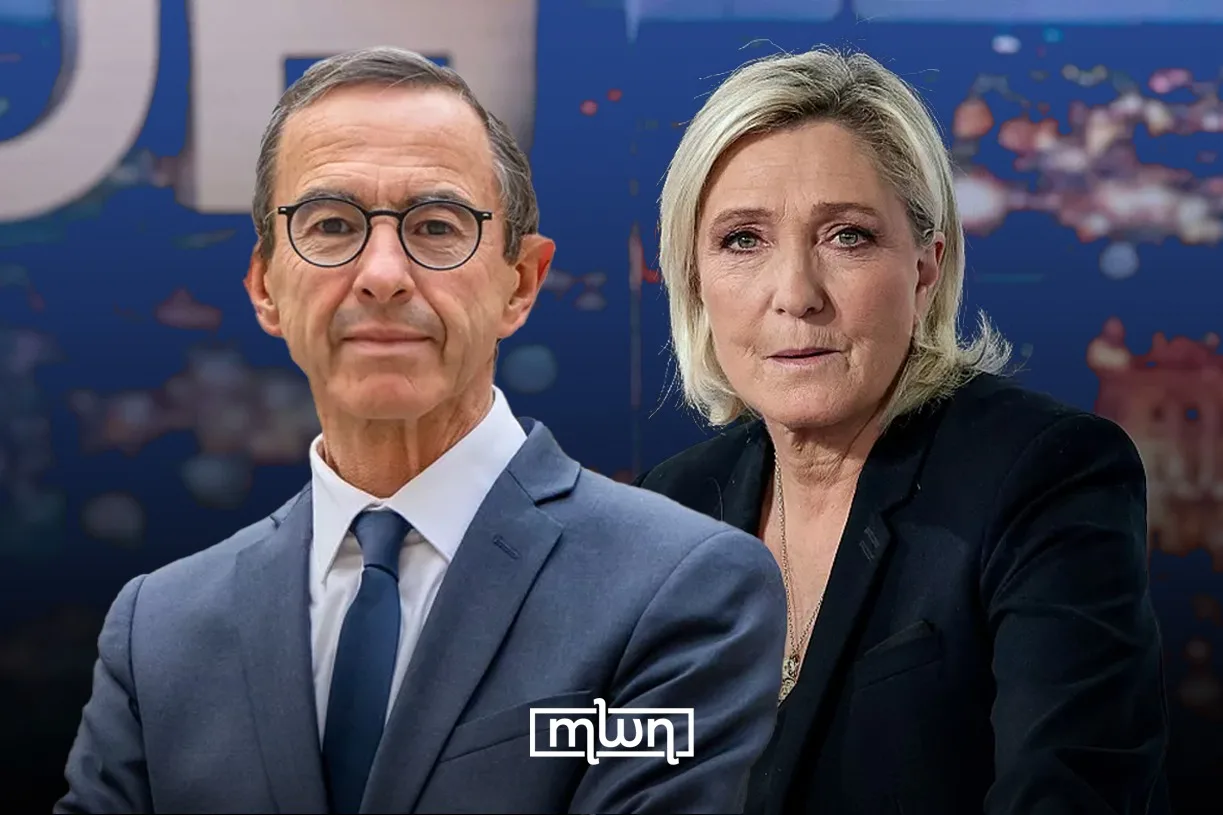
Rabat – Marine Le Pen has called on Interior Minister Bruno Retailleau to outlaw the Muslim Brotherhood in France, expressing urgency that her party has been saying this for years.
The leader of the National Rally (RN) parliamentary group addressed the issue on social media after Retailleau spoke on CNews.
“He has detailed information on the dangers of the Muslim Brotherhood. We have warned about this for years. What is he waiting for to ban this totalitarian movement, which spreads its influence everywhere, even within the Paris Mosque, a symbol of gratitude to Muslim soldiers who fought for France in World War I?” Le Pen wrote on X.
Retailleau talked about several issues in his interview, including the attack on a rabbi in Orleans, antisemitism, the debate over wearing the veil in sports, and what he referred to as “anti-white racism.”
He reiterated his position on banning the veil in sports and called it incompatible with the principles of the Republic, alongside other Islamophobic remarks.
“In sports competitions, the veil must be prohibited,” he said during the same interview. He argued that allowing religious symbols in competitive settings undermines the neutrality of public spaces.
“For me, the veil is not a sign of liberty but a symbol of submission and apartheid in our society,” he added. He framed the issue as a societal divide and said that such practices go against the values of gender equality and secularism.
A larger attack on Islam
The minister also directed criticism at the left-wing party La France Insoumise (LFI), accusing it of threatening France’s foundations.
“I think La France Insoumise today is a danger to the Republic,” he stated. He has previously accused LFI of enabling radical ideologies by refusing to take a clear stance on Islamist extremism.
Retailleau also linked rising antisemitism in France to Islamist movements. “Antisemitic hatred is spread by Islamism,” he said, attributing recent attacks, manifestations, and tensions to what he termed radical ideologies.
He claimed that Islamist networks exploit grievances to promote division while also warning that their influence extends beyond religious circles into political and social spheres.
The minister even took his Islamophobic remarks to a new level, likening Islamism today to fascism in the past, saying, “Islamism now behaves as fascism once did.”
In France, Islam faces immense scrutiny and is often perceived through a lens of suspicion, particularly in the context of rising concerns over radicalism.
Many frame Islamism as a direct threat to national values and link it to issues of security, secularism, and societal integration.
As a result, Islam is increasingly viewed with skepticism, which creates an environment where its practices are often frowned upon or outright rejected, and Muslims are faced with increasing Islamophobia and violence.