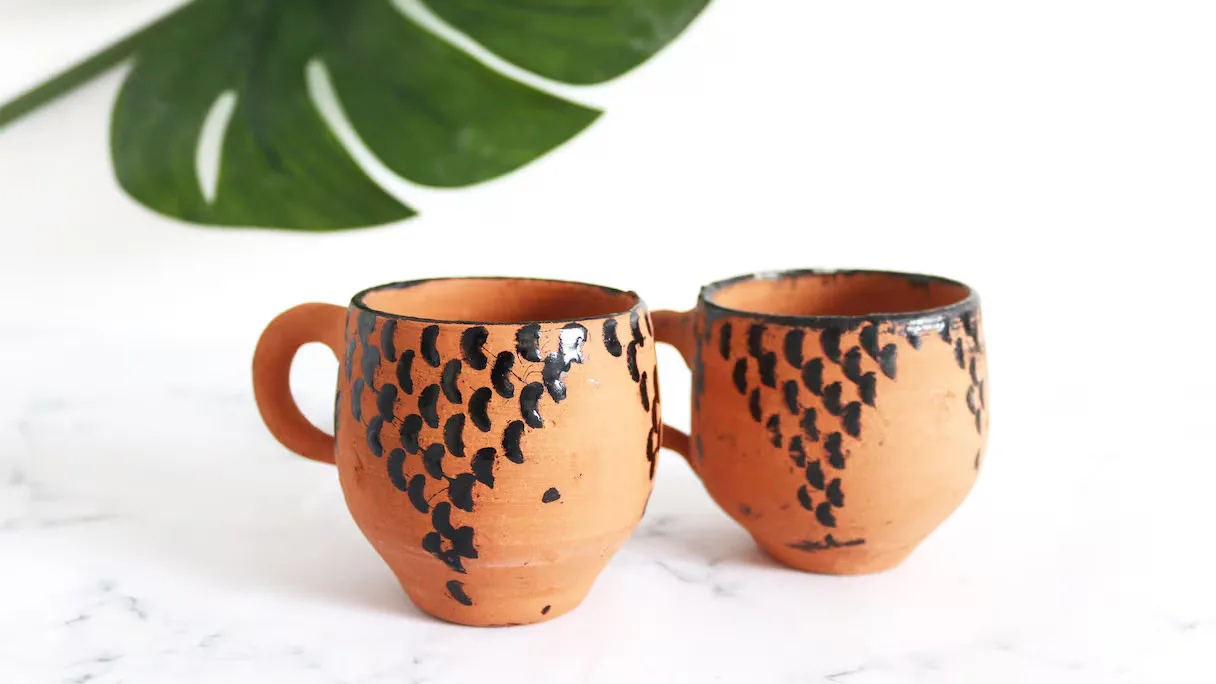
Marrakech – Morocco’s Secretariat of State for Handicrafts and Social and Solidarity Economy has banned the use of tar, known locally as qitran (قطران), in the production of food-grade pottery. The decision follows laboratory analyses that detected dangerously high concentrations of toxic substances in decorated earthenware products.
In a directive addressed to heads of handicraft chambers and regional and provincial directors, Secretary of State Lahcen Saadi outlined the findings behind the ban. A specialized laboratory tested multiple samples of food-use pottery coated with qitran and found elevated levels of aluminum, cobalt, and arsenic – all classified as harmful to human health.
The results confirm that the application of tar in this category of products poses a direct risk to consumers, the directive stated.
Qitran is a dark, sticky substance derived from organic materials. Moroccan potters have traditionally applied it to the surface of clay vessels as both a sealant and a decorative element. It gives pottery its characteristic dark streaks, black rims, and dotted patterns.
The practice is especially common among artisans producing tagine pots, cups, and bowls intended for everyday food and drink use. Workshops in pottery hubs such as Safi, Marrakech, and Oued Laou have long relied on the technique as part of the craft’s visual identity.
The ban is part of a broader program to improve the quality of traditional clay products and strengthen health and safety standards across both domestic and international markets.
The secretariat directed regional and provincial services to launch awareness campaigns targeting potters and ceramicists across the country. The campaigns aim to inform artisans – particularly those producing food-contact items – about the health dangers linked to tar use and to urge them to abandon the practice entirely.
The move comes months after French authorities flagged the same concern. In September 2025, France’s consumer safety agency issued an immediate recall of unglazed Moroccan clay cups sold at a store in Béziers, southern France. Laboratory tests on the recalled products revealed that they exceeded safety thresholds for aluminum, arsenic, and cobalt.
The recall notice described the cups as traditional terracotta vessels with black rims and decorative black dots – features consistent with qitran application. French authorities instructed consumers to stop using the cups immediately and return them for a full refund or exchange. The recall remained active until October 31, 2025.
Morocco’s latest directive signals an official acknowledgment of the risks at the production level. By targeting artisans and craft chambers directly, the government is attempting to address the problem at its source rather than relying solely on post-market enforcement.