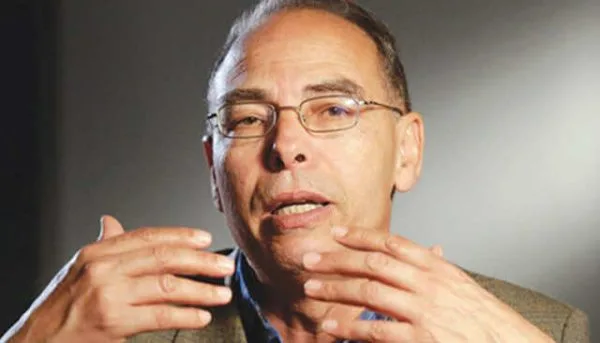
Rabat – Developments related to human rights in Africa attract international media, which often buzz with claims and conclusions – a pattern once again evident following Maati Monjib’s announcement of a hunger strike.
Recently, the Moroccan activist went on a hunger strike in protest of a travel ban imposed by a Moroccan court. Global outlets and NGOs have interpreted the ban as a direct retaliation against his activism and academic work.
However, Zouhair Lahrach, first deputy Public Prosecutor at the Rabat First Instance Court, denied these claims and interpretations, describing them as “unfounded.”
“I would like to clearly state that this measure has nothing to do with his political or academic activities, nor with the exercise of an rights guaranteed to him by law,” the deputy prosecutor said, assertingi that Monjib’s reason for the travel ban instead is a result of his alleged involvement in money laundering.
The prosecutor said investigations showed that Monjib received substantial wire transfers from abroad, noting that he also owns several real estate properties flagged through suspicious transaction reports under Article 18 of Law 43-05.
Last week, the National Human Rights Council (CNDH) said it received Monjib, who claims he has been facing “harassment” due to the travel ban. The council said it listened to his perspective and the relevant details of the case.
After a preliminary investigation of Monjib’s case, the activist was referred to the public prosecutor at the same court, which called for a larger formal investigation.
“I must emphasize that the judiciary, committed to uncovering the truth, is using all available legal means to complete the investigation, especially since it involves international letters rogatory,” Lahrach continued in his statement, noting that the procedures require the individual’s presence for confrontation and questioning.
The investigating judge is still reviewing the case, which required not only the travel ban but also the withdrawal of Monjib’s passport, he added.
Lahrach cited articles from the Moroccan penal code, which allows the judge to order border restrictions and the withdrawal of travel documents to prevent the accused from fleeing during the investigation period, noting that this contradicts the false claims made regarding the legal grounds for the travel ban.
This is not the first time the activist has been in legal trouble. Monjib was sentenced to one year in prison in January 2021 for different charges, accused of undermining the internal integrity of the state and fraud. However, he was given a royal pardon.
“As for the Royal pardon the individual previously benefited from, it has no relation to the current case under public prosecution for money laundering,” the deputy prosecutor said, noting that the case is being investigated by the examining chamber.
Monjib has shared details of his hunger strike on Facebook, sparking mixed reactions from Moroccans and international media alike.