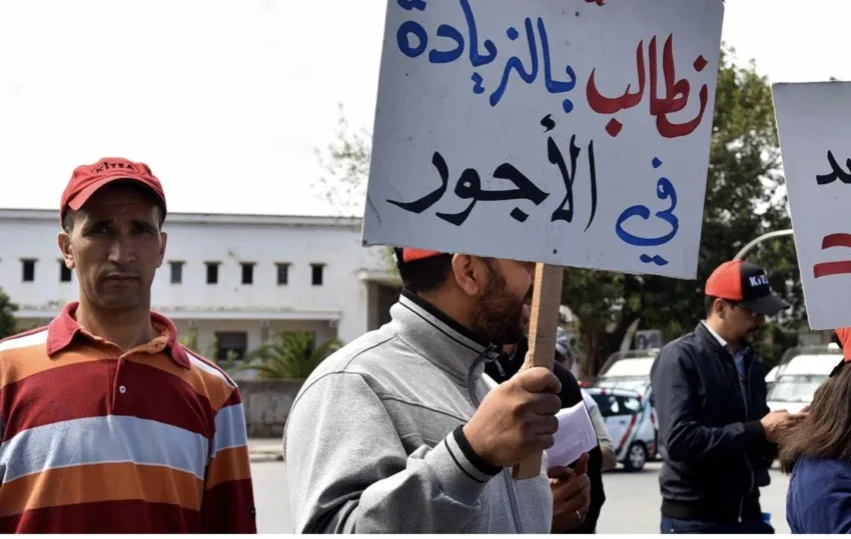
Rabat – In a strong message on Labor Day, Morocco’s Minister of Economic Inclusion, Younes Sekkouri, announced a significant increase in average net monthly salaries across the country.
The average net monthly wage in Morocco is expected to rise from MAD 8,237 ($820) in 2021 to MAD 10,100 ($1,000) by early 2026, a reflection, Minister Sekkouri said, of the government’s determination to improve living standards and reduce income disparities.
The announcement came today, May 1st, as Morocco celebrates Workers’ Day.
Rooted in a legacy of social struggle and advocacy, this day honors the vital role of Moroccan workers across all sectors, from agriculture and industry to healthcare and education, whose daily efforts fuel the country’s development.
Sekkouri pointed out that for five years, public sector workers at the lowest level received just MAD 3,000 ($300) a month. That amount will now rise to MAD 4,500 ($450), a move he described as long overdue.
“We are correcting a situation that lasted too long,” Sekkouri said.
Education stood at the heart of the government’s efforts. After months of negotiations, the state allocated a record MAD 17 billion ($1.7 billion) to support teachers and staff.
A landmark agreement reached in late 2023 led to a MAD 1,500 ($150) salary boost for over 330,000 employees in the education sector. Around 12,000 senior professionals also received enhanced grade-related allowances, recognition, Sekkouri said, for years of undervalued work.
The minister shared that 80% of the measures agreed upon in the December 2023 deal have already been implemented.
Talks continue to address remaining commitments and ensure educators are treated with the respect they deserve.
The healthcare sector also saw sweeping changes. With a total budget of MAD 3.5 billion ($350 million), the government introduced a MAD 500 ($50) salary increase for nurses and boosted compensation for administrative staff.
Read also: Morocco Ramps Up Employment Push With Focus on Youth, Women and Rural Families
For the first time, academic doctors under the Ministry of Health are receiving a risk allowance, formally recognized by a new government decree.
In another notable move, the government approved a special status for the Authority of Scientific Attachés, leading to a net monthly increase of MAD1,800 ($180), retroactive from January 2023. The raise will be delivered in three phases.
Sekkouri pointed to these reforms as part of a broader royal vision to strengthen public institutions and reduce social inequality.
One of the cornerstone initiatives is the Royal project for universal social protection. Its aim is to ensure that all Moroccans, whether they can contribute financially or rely on the AMO TADAMOUN solidarity system, receive the same access to essential health services.
Higher education also received attention. Around MAD 2 billion ($200 million) were invested through social dialogue, resulting in improved pay for nearly 15,000 university researchers.
The minister also noted two of Morocco’s largest royal projects: direct social assistance and housing support.
As of now, 3.9 million families benefit from the direct aid program. The government has allocated MAD 27.1 billion ($2.7 billion) to the initiative through the end of 2025, with that figure set to rise to MAD 29.4 billion ($2.9 billion) in 2026.
Meanwhile, since its launch in January 2024, the direct housing aid program received more than 130,000 applications.
Roughly a quarter of these came from Moroccans living abroad. The program currently operates with a budget of MAD 3.5 billion ($350 million), with further applications still under review.