


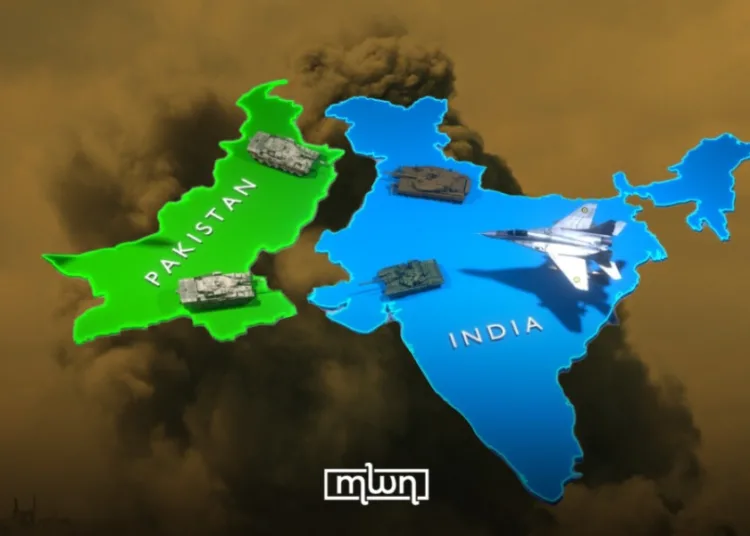
Rabat – India and Pakistan agreed Saturday to an immediate ceasefire after four days of deadly military confrontation — the worst in decades. Yet, the hope for calm and stability quickly faded when both sides subsequently accused each other of violating the truce.
India said Pakistani forces broke the agreement within hours. “There have been repeated violations,” said Indian official Vikram Misri, adding that India responded “appropriately.” He called on Pakistan to act with “seriousness and responsibility.”
Pakistan denied any violations and claimed Indian forces opened fire first. “We remain committed to the ceasefire,” said its Foreign Ministry. Information Minister Attaullah Tarar told local media there had been “no breach” on Pakistan’s side.
Despite the peace agreement, explosions were heard in Srinagar, the main city in Indian-administered Kashmir, while Pakistani officials reported gunfire at several points along the contested Line of Control.
The ceasefire followed a call between senior military officials. Another discussion is scheduled for May 12. No plans for broader talks have been announced.
Western governments welcomed the agreement. The UN and several European capitals called it a positive step. US President Donald Trump credited American mediation, calling the deal a sign of “good sense.”
What began as an Indian response to the April 22 bombing in Pahalgam has escalated into the most serious military standoff between India and Pakistan in over two decades.
The airstrike on Pakistani soil, which New Delhi claims targeted militants responsible for the attack, has since triggered a deadly chain of events. Nearly 50 civilians have died in the crossfire, as the two countries traded drone strikes, missile fire, and artillery.
As the ceasefire wavers, Kashmir remains caught in the middle, once again bearing the cost of unresolved hostilities.




