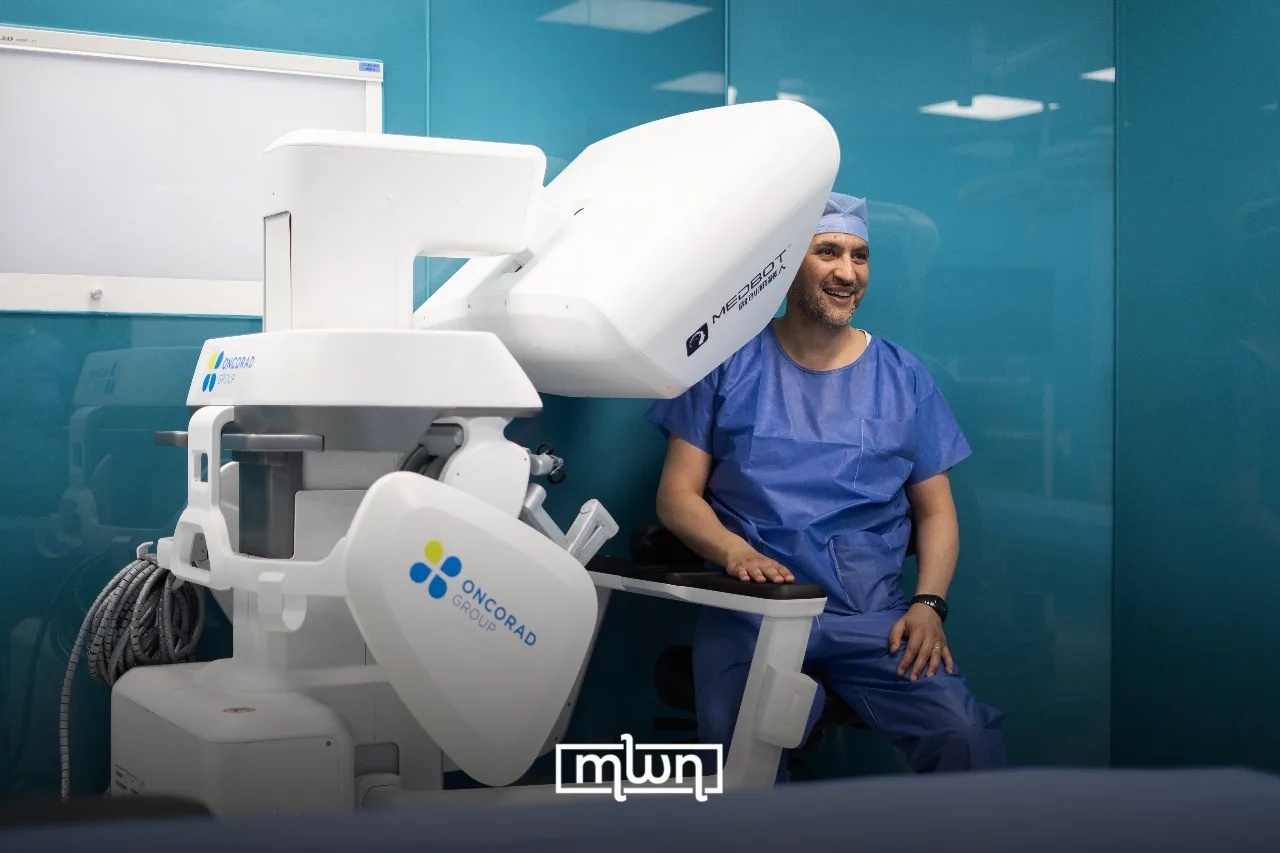
Morocco has wrapped up its first year of robotic surgery, with the Oncorad Group calling it a game-changer for the country’s healthcare system.
The group carried out its first robotic operation on May 27 last year. Since then, they have logged 178 procedures performed using the system, mainly in urology, including over 100 prostate cancer surgeries.
But the real headline came in November when a Moroccan surgeon operated remotely on a patient in Shanghai, setting a world record for the longest-distance telesurgery at 12,000 kilometres.
Another remote operation followed between Casablanca and Tangier.

“Within just a year, Morocco has joined the ranks of global pioneers in robotic surgery,” said Dr Younes Ahalal, the lead expert behind the operations. “This sort of work was once limited to the world’s tech giants. Not anymore.”
Alongside surgery, Oncorad has been busy with training. The group held a string of workshops across several specialities and took part in major medical conferences from Marrakech to Bordeaux and Thailand.
Founded in 2000, Oncorad now runs centres in Casablanca, Marrakech, Agadir, and Tangier. It’s known for its push into high-tech healthcare, with tools like AI-assisted imaging and precision radiotherapy.
The group says it now aims to expand access to robotic surgery across Morocco and position the country as a regional leader in medical innovation.
Beyond Oncorad, Morocco’s robotic surgery infrastructure is still modest but expanding. The public hospital in Agadir now has a South Korean Revo-I system. Casablanca’s private AKDITAL network boasts several Da Vinci Xi robots. These allow for minimally invasive procedures across urology, digestive surgery, gynaecology, and ENT.
Robotic surgery is still expensive. Procedures cost around MAD 80,000, often paid entirely by patients as insurance coverage is limited. Authorities are discussing reimbursement plans, and wider public rollout is in motion.
The health ministry plans to equip each major university hospital with a robot.
Remote surgery could prove transformative for rural care. In May 2025, a patient in Laâyoune was operated on remotely by a surgeon in Casablanca. It worked seamlessly, raising hopes for better access in remote regions.
Training is now a major focus. Early procedures were guided by foreign and diaspora experts. Moroccan teams are rapidly building experience, with local surgeons expected to take the lead soon.
The government, private sector and medical bodies aim to make robotic surgery mainstream by 2030. If all goes to plan, Morocco could soon be a regional hub for surgical innovation.