Most public debates on women’s roles, rights, or status are dominated by male voices. These men often speak from a position of theory, from pulpits, studio lights, or online platforms not from real life.
Something is happening here! But you don’t know what it is.. Do you, Mr. Jones?
These men are fluent in polished Arabic, French, and English; referencing Kant, Aristotle, and greek wisdom.
They quote Enlightenment thinkers to lend authority to their arguments, yet advocates for a domestication of women reminiscent of the pre-enlightenment patriarchy.
Their fluency in colonial languages (French, English) and classical references signals gatekeeping: only those who speak this cultured code get to define the conversation.
SOME OF THEM are preachers, with a male-dominated religious discourse coated in spiritual narcissism. Muftis of the digital age, self-declared guardians of virtue, debate women’s hormones, brain size, emotional instability, or their “place”, always from a place of comfortable distance. Surrounded by books and brotherhood, they craft arguments on women’s rights without ever asking how women live! Preachers that reduce women to moral symbols, sources of temptation, or passive beings to be protected or managed. They talk endlessly about women’s behavior, bodies, and boundaries but say little about their struggles, aspirations, or pain. Their version of Islam is protective of male comfort, not female dignity.
Their discourse is centered around obedience, modesty, and gender roles, while ignoring structural injustice: poverty, illiteracy, violence, healthcare access…
They rarely engage in field work, social reform, or direct support of the women they lecture about. Their authority is performative based on views, likes, and male applause not on action.
OTHERS are mainstream feminists. They want women to become like men, pushing them toward male-coded success: careerism, individualism, sexual freedom, consumption…Another form of erasure. Their narratives exclude rural, poor, religious and traditional women.
AND RECENTLY another ideological trend joined the team. The discourse around feminine and masculine energy claims to be liberating women. It prescribes softness for women and direction for men, while ignoring the psychological complexity, the economic pressure and the structural violence that shape real human lives. Here again, the Sacred Feminine that ignores real women is reproducing the very binaries it says it transcends.
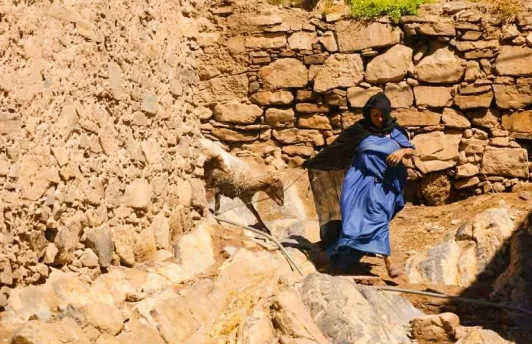
Meanwhile, real women, tired, underpaid, raising children with or without help, bleeding, feeding, building, have no time for these debates. They are in the field. Sick or healthy, divorced or married, veiled or unveiled, educated or not, they embody life while these men only discuss it.
The women they’re talking about are often absent from these spaces, not because they lack intellect, but because they are overwhelmed with real responsibilities (work, children, studies, illness, poverty, entrepreneurship, research…).
These men have the time to talk BECAUSE OTHER WOMEN ARE DOING THE WORK!
After all, the so-called Cultured & Educated man is one who has the time to become so. In a market-driven society, being cultured and educated already means belonging to the privileged segment of society that can afford it.
If the internet were to disappear tomorrow, many of these men would vanish with it! No voice, no audience, no weight. Because their knowledge lives in algorithm, not action. But the woman, She will still be there. Carrying the world on her back. Not because she wants to, but because she must. And while she walks forward, the statues keep talking to each other in circles, too hollow to notice that no one is listening anymore. Beyond ideology, I am not attacking feminism, religion or men. I am exposing how ideologies can become disconnected from reality when they ignore the people they claim to protect. Many arguments defending positions on gender, identity, or morality are built on seemingly accurate observations of social reality. These surface-level truths make them hard to challenge.
But the issue isn’t the facts! Facts alone are neutral. What must be examined is the so-called logical interpretation of these facts, and more importantly, the self-proclaimed neutrality or altruism of those who speak from positions of authority. Behind their discourse often lie unconscious drives, personal insecurities, power dynamics, and a need for dominance disguised as righteousness.
Gates of Eden: Adam and Eve, the Foundational Myth of Gendered Blame and Control
The story of Adam and Eve’s expulsion from paradise is the oldest metaphor for the conflict between men and women. It’s not just a theological anecdote it’s a narrative that sets the tone for thousands of years of patriarchal culture. It is the foundational myth used to justify male dominance and female culpability.
Eve is portrayed as the first to desire knowledge, to transgress divine order by eating the forbidden fruit and then offering it to Adam. From that moment, mortality, suffering, labor and desire are introduced into the human experience and Eve is punished with pain in childbirth and subjugation to her husband. This is reflected in how religious discourses consider women as unstable, emotional, seducing, and dangerous. A threat to masculine virtue and world order. It justifies both spiritual and social control over women by modesty rules, intellectual invisibility, restrictions, and domestic confinement.
From Eden to Modern Systems: Fast-forward to modernity. The story of Eve mutates but doesn’t disappear. The language have changed but the structure remains. In religion, women are still blamed for temptation and moral decline. In capitalism, they are both objectified as consumers and bodies, and burdened with unpaid reproductive labor. In mainstream feminism, some narratives still revolve around compensating Eve’s “guilt”, seeking validation from the same masculine systems that once punished her. Modern feminism sometimes replaces the “sinful Eve” with the “idealized superwoman” who must break glass ceilings without resentment, reject traditional roles without critique, and embrace sexuality without excess. In wellness circles, new-age teachings about Feminine Energy often romanticize submission and emotional labor, echoing old patterns of ignoring women’s anger, complexity, and resistance. Just like in Eden, the woman is either too soft, too curious, too loud, too dangerous, or not enough. She is still judged for her desire and punished for wanting more than obedience.
This myth encoded a deeper fear of feminine consciousness, of a woman who questions, who desires, who refuses to stay in her Role.
This is why systems of domination, religious or economic, are obsessed with regulating women’s bodies and speech. Because women, like Eve, symbolize the potential for disruption. So when today’s women speak up, revolt, question traditions, or step into intellectual or political life, they are still considered symbolically as those who ruined paradise.
They are asked to repent by being silent, compliant and grateful. And when they succeed within the system, they’re asked to prove they’re not like other women. So, the problem is a systemic mythology of blame and shame, where women are scapegoated and men are assigned with garding the gates of power, knowledge and fortune. We will remain exiled from any paradise untill we rewwrite the narrative with deep structural change and not with slogans.
The Problem Is Not Women. It’s the System: Feminism, Capitalism, Religious-political mechanisms and the Logic of Domination
Our modern lives are structured less around meaning than around hierarchy, dominance, and compensation. Most people, regardless of gender, perform unfulfilling labor in exchange for material survival and the illusory hope of climbing the social ladder. It rewards compliance and performance within a fixed structure of control.
Mainstream-Institutional Feminism, in such a system ends up demanding access to the same mechanisms that have already alienated men. Many women today don’t seek to dismantle the pyramids of power, but to access the same vertical climb, claiming a rightful place in a world that remains structurally toxic and unsafe. Equality, then, is redefined as equal participation in domination not liberation from it! This a symptom of the absorption of feminisme by capitalism. Capitalism doesn’t care about gender. It only cares about productivity and consumption. Thus, feminism is welcomed as long as it becomes a tool for expanding the labor pool, increasing markets, and multiplying desires. Empowered women become ideal consumers and workers, pursuing freedom through the acquisition of status symbols, careers, and visibility all within the logic of production and profit. The system survives, not in spite of feminism, but sometimes thanks to it!
Religion, historically, has played a parallel role. Rather than challenging domination, it has often justified it assigning fixed roles, promising reward in the afterlife for obedience in this one, and sanctifying authority. Patriarchy is not just a cultural artifact. It is a religious-political mechanism designed to stabilize the hierarchy. It tells men they must dominate to be fulfilled, and women they must submit and obey to be worthy. In modern capitalist societies, religious moralism continues to shape the family structure, gender roles and norms all aligned with the interests of stability and control. So when we speak of MEN as OPPRESSORS or WOMEN as VICTIMS, we are still trapped in the surface of the problem. The truth is more radical and more difficult: both men and women are shaped, constrained, and mutilated by a system that values dominance above life. It forces men into narrow scripts of strength and success, and women into scripts of beauty, care, or competitive ambition.
The hole structure of our daily lives (work, family, organized leisure…) is designed to keep us from asking deeper questions. What is a good life? What is freedom? What would it mean to live outside the cage of hierarchy, production, and performance?
Until these questions are confronted, no superficial redistribution of power between genders, races, or classes will lead to any form of emancipation. We don’t need a feminine version or any other version of domination. We need to withdraw ourselves from domination altogether whether it comes in the name of faith, progress, or empowerment. Because the system doesn’t care if you’re a man or a woman. It only cares that you stay in your place, play your role, and keep the machine running.
Beyond Pulpits and Podcasts: The Women Who Hold Morocco Together
And while these men keep debating from behind screens, podiums, pulpits and and studio lights, my country Morocco moves on.
In noise, in silence, in dignity, in exhaustion, women hold this country together. They are abandoned mothers, raising children alone without financial support.
They are farmers’ wives and daughters, up at dawn feeding animals, harvesting crops, surviving drought and patriarchy alike. They are daughters whose salaries are taken by fathers and brothers under the guise of respect and obedience. They are divorced women navigating both social stigma and legal limbo, expected to be invisible yet endlessly judged. They are nurses and doctors working night shifts, saving lives while being told their place is at home. They are maids, seamstresses, teachers, lawyers, cashiers, cleaners, policewomen… not theory, but flesh and bone women. They are the real Morocco, even when they’re unseen.
And let it be said clearly!!
God sees them. God loves them. Because at every moment, they remember Him, in their integrity, in their effort, in their service. By working with honesty, by protecting others, by not cheating or harming, by lifting others in silence. THEY ARE IN CONSTENT WORSHIP! Meanwhile, those who speak loudest about, rarely look them in the eyes!
They romanticize submission from a place of power, while refusing to listen to actual women. They demand silence from women who live with daily injustice. And while the polished debates echo in a hollow space, and these men quote Aristotle, call on Kant, or speak of Eve and the forbidden fruit, Moroccan women are busy doing what no one else will do: endure, build, resist, learn, grow, give often without thanks, often alone! Not in theories, but in survival. They are the ones holding the line. And their strength, like their faith, needs no permission.