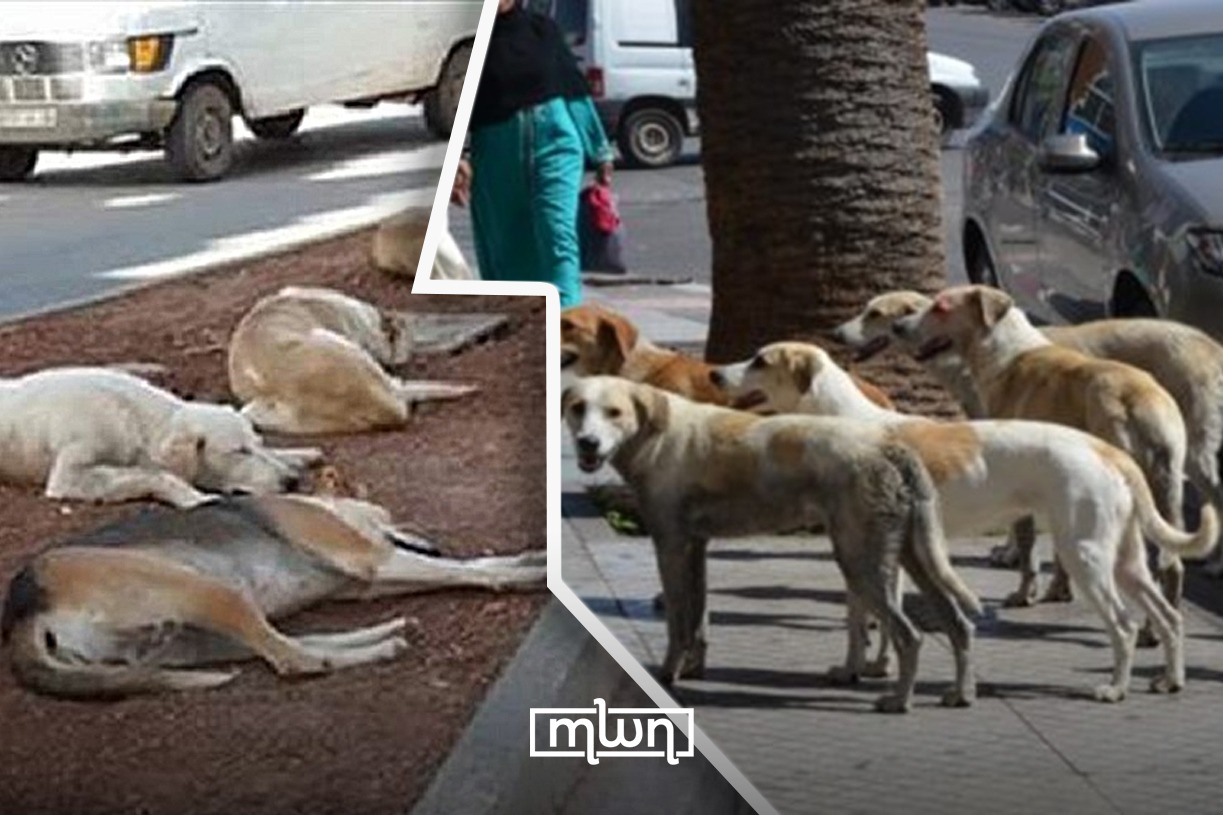
Morocco is currently facing intense public debate over Draft Law No. 19.25, a proposed piece of legislation intended to regulate the management of free-ranging animals. The law represents a significant shift toward humane approaches such as TNVR (Trap–Neuter–Vaccinate–Return), yet it also contains provisions that have sparked controversy, especially those prohibiting the feeding, sheltering, or treating of stray animals in public spaces without authorization. Violators face fines of up to 3,000 dirhams.
This creates a fundamental question: if TNVR is the official policy, who will feed the animals after they are released back into the streets?
Overview of Law No. 19.25
The law aims to establish a legal framework that balances public safety and animal welfare, particularly in response to growing concerns about stray animals, especially dogs, and their risks: disease transmission, traffic accidents, and potential aggression.
The law aligns with international standards (OIE/WOAH) and adopts the Five Freedoms, internationally recognized principles for animal welfare, in humane stray animal management programs.
It defines “stray animals” broadly as any animal in public spaces without supervision or ownership.
It introduces a digital platform to:
- Report stray animals,
- Register pets with unique identification,
- Manage updates (loss, health changes, death),
- Track recovery procedures when animals are brought to
It mandates the creation of dedicated animal care centers, overseen by veterinarians, to:
- Capture, care for, sterilize, vaccinate, and release stray animals,
- Accept abandoned pets,
- Offer adoption or handover options,
- Restrict euthanasia strictly to cases where animals pose a proven risk or have incurable
It encourages partnerships between local governments and registered animal-welfare associations, under strict criteria and formal agreements.
Private entities may also run care centers under five-year authorizations, subject to oversight and revocation processes.
It strictly prohibits individuals from feeding, sheltering, or treating stray animals in public spaces unless through authorized channels; violators face fines of up to 3,000 dirhams.
Other penalties include:
- 2 months to 6 months imprisonment and up to 20,000 dirhams for animal
- Fines up to 500,000 dirhams for unlicensed care centers, and up to 100,000 dirhams for centers operating without veterinary supervision or failing to maintain updated data.
- 5,000 to 10,000 dirhams for owners who fail to register their pets or keep health records
The law will take effect upon publication in the Official Bulletin (“Bulletin Officiel”). However, provisions requiring detailed regulations (e.g., setting up centers, data platform specifics) will only come into force once the corresponding decrees are issued.
The Ecology and Origins of Free-Ranging Dogs
A free-ranging dog, commonly called a “stray dog”, is a dog that is not confined to a yard or house. It includes village dogs, stray dogs, feral dogs, etc., and may be owned or unowned. Free-ranging dogs often called “wild dogs” in everyday conversation, are in reality domestic dogs (Canis lupus familiaris) that have lost regular human care and now roam freely.
These animals descend from once-owned pets but have adapted to life without a specific owner. Unlike truly wild canids such as wolves or jackals, they remain heavily dependent on human environments for survival, even if indirectly.
They inhabit both urban and rural areas, often scavenging through rubbish, loitering near markets, or receiving scraps from sympathetic residents. Empty lots, souks, abandoned buildings, roadside ditches, and shaded alleyways can serve as makeshift shelters. Their daily patterns often mirror human routines: early mornings and late evenings see more movement when streets are quieter, while midday might be spent resting in shaded areas.
They are opportunistic omnivores, feeding on household refuse, slaughterhouse waste, animal carcasses, and food intentionally provided by humans. This scavenging lifestyle means their distribution is closely tied to human density, waste management practices, and cultural attitudes toward dogs.
Socially, they may form loose groups or packs, but these groupings are often fluid, centered around food sources rather than strong cooperative hunting strategies like wolves. Their reproduction is seasonal in some climates, and because few are sterilized, population growth can be rapid.
From a public health perspective, their close association with humans and livestock facilitates the spread of zoonoses. Poor waste management and lack of sterilization programs often exacerbate the problem.
The ecology of free-ranging dogs makes management challenging. Culling has historically been used but is often ineffective because it doesn’t address the root causes of population growth (uncontrolled breeding and food availability). Humane strategies like TNVR (Trap–Neuter– Vaccinate–Return) are increasingly promoted, particularly when paired with community education, responsible pet ownership, and better waste control.
The TNVR Approach and Its Implications
TNVR is designed as a humane and scientifically supported method to stabilize and reduce stray animal populations. It involves capturing free-ranging dogs, sterilizing them, vaccinating them, particularly against rabies, identifying them with visible tags, and returning them to their original territories. The approach relies on the principle that a stable, non-breeding population will naturally decline over time.
However, for TNVR to succeed, returned dogs must have access to food and water. Without a steady food source, they may roam beyond their territories in search of sustenance, increasing the risk of road accidents, disease spread, or conflict with people and other animals. Feeding is, therefore, not an optional kindness, it is an operational necessity.
Public Health Considerations: Key Zoonoses Impacting Morocco
Free-ranging dogs are carriers of several serious diseases that can spread to humans, posing significant public health challenges. Among the most important zoonoses transmitted by these animals are rabies, a deadly viral infection; leishmaniasis, a parasitic disease causing severe skin ulcers and potentially fatal internal illness; echinococcosis, which leads to dangerous cysts forming in vital organs; and leptospirosis, a bacterial disease that can cause kidney and liver damage.
Unlike domestic dogs, stray populations often lack vaccination and veterinary care, allowing these diseases to persist and spread unchecked. Addressing the risks posed by stray dogs is essential to safeguarding community health across Morocco.
Rabies
Rabies is a fatal viral disease that affects the central nervous system of mammals, including humans. It is primarily transmitted through the bite of an infected animal. Once symptoms appear in a human, the disease is almost always fatal. The initial symptoms of rabies in humans may include fever, headache, and general weakness or discomfort.
As the virus progresses, more specific symptoms appear, such as anxiety, confusion, agitation, hallucinations, hydrophobia (fear of water), difficulty swallowing, paralysis, and ultimately coma and death. In dogs, rabies may manifest as sudden behavioral changes, restlessness, aggression, excessive salivation, difficulty swallowing, paralysis of the hind limbs or jaw, and sudden death.
Dogs are the primary source of human rabies deaths, contributing to 99% of all rabies transmissions to humans. This underscores the critical importance of widespread canine vaccination and responsible management of dog populations.
Leishmaniasis
Morocco is endemic for several forms of leishmaniasis, including cutaneous leishmaniasis caused by Leishmania major, L. tropica, and L. infantum, as well as the more severe visceral leishmaniasis, predominantly linked to L. infantum. Cutaneous leishmaniasis is widespread in provinces such as Errachidia, Tata, and Azilal, while visceral leishmaniasis occurs more frequently in the northern regions, including Taounate, Al Hoceima, and Sidi Kacem.
Free-ranging dogs pose a particular public health concern, as they act as uncontrolled reservoirs for L. infantum. Often carrying the parasite without showing symptoms, these dogs can move freely across large areas, increasing the likelihood of contact with sandfly vectors and nearby human communities. Unlike owned dogs, which can benefit from vaccination, treatment, or protection via insecticide collars, stray dogs cannot be easily monitored or managed. This makes them a persistent and influential factor in sustaining and amplifying the transmission cycle of zoonotic leishmaniasis, which is a silent but persistent threat in Morocco.
Hydatidosis
Hydatidosis, also known as echinococcosis, is a parasitic disease caused by the larval stage of the Echinococcus tapeworm. Dogs serve as the definitive hosts, harboring adult tapeworms in their intestines and excreting the eggs in their feces. Humans become accidental intermediate hosts when they ingest these microscopic eggs through contact with contaminated food, water, or surfaces, or by handling infected dogs. Once inside the human body, the eggs hatch and form fluid-filled cysts, primarily in the liver and lungs, though they may also affect the brain, bones,
or other organs. Symptoms in humans depend on the size and location of the cysts, and may take months or years to appear. They can include abdominal pain, nausea, vomiting, chronic cough, chest pain, and in severe cases, anaphylactic shock if a cyst ruptures. In dogs, there are usually no outward signs of infection, which makes them silent but effective vectors of the disease. The cycle of transmission is often sustained in areas where dogs are fed raw offal from livestock.
Leptospirosis
Leptospirosis is a widespread bacterial zoonosis caused by Leptospira species, affecting both humans and animals. Among stray dogs, the disease is facilitated by their outdoor lifestyle, frequent exposure to contaminated water or soil, and the lack of vaccination. These dogs often roam in environments where they come into contact with wild rodents, a primary reservoir for Leptospira, and may also scavenge in areas with stagnant or flood-prone water conditions that favor bacterial survival.
Transmission to humans typically occurs through direct contact with the urine of infected animals or indirectly via contaminated water, soil, or food. In Morocco, the risk is particularly heightened in urban and peri-urban settings where stray dogs and people share common spaces, especially markets, waste disposal areas, and riverbanks.
Human leptospirosis can range from a mild, flu-like illness to severe, life-threatening conditions, characterized by jaundice, kidney failure, and hemorrhaging. The lack of monitoring and preventive measures for stray dogs not only sustains the bacterial reservoir but also creates an ongoing public health hazard, especially for vulnerable groups such as children, waste collectors, and agricultural workers.
The Cultural and Religious Context of Feeding Animals in Morocco
In Morocco, feeding animals in public spaces is not merely an act of charity, it is a deeply ingrained cultural and religious tradition. Moroccans believe food is sacred, and should never be wasted. Leftovers, especially bread, are never thrown away but given to animals. This practice stems from a mix of ecological logic and moral duty, reinforced by Islamic teachings that encourage mercy and compassion toward all living beings. Historically, people have fed street dogs and cats with food scraps, leftover couscous, or discarded meat and fish from Souks.
Today, with the spread of dry commercial pet food, some caregivers have shifted to more hygienic feeding methods, but the underlying motivation remains the same: caring for animals is a moral and communal responsibility. For many, criminalizing feeding is not just a legal issue, it is an attack on a core moral value.
The Current Role of Volunteers and NGOs
For years, Morocco’s stray animal population has been supported by volunteers, NGOs, and informal community caretakers. They distribute thousands of kilograms of food annually to street dogs and cats. Without these efforts, many animals would face starvation, especially those neutered and returned under TNVR who can no longer compete aggressively for food. If the law criminalizes these acts without offering an alternative, the survival of these animals will be at risk.
The Legal Contradiction
Articles 5 and 44 of Draft Law No. 19.25 prohibit feeding, sheltering, or treating stray animals in public spaces without official permission. The intention, according to proponents, is to regulate and professionalize animal care, ensuring that interventions are safe, hygienic, and coordinated. However, this prohibition clashes directly with the TNVR framework. By returning dogs to the streets without providing a structured feeding plan, the law risks: Creating welfare problems for the animals, undermining public trust in humane control measures, forcing compassionate acts underground, beyond any form of coordination or monitoring.
Reconciling TNVR with Feeding Restrictions
If Morocco wishes to align Law No. 19.25 with both scientific best practice and cultural values, several steps could bridge the gap:
- Establish authorized community feeding points, managed jointly by municipalities and NGOs
- Create volunteer caregiver registries allowing approved citizens to continue feeding under hygienic, monitored conditions
- Launch public awareness campaigns linking TNVR and controlled feeding,
- Ensure feeding and care are integrated into municipal stray animal management