
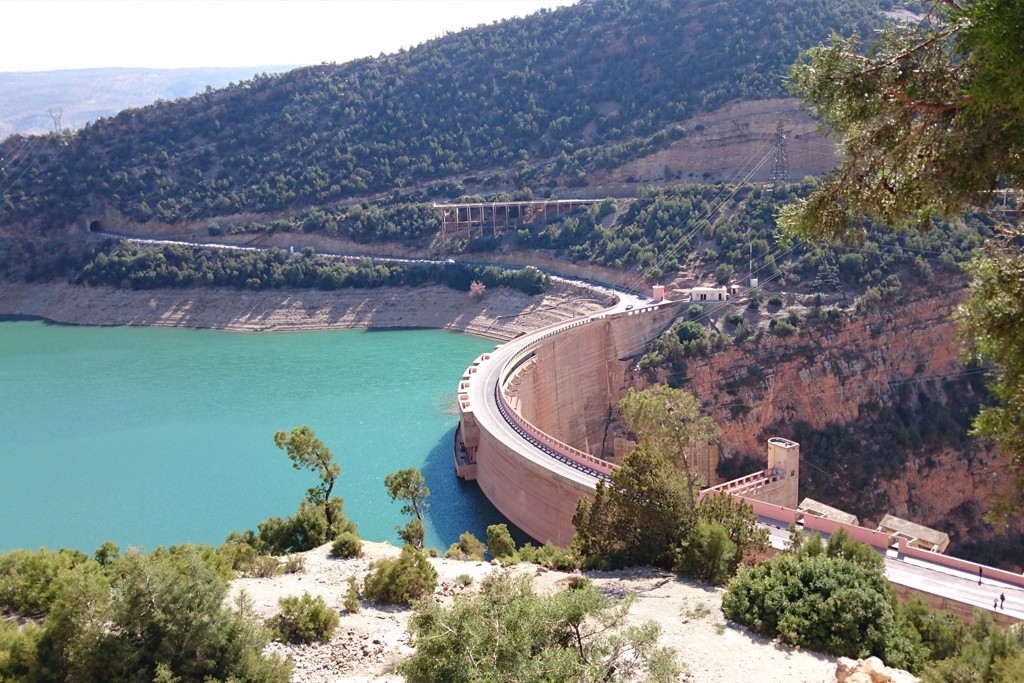
Rabat — Morocco’s dams experienced a sharp drop in water levels during summer 2025 as extreme heat waves hit several regions across the country.
Dam water levels reached only 34.22% of capacity by August 24. This equals just 5.736 billion cubic meters out of a total storage capacity of 16.762 billion cubic meters.
While these levels show improvement compared to summer 2024, when dam filling rates hit 27.67%, the rapid decline since mid-June raises concerns.
Water levels dropped from nearly 38.9% in mid-June to the current level, and temperatures continue to climb.
Multiple factors drive water loss
Several connected factors explain why dam water levels keep falling. Extreme heat waves and dry “Chergui” winds cause water to evaporate quickly from reservoir surfaces.
Water consumption has surged dramatically across Morocco.
Urban areas use more water for household needs, while rural regions increase irrigation to keep crops alive during the scorching summer.
Climate change and poor rainfall during recent years made the situation worse. Many dams also face silting problems, which reduce their actual water storage capacity.
Authorities monitor situation closely
The water shortage puts pressure on Morocco’s water management systems.
Officials track consumption patterns and reservoir levels daily as the country deals with one of its most challenging water situations in recent years.
The combination of climate pressures and high demand creates a complex challenge for water resource management.
Morocco must balance urban water needs, agricultural irrigation, and maintain strategic water reserves for the future.
Summer 2025 signals Morocco’s ongoing struggle with water scarcity, despite some improvements over the previous year’s critically low levels.
Morocco’s response to water resources shortage
The Moroccan government has introduced comprehensive water management policies to respond to the country’s critical situation in water resources.
The North African country has opened up desalination plants and promoted water-saving practices in agricultural and industrial sectors.
King Mohammed VI called on all Moroccans and stakeholders in last year’s Throne speech to actively protect this vital resource, describing water preservation as a national responsibility.
Recalling the significant efforts and investments made to secure water supplies and face drought challenges, the King called for rational and responsible water use.