
 Join on WhatsApp
 Join on Telegram
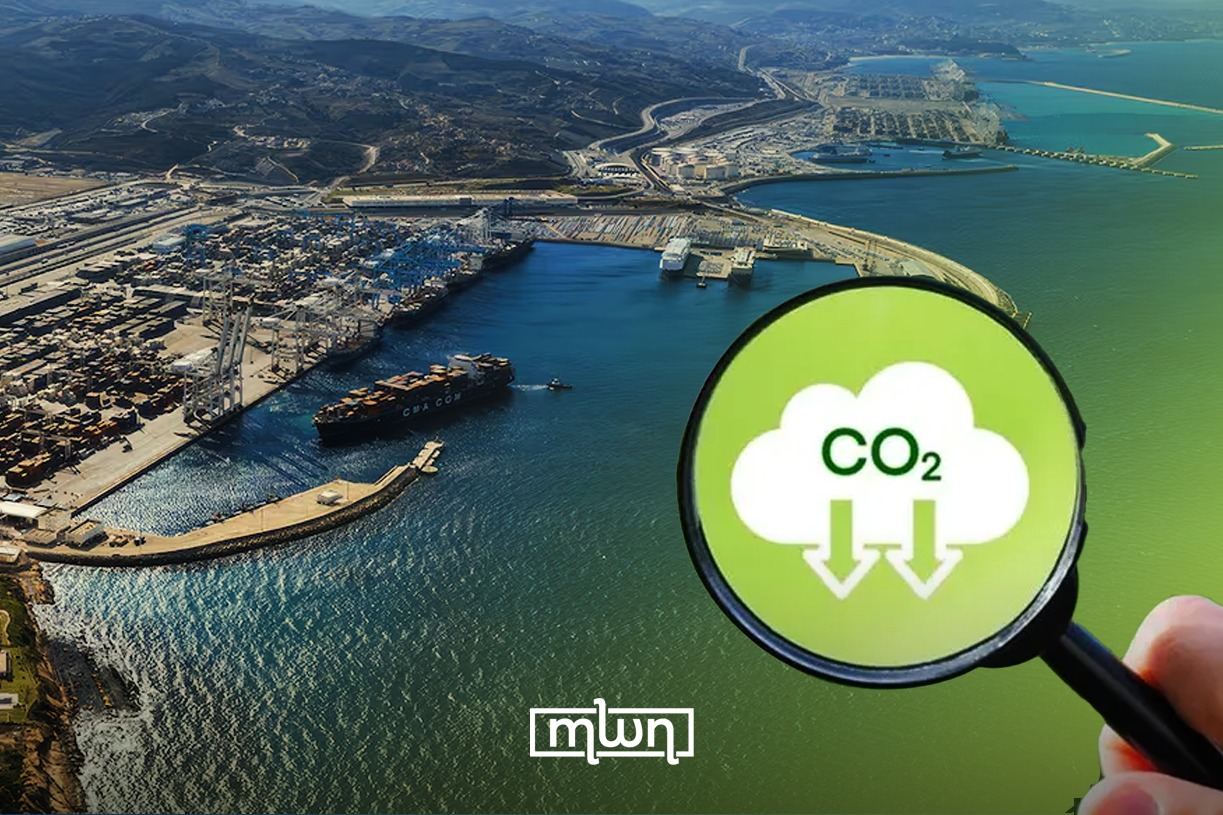
Rabat – Tanger Med has developed a comprehensive decarbonization plan presented by Amine Benyessf, decarbonization director at Tanger Med Groupe, in response to global environmental regulations. The plan will focus on four key areas: renewable energy generation, green mobility, energy efficiency, and circular economy practices.
During the 2nd edition of the TOC Africa 2025, Benyessef noted that this strategy adapts to a rapidly changing international environment, marked by stricter decarbonization standards.
This initiative aligns with international maritime standards, including the European Union’s Emission Trading System and the International Maritime Organization’s targets for reducing greenhouse gas emissions.
As of January 2025, the port complex started operating entirely on green electricity, sourced through direct power purchase agreements with national developers.
To further bolster its renewable energy capacity, Tanger Med has initiated several self-production projects. In one such project, a 1.3 MW solar photovoltaic plant has been installed on the roof of the Tanger Med Port Center, generating approximately 1.95 GWh annually.
Additionally, a 13 MW floating solar facility is under development at the Oued Rmel dam, expected to produce around 20 GWh per year upon completion.
Plans are also underway for a 2 MW solar installation atop import warehouses and a 15 MW wind farm within the port’s logistics zone, both slated for operation by 2026.
In the field of green mobility, Tanger Med is advancing electrification and hydrogen technologies. The TC4 terminal—operational since 2024—features onshore power supply systems capable of powering large vessels, thereby eliminating emissions during port calls.
Read Also: Tanger Med Port Launches $500 Million Expansion of Truck Terminal to Double Capacity
The port’s electric vehicle fleet comprises 32 service vehicles, supported by 13 charging stations. Furthermore, a pilot project is underway to test hydrogen-powered port trucks, complete with a dedicated refueling station.
Energy efficiency measures are also a priority. The port has replaced all lighting with LED fixtures, resulting in significant energy savings of 58% in industrial zones and 65% in the port complex.
A smart lighting management system oversees these installations. Additionally, the “Just-in-Time” scheduling system has reduced anchorage operations by 70%, leading to a decrease of approximately 10,000 tonnes of CO₂ emissions annually.
Tanger Med is also committed to circular economy principles. A waste sorting and valorization center, currently under construction in the Tanger Tech zone, is expected to process 29,000 tonnes of waste annually starting in late 2025.
Water reuse initiatives are in place, with nearly 89,000 m³ of wastewater treated and repurposed for irrigation in 2024 alone.
Through these multifaceted efforts, Tanger Med aims to position itself as a leader in sustainable port operations, not only meeting but exceeding international environmental standards.
The port’s proactive approach highlights Morocco’s commitment to environmental stewardship and sets a benchmark for other ports in Africa and beyond.