Mohammedia – Since launching its National Energy Strategy in 2009, Morocco has been working to raise the share of renewable energy to 52% of the installed electricity capacity and cut energy demand by 20% by 2030.
The 2026 Finance Bill continues this transition by promoting renewable energy schemes, improving energy efficiency, investing in infrastructure, and spurring new technologies.
As of May 2025, more than 45% of Morocco’s power installed capacity was attributed to renewable energy compared to 37% in 2021.
The mix comprises 44% of wind energy, 24% hydropower, 17% solar energy, and 15% pumped storage plants. Projects such as Noor Atlas and Noor Midelt have helped reduce production costs to between 34 and 42 centimes per kilowatt-hour, showing growing competitiveness in the sector.
In 2026, the administration intends to increase solar and wind power generation while creating large-scale battery storage facilities to ensure a stable supply.
Morocco is also promoting the peaceful use of nuclear energy in cooperation with the International Atomic Energy Agency (IAEA).
Throughout 2024 and 2025, a series of projects were undertaken to improve agricultural production and strengthen radiation safety.
Three new projects will take place in 2026 and 2027 under the National Framework Programme 2024–2029. These include updating nuclear legislation, improving food security via the control of livestock diseases, and maximizing water resource management.
The government is also proceeding with its natural gas master plan. Following the signing of an agreement in 2024 for the construction of gas import, storage, and transport infrastructure, the master plan is now entering its operational phase.
The first LNG terminal will be built at Nador West Med port, whereas investor search and tendering will occur between late 2025 and 2026.
A new regulatory framework for the gas market will also be introduced to manage the importation, distribution, and supply of natural gas across the country.
Hydrogen, energy efficiency, and mining reforms shape the next phase
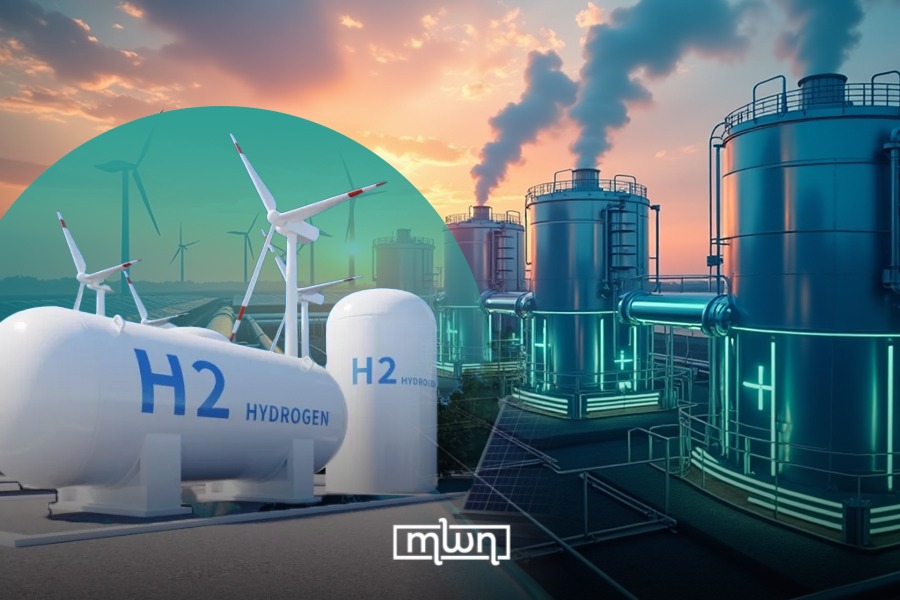
Green hydrogen has also emerged as one of the other key pillars of Morocco’s energy strategy. In 2025, the country signed its first land reservation deal under the “Morocco Offer,” launching six large-scale projects in southern regions including Laayoune-Sakia El Hamra, Guelmim-Oued Noun, and Dakhla-Oued Eddahab.
The projects are supported by five local and international investors and amount to a total investment of MAD 370 billion. They are aimed at positioning Morocco at the forefront of the world’s production, and export of green hydrogen in the years to come.
Energy efficiency remains Morocco’s focus for its sustainability strategy. After major progress in 2025, including having twelve regional decarbonization plans and a national energy savings monitoring system, new projects are to be undertaken in 2026.
These include the rollout of minimum performance standards for household appliances, updating the Binayate software employed to calculate buildings’ thermal compliance, and launching public awareness campaigns.
The government aims to promote sustainable energy use in such fields as transportation, manufacturing, construction, and agriculture, as well as enabling companies to employ cleaner production techniques.
The mining and geological sectors are also witnessing considerable growth. As part of the National Geological Mapping Plan, several mapping projects were launched in 2024 and 2025 in areas like the High Atlas and Rabat-Salé-Kénitra.
In 2026, coverage will be expanded into new areas like Boutonnière du Bas Drâa and the Oulad Dlim massif, with additional geological coverage beyond the 45% reached by the end of 2024.
To support these efforts, a draft law to amend Law No. 33-13 on mining is under preparation.
The reform seeks to align the sector with the objectives of Morocco’s New Development Model while regulating new activities such as exploration for natural hydrogen, production of geothermal energy, and underground storage.
The law seeks to improve environmental protection, strengthen governance and transparency, and encourage local value creation from extracted minerals.
Through the 2026 Finance Bill, Morocco reaffirms its commitment to an energy model of growth with the conservation of natural resources.
Read Also: Moroccan Government Approves 2026 Finance Bill and Accompanying Measures