
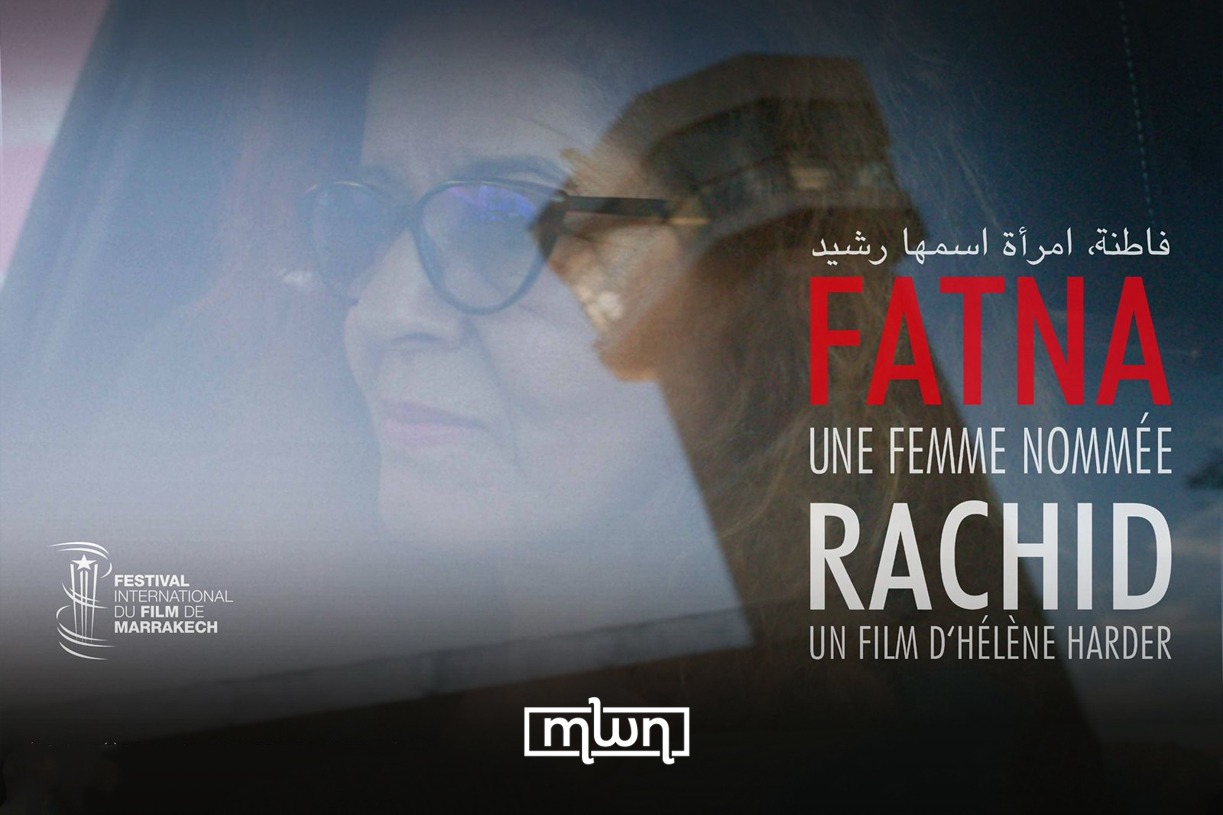
Rabat – The documentary “Fatna, A Woman Named Rachid” will be part of the program of the 22nd edition of the Marrakech International Film Festival (FIFM), scheduled to run from November 28 to December 6.
Written and directed by Hélène Harder, the film follows the life of Fatna El Bouih, a prominent human rights activist, writer, and survivor of Morocco’s “Years of Lead,” whose commitment to justice and equality continues today.
The documentary takes its title from the book “Une Femme nommée Rachid” (Éditions Le Fennec), which inspired the film.
An intimate portrait of activism
Through the bustling streets of Casablanca and rare archival footage from the 1970s, the film traces Fatna’s struggle beginning at age 21, when she was imprisoned and tortured.
Now 67, she continues to pursue change through concrete initiatives, including advocating for women’s rights, supporting Syrian female detainees who survived the Saidnaya prison, and organizing a cinema festival for juvenile inmates.
In the book, El Bouih explains that during her political imprisonment, she was not allowed to use her real name and was instead given a male name “Rachid, along with a number, 45.” This renaming was a conscious attempt to strip her of her identity and undermine her femininity, as women’s imprisonment was considered taboo; as a result, she was forcibly recast as “Rachid.”
“Throughout the film, we follow Fatna in her various activist efforts in Casablanca, including organizing a film festival at Oukacha Prison,” Harder explains.
“Her journeys across the city become journeys through time: past and present intertwine through her voiceover and restored archival images from the 1970s. The film aims to convey the enduring dream of change Fatna has carried since childhood, despite the repression she endured, and to reveal both individual and collective progress in Moroccan society,” she added.
Past and present
The documentary combines archival footage, mostly drawn from Morocco’s cinema heritage of the 1960s and 1970s, recently restored by institutions such as the Moroccan Cinematheque, with contemporary images to create a sensitive and intimate portrait.
Fatna’s voice, her travels through Casablanca, and her interactions with family and close friends allow audiences to experience her life, struggles, and daily reality.
The Marrakech screening honors Fatna’s unique story and emphasizes the importance of transmitting women’s memory. “Fatna, A Woman Named Rachid,” reminds viewers that sharing this history is essential to understanding the past, acknowledging women’s contributions, and inspiring future generations.
Screenings and international reach
The film will be screened at the Palais des Congrès in Marrakech on December 3 at 6:30 pm. It will then travel to Brussels for its European premiere, closing the Cinemamed festival on December 5.
The production involves an international team of producers from Morocco, France, and Belgium, with music composed by Charlotte Maison and David Baboulis, and sound design by Floy Krouchi.
The project is supported by multiple cultural and cinematic partners across Europe and the Arab world.