Rabat – Although Algeria and South Africa share the anti-Morocco rhetoric, Pretoria has acknowledged that UN Security Council Resolution 2797 explicitly endorses Morocco’s Autonomy Plan as the genuine political solution for Western Sahara.
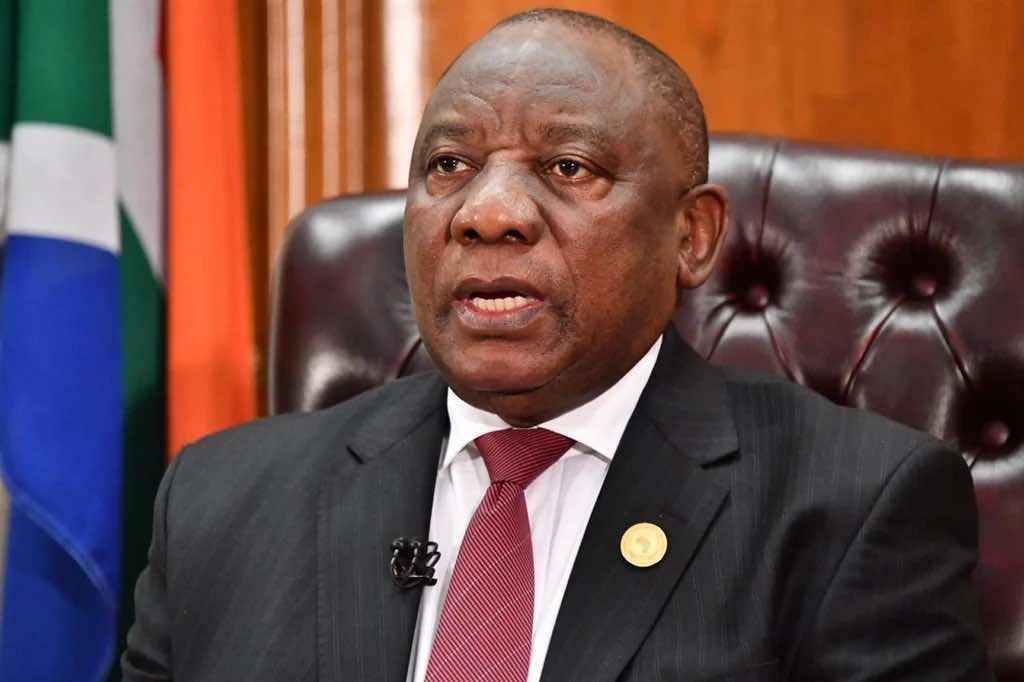
President Cyril Ramaphosa openly made his remarks at the African National Congress’s 5th National General Council on Tuesday.
On X, he reiterated his position, expressing concerns over the UN Security Council resolution that backs Morocco’s autonomy initiative as a feasible political solution to end the dispute.
“We must be concerned that the struggle of the people of Western Sahara for self-determination has been set back by the recent UN Security Council resolution, which strongly endorsed Morocco’s autonomy plan as the ‘most feasible solution,’” he wrote.
Ramaphosa further acknowledged that the resolution shifts away from past UN positions “on a referendum on self-determination.”
South Africa has long been part of a small group of countries that support Algeria’s agenda, backing Polisario’s independence claims in Western Sahara. Similar stances challenge Morocco’s territorial integrity and sovereignty over its southern provinces in Western Sahara.
However, Ramaphosa’s recent remarks acknowledge what Algeria’s regime has consistently sought to deny since the adoption of Resolution 2797 on October 31.
The historic resolution received applause and a consensus by numerous countries, including France and the US – which viewed it as a significant step toward resolving the dispute within the framework of Morocco’s Autonomy Plan.
The Moroccan proposal is endorsed by over 120 countries as the most viable or the only political solution capable of ending the long-standing dispute
Following the vote, Algeria’s regime attempted to downplay the significance of the resolution, claiming that Morocco “failed” to make the autonomy initiative the exclusive framework for resolving the dispute.
Minister of Foreign Affairs in Algeria, Ahmed Attaf, alleged in November that the resolution left room for so-called “alternative options.
He argued that the text reaffirmed the “right to self-determination.”
Pro-Polisario advocates have also attempted to interpret the resolution in a way that aligns with Algeria’s agenda.
Recently, however, Morocco’s Foreign Affairs Minister Nasser Bourita responded to the interpretations, claiming the latest resolution refers to a referendum as an option.
In an interview with EFE, Bourita stressed that “no one has ever said that self-determination is synonymous with a referendum.”
“What it says is that the right to self-determination allows the parties to express their will. I don’t think that when a person signs an agreement following negotiations, they are not expressing a will,” Bourita said.
Bourita said Morocco has “no problem with ‘self-determination,’” stating that Morocco rejects restrictive, anachronistic interpretations for political purposes.
“No one has ever said that self-determination is synonymous with a referendum – this exists nowhere. Therefore, we believe that if we want to read the resolution clearly and lucidly, it is straightforward,” Bourita said.
He stressed that the concept refers to an expression of will that can take different forms within the framework of Morocco’s Autonomy Plan.
For him, if people want to interpret the resolution politically and “steer it, that is something else.”