
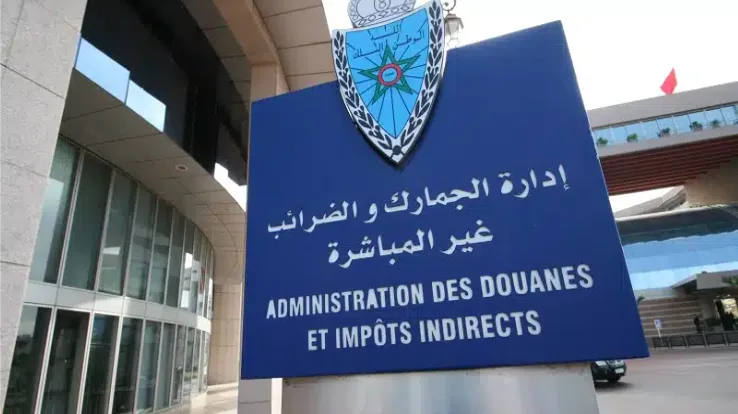
Rabat – Morocco’s Customs and Indirect Tax Administration is preparing to roll out a series of reforms in 2026 that mark a clear shift toward stronger oversight, expanded enforcement powers, and deeper reliance on digital tools to manage trade flows and counter fraud.
Outlined in a recent customs circular linked to the 2026 Finance Law, the measures introduce amendments to the Customs and Indirect Taxes Code that will take effect on January 1, 2026.
The reforms target several areas, from field surveillance and customs clearance to compliance inside industrial acceleration zones.
A key change concerns the expansion of customs monitoring capabilities.
The revised legal framework allows customs officers to rely more broadly on technological equipment, such as aerial surveillance, scanning devices, and video monitoring systems.
Authorities say this approach aims to strengthen real-time controls and improve the detection of smuggling activities, while bringing national practices closer to international standards in border and logistics management.
Digitalization features prominently in the reform package. Customs authorities plan to introduce a secure electronic platform for the exchange of commercial documents linked to import declarations.
Built on blockchain technology, the system is designed to ensure the authenticity and traceability of documents exchanged between foreign suppliers and Morocco’s customs information system, particularly invoices.
While participation in the platform will remain voluntary, importers who opt in are expected to benefit from faster processing and reduced clearance times.
The reforms further tighten oversight within industrial acceleration zones, where customs inspections have found irregular practices involving undeclared goods or activities outside authorized scopes.
Under the new provisions, the presence of such goods will be explicitly treated as a customs offense.
Another notable measure addresses false declarations related to the storage or processing locations of imported goods. Importers will now face financial penalties if they provide inaccurate addresses, a move intended to improve transparency and facilitate post-clearance controls.
Taken together, the 2026 customs reforms signal a move toward a more structured and technology-driven system. With digital solutions and clearer sanctions, the administration aims to enhance the traceability of imports and reinforce its fight against fraud and illicit trade.