 Join on WhatsApp
 Join on Telegram
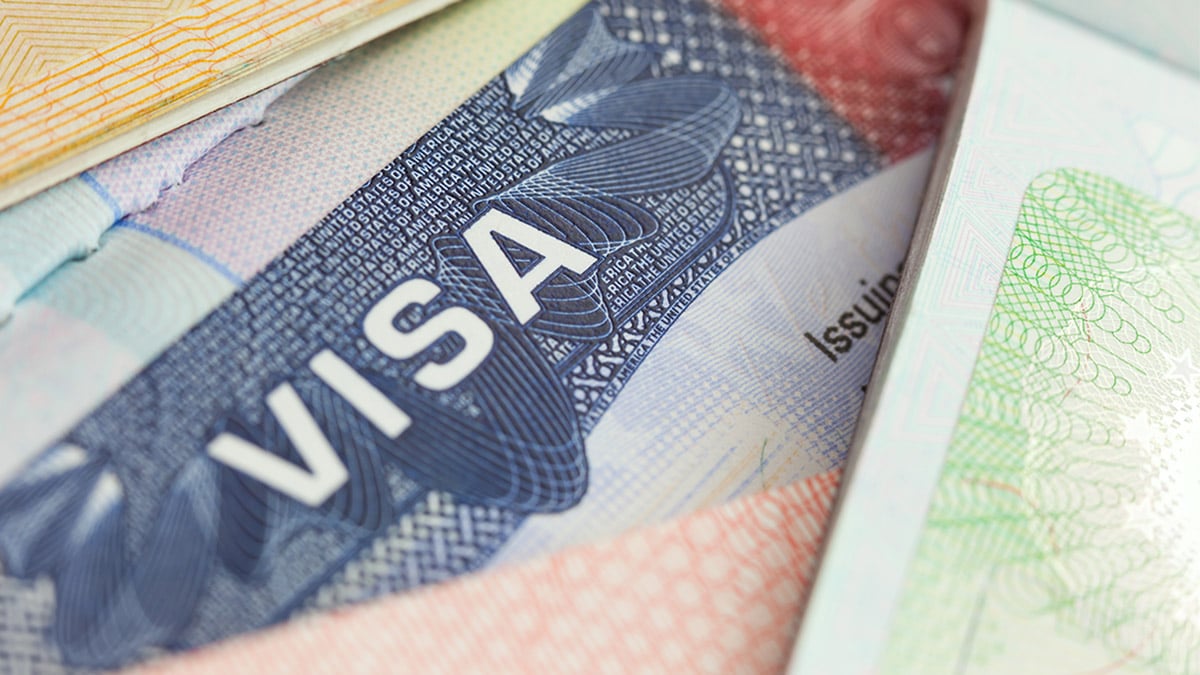
Marrakech – The United States has expanded its controversial visa bond program to include Algeria among 38 countries whose citizens must post refundable cash deposits of up to $15,000 when applying for B1/B2 business or tourism visas.
The State Department announced the expansion on January 6, with implementation beginning January 21. Algeria joins 24 other African nations on the list, making it the only North African country subject to these requirements. Morocco notably remains absent from the expanded roster.
Under the program, Algerian passport holders applying for temporary visitor visas must post bonds ranging from $5,000 to $15,000, with amounts determined during visa interviews.
Applicants must also submit Department of Homeland Security Form I-352 and agree to bond terms through the Treasury Department’s Pay.gov platform.
The policy targets countries with high visa overstay rates based on Department of Homeland Security Entry/Exit Overstay Reports. Algeria’s inclusion follows either elevated overstay statistics or insufficient control and verification information, though specific reasons remain unclear.
The expanded list includes Nigeria, Senegal, Uganda, Zimbabwe, Bangladesh, Nepal, Cuba, and Venezuela, among others. Previous additions brought countries like Botswana, Guinea, Malawi, and Tanzania under the program between August 2025 and January 2026.
Bond breaches occur when visa holders overstay authorized periods, remain in the country beyond permitted dates, or apply for status adjustments, including asylum claims.
The Department of Homeland Security forwards violation cases to the US Citizenship and Immigration Services for breach determination.
Mounting travel barriers ahead of World Cup 2026
For Algerian citizens, the bond requirements impose substantial financial hurdles. Those required to post the maximum $15,000 bond would need approximately DZD 3.54 million, making US travel accessible primarily to wealthy individuals.
The situation is compounded by Algeria’s strict currency controls and a dinar whose value has steadily eroded, forcing citizens to rely on black-market exchange rates that sharply inflate costs and deepen the financial burden.
Payment does not guarantee visa approval, and fees paid without a consular officer’s authorization are non-refundable. However, bonds are automatically returned if visa holders depart the United States before authorization expires, never travel to the US, or are denied entry at ports of entry.
Successful applicants must enter and exit through three designated airports: Boston Logan International, John F. Kennedy International, and Washington Dulles International. Using other entry points may result in denied admission or improperly recorded departures.
The timing coincides with the 2026 FIFA World Cup, co-hosted by the United States, Canada, and Mexico. With Algeria set to play group-stage matches in the US, the new requirements risk sharply limiting fan travel and on-site support for the national team.
By contrast, in the Rabat case, last December the US announced a sharp reduction in visa wait times for Moroccans – from 10 months to two – facilitating travel for fans ahead of the quadrennial global football showpiece.
During the same month, additional consular staff were deployed specifically to Casablanca to handle surging visa demand tied to tournament travel.
The program represents broader US immigration policy tightening under the Trump administration, which has introduced mandatory in-person interviews, extensive social media history disclosure, and detailed travel documentation requirements for visa applicants from all countries requiring visas.
Algeria was singled out amongst its neighbors
Algeria’s inclusion stands in stark contrast to its regional neighbors, with Tunisia, Morocco, and Egypt spared bond requirements – a divergence that speaks volumes about Washington’s differentiated trust calculus, security assessments, and diplomatic depth across North Africa.
The policy adds to existing US trade measures against Algeria, including a 30% import tariff surcharge – among the highest applied to African countries alongside South Africa and Libya.
These cumulative restrictions point to a clear deterioration in US-Algeria relations, widely seen as a consequence of Algiers’ alignment choices under Abdelmadjid Tebboune, which have placed the country increasingly at odds with Washington’s security and geopolitical framework.
Whether Algeria will implement reciprocal measures against US citizens remains uncertain, though Mali and Burkina Faso have recently imposed entry restrictions on Americans in response to US policies.
The visa bond program affects citizens regardless of application location and covers nationals traveling on passports issued by the listed countries. Officials maintain that the refundable bonds effectively reduce overstays while ensuring compliance with immigration regulations.