
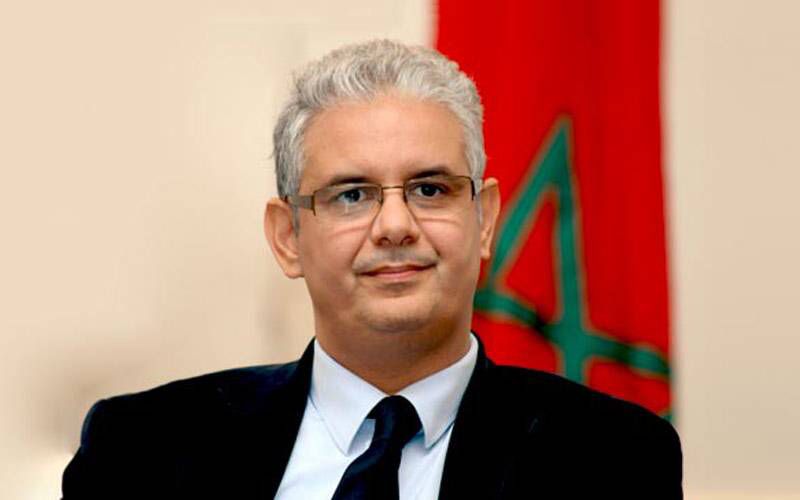
Agadir – Nizar Baraka, Minister of Equipment and Water, has emphasized the strategic role of public procurement as a tool for implementing public policies and called for Morocco to move beyond the traditional view of procurement as a mechanism for spending.
Baraka’s ministry organized on Monday in Rabat a seminar under the theme “Optimal Management of Public Markets: A Mechanism for Preventing Disputes.” The event focused on the urgency of improving the management of public contracts and the need to reduce conflicts or legal disputes related to procurement.
Minister Baraka highlighted the need for a performance-oriented approach grounded in three key pillars: economic efficiency by using public funds wisely, territorial equity by ensuring fair access and benefits for all regions of the country, and public trust through building confidence in government institutions by being transparent and accountable.
He pointed out that reforming the public procurement system has been one of Morocco’s central priorities since the start of its mandate, showing the government’s view about procurement as not just a mere routine spending, but as a strategic tool for national development.
The effective implementation of these significant reforms enables Morocco to better control public spending and strengthen its own economy, and invest more effectively in infrastructure and public projects, he argued.
Baraka presented these reforms as an integral part of King Mohammed VI’s directives, stressing that these royal guidelines emphasize efficiency, accountability, and results-based management as fundamental components of effective public action.
He noted the importance of a preventive and rigorous approach in procurement, including precise needs assessment, clear specification drafting, objective award criteria, and updated contractual frameworks.
Read also: Baraka: Morocco Has 17 Desalination Plants With 350.3 Million Cubic Meter Annual Capacity
These measures are intended to address emerging challenges such as fluctuating costs of materials or services, delays or shortages in delivering materials, environmental factors or difficult locations that might affect projects, and the shift of technology-driven systems.
As part of these efforts, Baraka announced that the ministry of Equipment and Water will run training sessions in partnership with the Superior Council of the Judiciary (CSPJ).
He added that the objective of this program is to share judicial expertise about public procurement, for a better understanding of the legal aspects of contracts and compliance. In addition, these trainings are designed to improve communication between ministry and judges, especially on technical or legal issues that both sides deal with in public procurement.
Baraka’s ministry has also created a “Guide to the Case Law of the Ministry of Equipment and Water,” compiling key judicial rulings related to public procurement, state property, and trespass.
Also speaking at Monday’s seminar was Mohamed Abdennabaoui, First President of the Court of Cassation and delegate president of the CSPJ. In his presentation, Abdennabaoui pointed out that legal disputes related to administrative contracts and public procurement have gradually gone up in recent years in Morocco — from 1,969 in 2023 to 2,218 in 2024, and 2,577 in 2025.
This means more public procurement contracts are ending up in court, either due to disputes over contract terms, execution, or compliance issues.
Abdennabaoui noted that under the ongoing partnership between the Court of Cassation and the Ministry of Equipment and Water, a technical committee is developing a series of scientific meetings for 2026 to examine legal issues and clarify case law guidance on public procurement. This would allow the ministry and other stakeholders to understand court decisions and reduce disputes in the future, he concluded.