
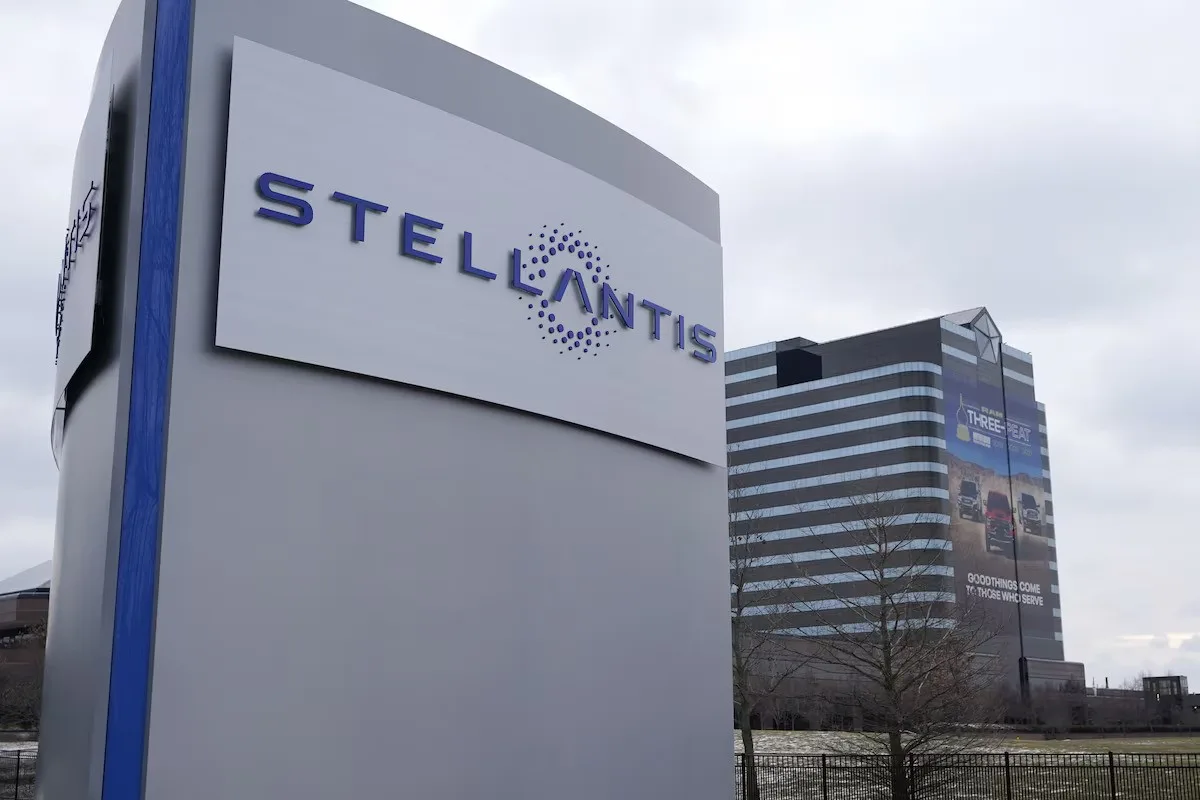
Rabat – Despite the growth reported in their fourth quarter report, Stellantis also announced $26 billion (€22.2 billion) in charges last Friday primarily due to shifting strategy to scale back its electrical vehicle (EV) production.
The Franco-Italian-American automotive company said the charges will be paid out over the next four years and include cash payments of about $7.7 billion. Over $16 billion of the charges are related to “realigning product plans with customer preferences and new emission regulations in the US, largely reflecting significantly reduced expectations for battery electric vehicles (BEVs).”
“The charges announced today largely reflect the cost of overestimating the pace of the energy transition that distanced us from many car buyers’ real-world needs, means and desires,” Antonio Filosa, the chief executive of Stellantis, said in a statement.
Filosa added that the nearly $27 billion charges “also reflect the impact of previous poor operational execution, the effects of which are being progressively addressed by our new team.”
The company’s previous strategy foresaw EVs making up half of US sales and all European sales by 2030, assumptions the company now says were overly optimistic.
In 2025, only 7.7% of US new-vehicle sales were fully electric vehicles, compared to 19.5% in Europe.
The company webpage frames the hit as a reflection of “a strategic shift to put freedom of choice – from a growing range of EVs, hybrids and advanced internal combustion engines – at the heart of the Company’s plans.”
The charges and ultimate pull back of electric vehicles illustrates the growing pressure on automakers to navigate lower-than-expected EV demand, particularly in the US.
While EV sales in Europe remain high, consumer demand in the US continues to fall partially due to higher sticker prices and concerns over access to charging stations. The Trump administration also cancelled President Biden’s tax credits which were worth up to $7,500 per car and is also working to roll back emission regulations.
Though Stellantis’ charges are the largest yet reported by an automaker due to bad EV predictions, Ford took a $19.5 billion hit in December, and last month GM reported $6 billion in write-downs.
The company’s shares plummeted 25.2% on Friday, their largest drop in one day on record.
Stellantis also agreed to sell its 49% stake in a Canadian battery joint venture to South Korea’s LG Energy Solutions.
Stallantis 2025 Shipments up 9%
Despite the hits, the company released its fourth quarter shipping estimates last week indicating early signs of operational improvement. The last three months of 2025 witnessed a 9% year-over-year (y-o-y) increase in consolidated shipments, delivering an estimated 1.5 million units.
North American shipments grew by approximately 127,000 units compared to the Q4 shipments in 2024, reporting a 43% increase in shipments to North America. The report attributes the growth to normalized inventory dynamics – 2024 utilised an inventory reduction initiative – as well as heightened momentum in the region with Q4 2025 orders up nearly 150% year-over-year.
The increase was largely driven by new offerings of Jeep®, Ram and Dodge brands which accounted for 30% of y-o-y growth.
North American growth is countered by some shrinking in Europe caused by a contracting Light Commercial Vehicle (LCV) market and competitive pressures. Greater Europe saw a decrease in approximately 26,000 units, a 4% loss.
South America reported an 18,000 unit increase, a 7% growth. The Middle East and Africa each witnessed a 3,000 unit increase, a 2% growth. China, India, and the Asian Pacific also distributed 3,000 more units than Q4 in 2024, a 20% increase in the region.
Stellantis also maintained its leadership in South America, with a 7% increase largely supported by demand in Brazil.
Türkiye drove growth in the Middle East and Africa, in hand with increased local production in Algeria, and continued growth in Morocco.
Stellantis in Morocco
In 2025, Stellantis expanded their Kenitra factory to produce Automated Guided Vehicles (AGVs). The €1.2 billion investment intends to double the factory’s production and increase the local integration rate to 75% by 2030.
Stellantis’ Kenitra factory also previously announced that at least 400,000 vehicles should roll off the production line by 2027.
The Moroccan automotive market grew by 33.4% in 2025. Stellantis Morocco recorded 42,901 units sold, representing 22.5% growth compared to 2024, and a market share of 18.2%.
According to data shared recently at Stellantis Morocco’s annual press conference, nearly one out of every four hybrid vehicles sold in Morocco is a Stellantis model. The Group leads this segment with 5,691 units sold, representing a 23% market share.
“The year 2025 confirmed the strength and resilience of Stellantis Morocco. In a fast-growing market, we delivered solid results, driven by the momentum of our brands, leadership in key segments, and the continued strengthening of our ecosystem,” said Yves Peyrot des Gachons, Managing Director of Stellantis Morocco.
“Beyond commercial performance, 2025 was above all a year of structuring, during which we reinforced our industrial, commercial, and financial foundations to confidently prepare the next phases of our development in Morocco.”
What Stellantis’ recent charges mean for Morocco’s branch and manufacturing operations remains unclear.
Read also: Stellantis Strengthens Presence in Morocco with €1.2 Billion Project