
Rabat – India will host the IndiaAI Impact Summit 2026 in New Delhi on February 19-20, bringing together world leaders, ministers, and major technology companies.
The event’s goal is to make artificial intelligence more accessible and useful for daily life, especially in the Global South, Indian officials have said.
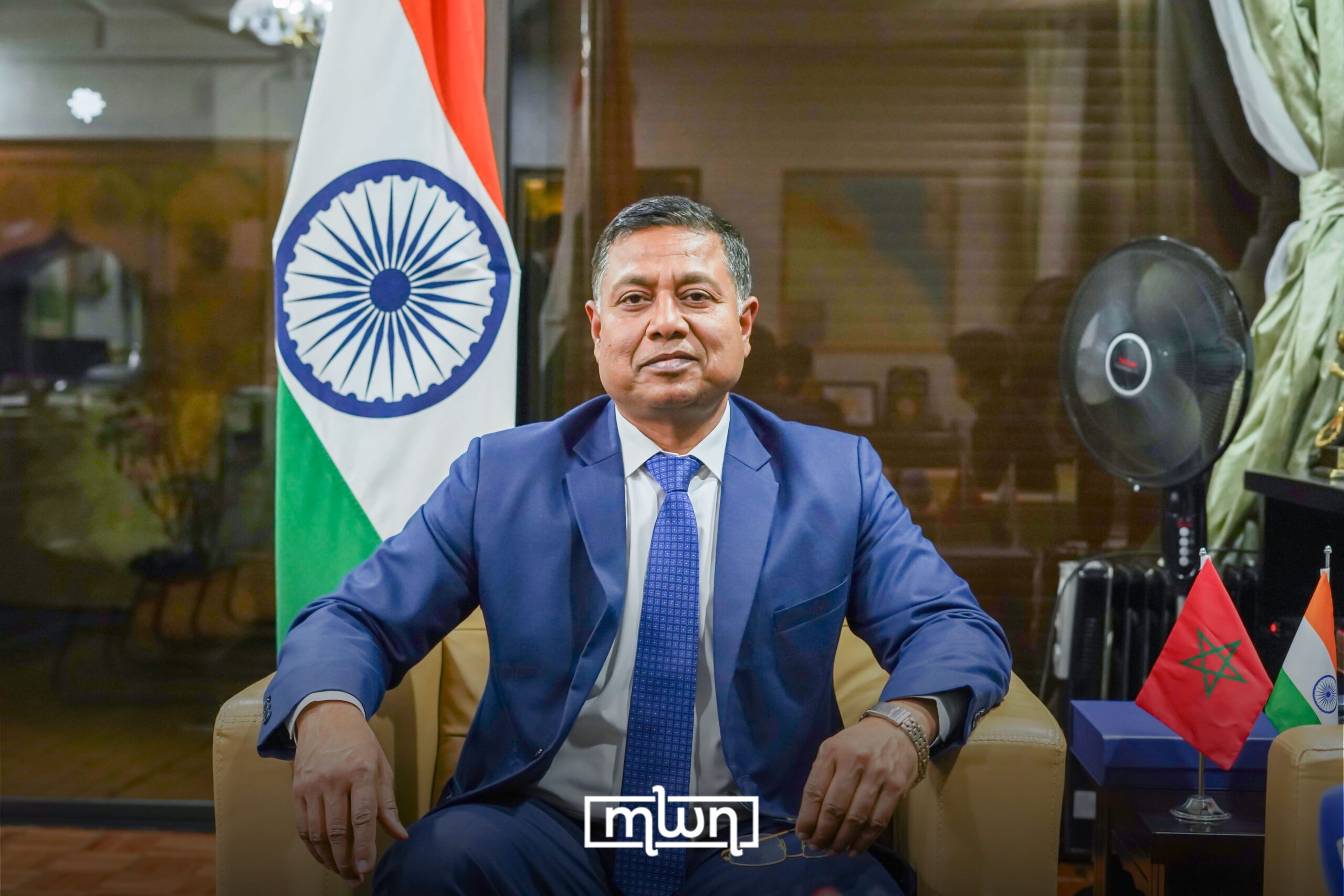
In an exclusive interview with Morocco World News at the Embassy of India in Rabat, India’s Ambassador to Morocco Sanjay Rana said the summit is meant to move the global AI debate away from regulation and toward real results.
“The main dates of the summit are 19th and 20th of February,” Ambassador Rana told MWN. “Many world leaders, as well as ministers for IT and heads of corporations of IT companies from all over the world, will be participating in this major summit on AI in New Delhi.”
‘From aspirations to impact.’
India says the summit builds on recent AI meetings in Bletchley Park, Seoul, Paris, and Kigali, but with a different focus. According to the official background note, the aim is to shift “from aspirations to impact,” with outcomes centered on “People, Planet, and Progress.”
Hosting the summit in India is both symbolic and practical because it will be “the first time an AI summit is taking place in the south in a developing country,” Ambassador Rana said.
He compared it to earlier meetings in the UK, France, and South Korea, which focused mainly on rules and governance. “They were dealing with issues such as governance issues, regulations, how AI should be governed… what should be the guardrails,” he explained.
“In India, I think the focus is on impact,” Rana added. “What impact AI can have on the lives of the people, how we can ensure that AI reaches everyone.”
Democratizing AI access
He stressed that India’s approach reflects global demographics. “Most of the people of the world live in the south, developing countries,” he said, adding that the summit has “a special place in the AI world.”
The Impact Summit’s overview also describes the event as the first in this series to be held in the Global South, with a people‑centered focus on inclusive growth and resilience.
Asked what “impact” means in practice, Ambassador Rana pointed to collaboration. “Since it’s an international AI summit, the focus is on collaborations,” he told MWN. “By working together… we can ensure that the fruits of AI reach everyone.”
He insisted on the urgency of affordability and access, saying AI should not be limited to those who can pay for expensive tools.
“How to ensure that AI is affordable, how to ensure that AI is accessible to all,” he said, mentioning “young people in the colleges; people in training institutes, everyday people who cannot afford hugely expensive AI resources.”
This concern matches the summit’s official plan, which includes working groups on human capital, inclusion, safe and trusted AI, efficiency and resilience, and science.
One key goal is “democratizing AI resources,” such as computers and datasets, which the document notes are still concentrated in a few countries and corporations.
What Morocco can learn from India’s approach
Morocco and India face “similar challenges and similar resource constraints,” the ambassador said, arguing that this makes cooperation practical. He pointed to education, agriculture, and workforce training as areas where AI could bring quick benefits if the right foundations are in place.
A key theme of the interview was digital public infrastructure (DPI), which includes identity systems, registries, and services that support large-scale tech use.
“India has created a very good public digital infrastructure, and Morocco has also done a very good job in that,” Rana said. “Digital public infrastructure is the backbone on which a lot of AI applications and benefits would come.”
India has already worked with Morocco in this area, the ambassador noted, mentioning the National Population Register (RNP) and the social registry.
Expanding such cooperation, he said, could help Morocco turn AI opportunities into real outcomes like better services, education, and job skills.
Language technology is another shared priority. “We have multiple languages in India,” Rana said, stressing the need for AI tools that handle dialects and local languages.
Morocco faces similar challenges, pointing to Darija, he said, noting: “You will need to develop AI tools that can understand Darija; can translate them into international languages.”
Ambassador Rana confirmed that Morocco’s delegation to the summit will be led by Minister of Digital Transition and Administrative Reforms Amal El Fallah Seghrouchni, predicting the visit could lead to new agreements and deeper cooperation in technology and AI.
As for efforts needed to further deepen India-Morocco ties, Ambassador Rana said he expects the next phase of cooperation to involve startups and youth-led innovation.
“Moroccan youngsters and Indian youngsters and young companies will be working with each other,” he said, calling Morocco’s youth “smart, very talented, very tech savvy,” and “well placed to ride this new wave of AI.”