
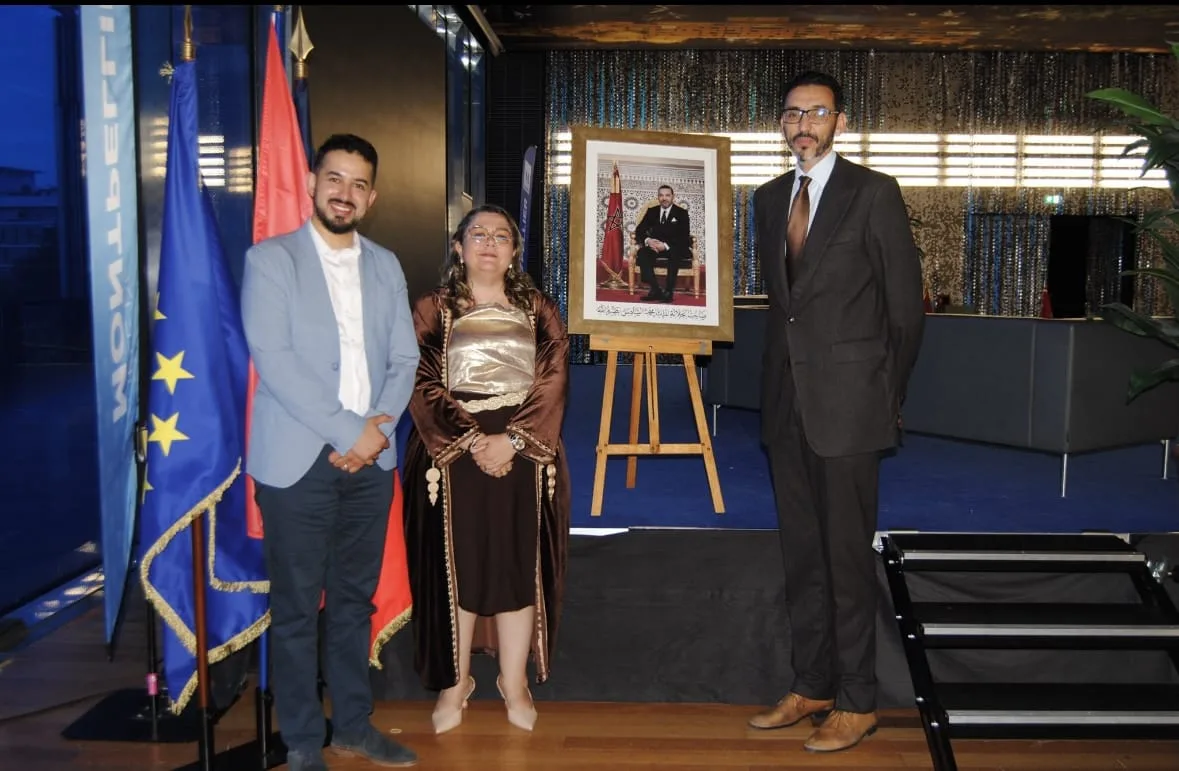
Rabat – The traveling exhibition “The Gates of Morocco’s History: Dynasties, Sovereigns, and Personalities” arrived in Montpellier this June, offering visitors a look at the key figures and historical developments that have shaped Morocco’s identity.
Hosted at Montpellier City Hall by the association Coeur De Lionne in partnership with the Moroccan Consulate General in Montpellier, the exhibition aims to promote Moroccan culture and highlight the country’s rich heritage abroad.
The exhibition traces Morocco’s history through its major rulers and personalities, from Moulay Idriss, the founder of Fez, to King Mohammed VI. It also spotlights the legacies of the late King Mohammed V, a symbol of Morocco’s independence, and King Hassan II, who played a central role in the country’s modern development.
Coeur De Lionne said the exhibition “highlights the richness of Morocco’s historical heritage, the diversity of its civilization, and the depth of its cultural legacy through a program designed to be accessible to all visitors.”
Alongside the exhibition, organizers held a roundtable discussion on Monday titled “At the Crossroads of the Moroccan Model: Between Deep-Rooted Heritage, Diversity, and Openness.” The discussion featured Farid El Asri, a professor at Sciences Po Rabat, and historian Jamel El Hamri, the exhibition’s curator.
The event saw the attendance of Montpellier Mayor Michaël Delafosse, Rabbi Yakov Sitruk, Father Jean Louis Cathala, diplomats, academics, and community leaders.
Speakers discussed the historical, cultural, religious, and social foundations of modern Morocco, notably the country’s diverse identities and long-standing traditions of tolerance, coexistence, and openness.
Morocco’s Consul General in Montpellier, Lamiae Bennani, said the country has successfully integrated its many cultural influences over the centuries, turning diversity into a source of national unity and social cohesion.
She added that at a time of growing instability and identity-related tensions around the world, Morocco offers an example of how national unity can coexist with cultural diversity, religious values, and openness to other societies.
El Asri recalled Morocco’s pluralistic social model, noting that the country’s history has been shaped by exchanges with different cultures and civilizations. He said this openness has contributed to the unique character of Moroccan society.
Historian Jamel El Hamri noted the importance of sharing Morocco’s history with Moroccans living abroad and international audiences. He noted that growing efforts are underway to make the country’s historical heritage more accessible and called for greater use of new technologies to support those initiatives.
Among the attendees were also the vice president of Montpellier Méditerranée Métropole, the honorary consuls of Italy and Poland, and representatives of several civil society organizations.