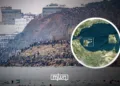

Fez – Three Iranian oil tankers carrying millions of barrels of crude have crossed the US blockade line in the Gulf of Oman, according to ship-tracking data, in what analysts see as an early sign that Tehran is preparing to resume exports before a formal agreement with Washington is signed.
The vessels, Diona, Hero II and Sonia I, all owned by the National Iranian Tanker Company (NITC), sailed past the blockade line separating the Gulf of Oman from the Arabian Sea.
Two of the ships were openly broadcasting their locations as they crossed, while the third activated its tracking system shortly after passing the line.
The movements come days after Trump announced the “immediate removal” of the blockade imposed on Iranian ports.
However, US naval authorities later clarified that enforcement measures would remain in place until a final agreement with Iran is signed, a step expected to take place in Switzerland on Friday.
According to maritime intelligence firm Windward, the decision by the tankers to resume activity suggests growing confidence in Tehran that restrictions are about to ease.
“This is a sign that Iran is confident the blockade is over, even if the US has insisted it will remain in effect until Friday,” Michelle Wiese Bockman, a senior analyst at Windward Maritime Intelligence, told BBC Verify.
The three vessels are carrying a combined cargo of around 3.8 million barrels of crude oil, according to data from TankerTrackers.com.
Their destinations have not been publicly disclosed.
The ships are subject to US sanctions, as is their owner, the National Iranian Tanker Company.
Washington has maintained extensive sanctions on Iran for years over concerns about its nuclear program, its regional activities and allegations of human rights abuses.
Data from MarineTraffic shows that Hero II and Sonia I departed from Iran’s Chabahar port on Tuesday before crossing the blockade line early Wednesday.
Read also:
Diona appeared on public tracking systems shortly after it had already crossed into the Arabian Sea.
Windward noted that this marks the first time these vessels have publicly transmitted their locations since March.
If they successfully complete their voyages, they would represent Iran’s first oil exports in nearly two months.
The US blockade has severely affected Iran’s oil industry.
Data from maritime intelligence firm Kpler shows Iranian crude exports fell to around 260,000 barrels per day in May, the lowest level in six years and less than one-fifth of the country’s 2025 average exports of 1.67 million barrels per day.
Despite Trump’s announcement of the latest and more comprehensive peace agreement with Tehran, uncertainty remains over how quickly Iranian exports will return to normal levels.
The US has previously indicated that enforcement actions could take place beyond the Gulf region, and American forces have intercepted Iran-linked vessels in the Indian Ocean in recent weeks.
Meanwhile, another Iranian tanker, Stream, is approaching the blockade line after spending more than a month near Pakistan’s port of Karachi.
Other Iranian vessels have also resumed broadcasting their positions in key shipping lanes, including the Strait of Malacca.
The increased activity suggests that Iran is moving quickly to bring its oil fleet back into operation as diplomatic efforts between Tehran and Washington enter a decisive phase.
“Iran is wasting no time getting its tankers back into circulation,” Bockman said.