 Join on WhatsApp
 Join on Telegram
Fez– Commercial shipping is gradually resuming through the Strait of Hormuz after the US and Iran signed an agreement aimed at ending their recent conflict, although traffic remains far below normal levels.
Data from maritime intelligence firm Kpler shows that at least 172 vessels crossed the strategic waterway between 18 and 23 June, including 42 ships on Saturday alone.
Before the conflict, the strait typically saw around 138 crossings a day.
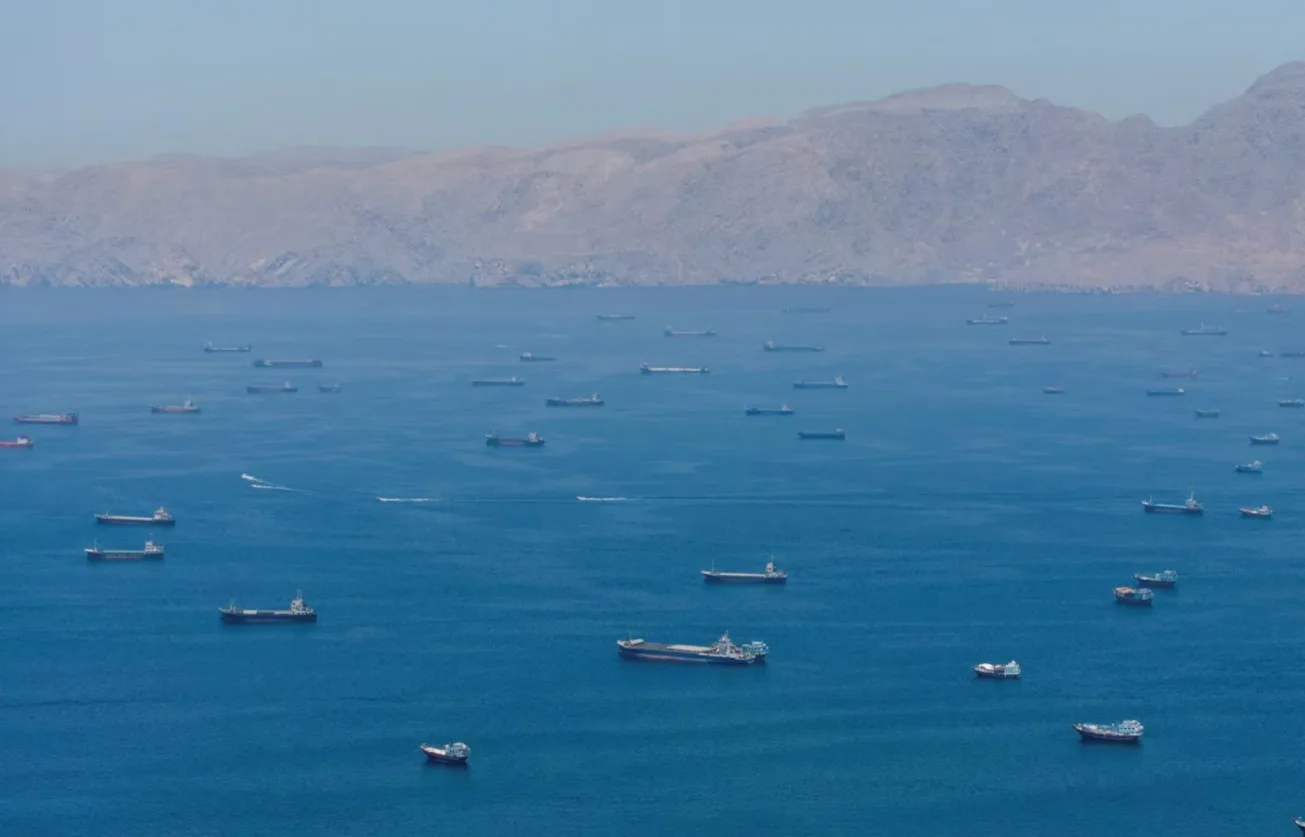
Ship-tracking data indicates that more than 200 tankers are currently waiting inside the strait, while over 250 tankers and 440 cargo ships remain in the Gulf.
Most of them are stationary or anchored, suggesting that many shipping companies are still proceeding cautiously.
The Strait of Hormuz is one of the world’s most important shipping routes, carrying a large share of global oil and gas exports.
Since the agreement was signed, oil markets have reacted positively, with Brent crude prices falling to their lowest level since the start of the conflict.
A significant number of the vessels that have crossed the strait in recent days have been linked to Iran.
Analysts say at least 30 tankers carrying Iranian oil and petrochemical products have departed from the Gulf since the deal was reached.
The US has also temporarily eased sanctions on Iranian oil exports by issuing a licence that allows the sale of Iranian crude oil and related products until 21 August.
On Monday alone, at least five tankers that had previously been sanctioned for links to Iran passed through the strait carrying an estimated four million barrels of oil.
At the same time, shipping activity involving other countries has started to increase.
Liquefied natural gas carriers have resumed voyages to Qatar, while cargo ships and oil tankers have begun leaving Gulf ports again.
However, most ships are choosing to travel through waters controlled by Iran along the northern side of the strait rather than the southern route near Oman that had previously been recommended by the United States and its allies.
The agreement between Washington and Tehran includes a commitment by Iran to ensure the safe passage of commercial vessels for 60 days without charging transit fees.
Iran also said it would work with Oman on future arrangements for managing maritime services in the strait.
Still, uncertainty remains. Iran’s newly established Persian Gulf Strait Authority has required ships to obtain permits before crossing, a move that may discourage some operators because the authority itself is under US sanctions.
Conflicting statements from Iranian officials have also added to the uncertainty.
While Iranian diplomats have recently said the strait remains open, military officials have suggested limits could be placed on the number of ships allowed to pass each day.
Security concerns are another factor slowing the return to normal traffic.
The Joint Maritime Information Center, a multinational maritime organisation, has warned vessels to avoid the central shipping lanes because of sea mines discovered in the area.
Mine-clearing operations are continuing, and ships have been advised to use alternative routes until the area is declared safe.
Although commercial traffic has started to recover following the US-Iran agreement, shipping through the Strait of Hormuz remains well below pre-conflict levels as security concerns and political uncertainty continue to weigh on the industry.